Jane’s portrait of Anna
The Woman in the WindowJane’s portrait of Anna is a signed drawing whose discovery gives material form to Anna’s memory of Jane Russell’s visit. Found in a linen drawer and later shown to Detective Little, it becomes more than a likeness: Anna relies on it to support her account, while Alistair Russell insists that she made it herself. Its significance lies in that unresolved contest over what a physical object can prove.
Appearance and Provenance
The portrait appears unexpectedly when Anna is dealing with a wet robe in the bathroom. With the paper-towel spindle empty, she opens the linen drawer and finds the drawing resting on folded napkins. The ordinary setting matters: the image is not presented as a formal document retrieved from a file, but as something tucked among household linens and encountered in the course of a small domestic task.
Its image sharply differs from a picture of Anna asleep. Here she is upright and beaming, with her hair swept back and her eyes bright and keen. The distinction is important to Anna’s recognition of the drawing: it shows her as alert and composed, rather than in the vulnerable state associated with the image she contrasts it against. Its paper-and-ink likeness presents a version of Anna she can identify, but the scene does not establish when the drawing was made or how long it remained in the drawer.
The signature in the corner supplies the object’s most consequential mark. Anna recalls that Jane called it “A Jane Russell original” after Anna had described the drawing as a nifty trick, and that Jane signed it. When Anna sees the signature again, she recognizes it as a souvenir from the night she had nearly doubted. The portrait therefore carries both a likeness and a claim about authorship; the signature connects the image to Jane, but that connection will be challenged.
The Remembered Visit
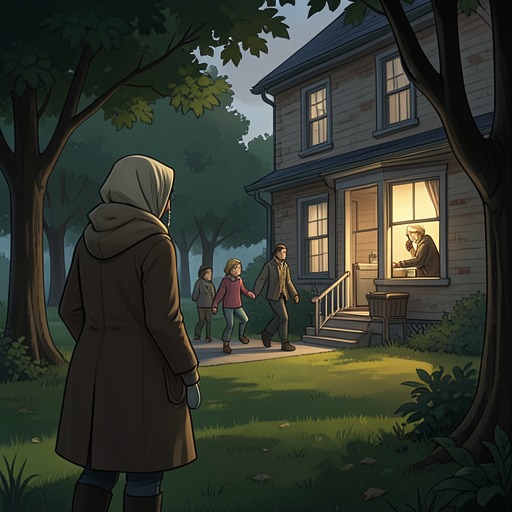
Finding the portrait brings back Anna’s recollection of the evening with Jane. Anna remembers chess and chocolate, cigarettes and wine, and a tour of the house. Among those details, the drawing is tied to a scene of Jane looking around the home and remarking on it. The portrait thus belongs to a larger remembered encounter rather than standing alone as an unexplained picture.
The recollection is specific and personal: Anna remembers Jane’s lively manner, her silver fillings, and the way she leaned toward the window while taking in the house. These details give the absent visitor a presence in Anna’s account, while the signed drawing offers a physical counterpart to that memory. Anna’s formulation that Jane had been there is not merely a conclusion about the picture’s subject. It is the conclusion she draws from the object in combination with the remembered evening.
The moment of discovery also changes Anna’s confidence. She had almost doubted the drawing’s significance and almost doubted Jane herself; seeing the signature makes the remembered visit feel present again. Her association of the portrait with “Memento mori” and the thought of remembering gives the keepsake a darker resonance, though the immediate force of the object is evidentiary: it prompts her to hold on to what she recalls rather than dismiss it.
Presentation as Evidence
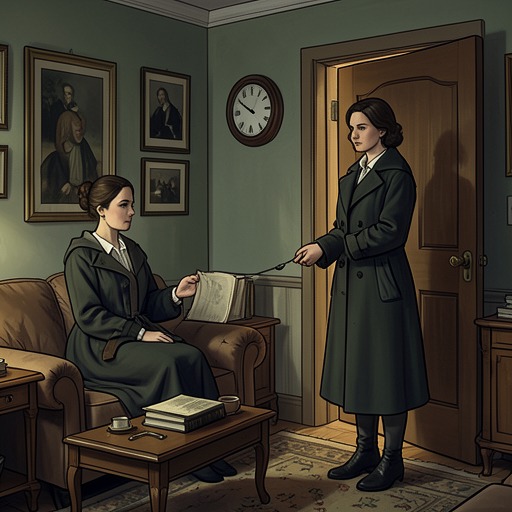
During a later confrontation, Anna turns to the portrait when she argues that someone had been in her house and that she has proof. Ethan Russell is holding Punch when Anna asks him to bring the drawing. Val Norelli objects to involving him, but Ethan approaches with the cat and the scrap of paper and hands it to Anna in a ceremonious manner. The scene shifts the drawing from private keepsake to an object displayed before other people.
Anna identifies it as a portrait Jane drew for her at the table. Detective Little recognizes the depicted person as Anna, and Anna answers that Jane’s presence in the house is what the portrait proves. Little’s recognition confirms the identity of the sitter; it does not, in this exchange, independently establish who drew the image or when. The distinction between what the drawing visibly depicts and what Anna says it proves is central to the disagreement that follows.
Alistair responds that the drawing proves nothing and accuses Anna of fabricating evidence, asserting that she drew it herself. The portrait’s physical existence therefore does not settle the dispute. Anna sees the signature and image as corroboration of her memory; Alistair recasts the same object as something Anna could have produced. In the available exchange, that accusation is not resolved by a further examination of the paper or signature.
Narrative Function
The portrait makes an uncertain memory concrete without making it indisputable. Its recognizable likeness, remembered signature, and place among Anna’s household things give her a specific object to present when her account is challenged. Yet the confrontation shows the limits of that material support: the drawing can be seen and recognized as Anna, while its authorship and evidentiary meaning remain disputed.
Its movement between settings gives it a compact narrative arc. First it is hidden among folded napkins and resurfaces by chance; then it opens Anna’s recollection of Jane’s visit; finally it is carried into a confrontation where other people interpret it differently. Each change of setting changes what the portrait can do. It begins as a keepsake, becomes a prompt to remember, and ends as contested evidence—an object that strengthens Anna’s insistence without compelling agreement.