Parental protection and love
The Woman in the WindowParental protection and love appear in the novel not as an abstract ideal but as an attachment made visible under pressure: a child calling for a parent, a mother acting violently to prevent a perceived threat, and Anna Fox reconsidering what protection means after recognizing that instinct in herself. The episodes connect care with bodily vulnerability and loss, while refusing to make every protective act harmless or uncomplicated.
A child’s call and a mother’s presence
In the aftermath of the gorge crash, the memory of Olivia being carried onto a stretcher gives parental attachment a small, concentrated expression. Wrapped in a blanket, she whispers “Mommy.” The word does not undo the catastrophe around her, but it marks a living connection at the moment when that connection is most precarious. Olivia’s appeal makes motherhood legible through recognition and need rather than explanation.
The surrounding circumstances sharpen the contrast between survival and loss. The account measures thirty-three hours from the car going off the road until a helicopter appears overhead. Olivia is reported to have still been alive when rescuers reached Anna Fox, while Ed was already dead; his body had cooled in the snow, and the explanation given to Anna is internal injury compounded by exposure. Against that finality, Olivia’s whisper remains a sign of attachment, but not a promise that love can prevent death or restore the family Anna has lost.
Protection as action and danger
A second, more disturbing example emerges when Ethan Russell recounts the confrontation between his parents and a woman who claimed a bond with him. Ethan had been in his room while his father wanted to call the police and the woman insisted that she was his son and should be allowed to see him. His mother shouted that she would make sure the woman never saw him again. The argument then fell quiet; when Ethan went downstairs a minute later, he found the woman on the floor.
Ethan identifies his mother as the person who stabbed her, using a letter opener. He explains that his mother feared someone else would take him away and said she would not let the woman hurt him again. The sequence places protective love beside an act of serious violence: the mother’s stated purpose is to keep her child safe, yet the means she chooses leaves Ethan with a traumatic memory of the scene. The narrative does not need to turn that act into a simple proof of devotion. Its force lies in the collision between the fear of losing a child and the irreversible harm committed in the name of preventing that loss.
Anna’s recognition of maternal instinct
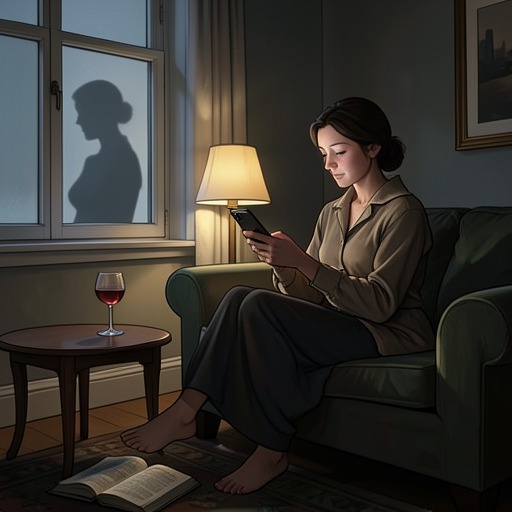
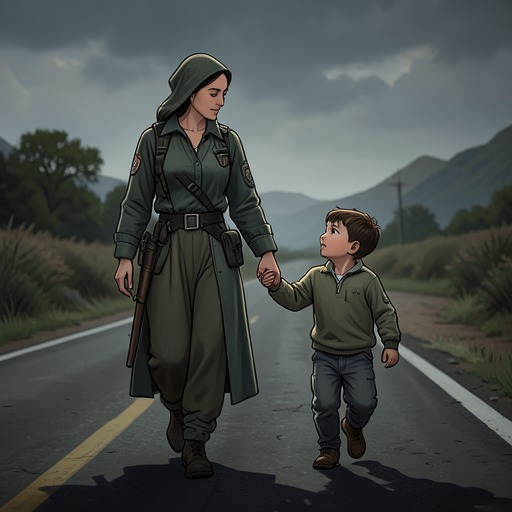
As Ethan weeps through the account, Anna Fox first registers that she had misunderstood what happened. She then thinks of Jane Russell, the real Jane, and of a mother-lion instinct: the same impulse, she recognizes, that possessed her in the gorge. The comparison links two distinct crises without making them identical. One is a mother’s violent attempt to prevent someone from taking Ethan; the other is Anna’s own experience of parental protectiveness amid the crash that took Olivia and Ed from her life.
That recognition changes how Anna listens to Ethan. His mother’s actions are no longer only an alarming disclosure about what happened in the house; Anna can also understand the fear of separation behind them because she has encountered a comparable protective impulse in herself. The text presents that understanding through a shift in attention—from the act and its horror to the vulnerable bond the mother believed she was defending. It does not erase the violence or establish that the mother’s judgment was right. Instead, it makes room for motive and consequence to remain in view together.
Protection, family, and connection
Later, Anna urges Ethan to reconsider Alistair Russell’s decision to keep him and Anna apart. She suggests that Alistair was afraid for Ethan as well as for her, and that taking Ethan home had saved him. Her appeal is rooted in the possibility that separation may have been intended as protection, not simply rejection. She tells Ethan that his parents love him and deserve to keep protecting him, and she reaches toward his shoulder as she speaks.
The gesture does not produce an immediate reconciliation. Ethan jerks away before Anna can touch him, and she feels that she has lost him. That interruption matters: care offered by one person cannot compel trust from another, especially in a conversation shaped by childhood trauma. Anna also tells Ethan that what happened to him when he was young was not his fault, but the reassurance is followed by his rejection of what he calls her talk. The scene therefore holds parental love and its limits together. Protection may be real, and a child may deserve it, while the work of understanding, trusting, and reconnecting remains uncertain.
Across these moments, the concept is defined by relationships under threat rather than by perfect outcomes. Olivia’s whispered address, Ethan’s account of his mother, Anna’s recognition of the instinct in the gorge, and her later plea that Ethan accept his parents’ love each show a different face of protection. The novel sets those gestures against death, violence, trauma, and withdrawal, making love consequential without presenting it as a guarantee that harm can be prevented or repaired.