
The Wonderful Wizard of Oz
The Wonderful Wizard of Oz is a landmark children's fantasy novel written by American author L. Frank Baum and illustrated by W. W. Denslow. First published on September 1, 1900, by the George M. Hill Company, it is the first book in the Oz series and is widely regarded as America's first modern fairy tale. The story has become a cornerstone of children's literature, beloved for its imaginative world, memorable characters, and enduring themes of home, friendship, and self-discovery.
The plot follows Dorothy Gale, a young orphaned girl living with her Aunt Em and Uncle Henry on a bleak Kansas farm. When a cyclone sweeps across the prairie, Dorothy and her little dog Toto are carried away, house and all, to the magical Land of Oz. The house lands on and kills the Wicked Witch of the East, freeing the Munchkins from her tyranny. Grateful for Dorothy's accidental deed, the Good Witch of the North gives her the dead witch's silver shoes and advises her to travel to the Emerald City to seek help from the great Wizard of Oz, the only one powerful enough to send her back to Kansas. Along the yellow brick road, Dorothy meets three companions: the Scarecrow, who believes he lacks a brain and desires intelligence; the Tin Woodman, who wishes for a heart to feel love and compassion; and the Cowardly Lion, who seeks courage to overcome his perpetual fear. Together, they journey toward the Emerald City, facing numerous obstacles such as the dense dark forest, a river crossing, and attacks from the Wicked Witch of the West, who desires Dorothy's silver shoes. Upon reaching the Emerald City, the Wizard appears as a giant floating head and demands that they kill the Wicked Witch of the West before he will grant their wishes. The four friends set out to confront the Witch, who uses her winged monkeys, wolves, and crows against them. Eventually, Dorothy destroys the Witch by throwing a bucket of water on her, causing her to melt. They return to the Emerald City, only to discover that the Wizard is a fraud—a mild-mannered old man from Omaha, Nebraska. He cleverly gives the Scarecrow a head full of bran and pins, the Tin Woodman a silk heart, and the Lion a potion of courage, but he fails to take Dorothy home. After a failed balloon attempt, Dorothy learns from the Good Witch of the South, Glinda, that the silver shoes have the power to take her anywhere. She clicks her heels together three times and is instantly transported back to Kansas, where she joyfully reunites with her family.
At its core, the novel explores profound themes. The most prominent is the idea of home: Dorothy's entire quest is driven by her desire to return, and she ultimately realizes that the power to go home was always within her reach. The Scarecrow, Tin Woodman, and Lion each seek qualities they already possess, highlighting the theme of self-discovery and the importance of believing in oneself. Friendship and teamwork are essential as the group supports one another through every trial. The book also subtly critiques authority and deception—the Wizard's facade and the Emerald City's green-tinted glasses symbolize how power can be manufactured and maintained through illusion.
Baum wrote The Wonderful Wizard of Oz with the intention of creating a modern fairy tale that would entertain without the gruesome violence found in older European fairy tales. He drew inspiration from his own life: his childhood illnesses, his love of fantasy, his experiences living in various American landscapes, and his exposure to the women's suffrage movement through his mother-in-law, Matilda Joslyn Gage. The tornado, the yellow brick road, and the Emerald City may have been influenced by the Kansas prairie, the gold standard debate, and the 1893 Chicago World's Columbian Exposition, respectively.
The book was an immediate success, selling over 90,000 copies within two years. It established Baum as a major children's author and led to thirteen sequels, a Broadway musical, and countless adaptations. Its most famous adaptation is the 1939 MGM musical film starring Judy Garland, which became a cultural phenomenon, introducing iconic songs and characters to a global audience. The novel has been interpreted as a political allegory for late 19th-century American populism, a feminist narrative, and a psychological journey. Today, it remains a staple of school curricula and popular culture, with the phrase "There's no place like home" ingrained in the collective consciousness. The Wonderful Wizard of Oz continues to inspire readers of all ages with its timeless message that the qualities we seek are often already within us, and that the journey to find them is what makes us whole.
About the Author
L. Frank Baum (born Lyman Frank Baum on May 15, 1856, in Chittenango, New York) was a prolific American author best known for writing The Wonderful Wizard of Oz and its thirteen sequels. His father, Benjamin Ward Baum, started as a cooper and later struck oil in Pennsylvania, amassing a fortune that allowed the family to live comfortably. Young Frank, as he preferred to be called, was a sickly child with a weak heart, which made him shy and introverted. He was homeschooled and spent most of his time reading in his father's library, developing a deep love for fairy tales and fantasy. However, his parents grew concerned about his excessive daydreaming and sent him to a military academy, hoping to instill discipline. The harsh regimen only worsened his mental health, leading to a breakdown, and he was eventually allowed to return home to pursue his own interests.
Baum never attended college; instead, he educated himself through voracious reading and practical experience. In his twenties, he tried his hand at various occupations: he worked as a journalist, a traveling salesman, a theater actor and manager, and even a newspaper editor. In 1882, he married Maud Gage, the daughter of prominent suffragist Matilda Joslyn Gage. The couple had four sons, Frank Joslyn, Robert Stanton, Harry Neal, and Louis Francis. Financial struggles plagued Baum throughout his early adulthood; he failed in business ventures such as a dry goods store and a newspaper in the Dakota Territory, but he never stopped writing. His first book, Mother Goose in Prose (1897), was a collection of nursery rhymes rendered as short stories, and it introduced the character of a farm girl named Dorothy in its final chapter. In the preface, Baum declared his intention to write modern fairy tales that would not frighten children as the Brothers Grimm's stories did. The success of his next book, Father Goose: His Book (1899), a collection of nonsense rhymes, finally gave him the financial stability and popular recognition he needed.
The creation of The Wonderful Wizard of Oz came about almost by accident. One evening, while telling a story to his sons, Baum was struck by a sudden inspiration and scribbled down the idea of a fairy tale set in a land called Oz. He self-funded the illustrations by W. W. Denslow, and the book was published by the George M. Hill Company in 1900. It became an instant bestseller, selling over 90,000 copies in two years and prompting Baum to write a series of sequels. Over the next two decades, he produced Oz books such as The Marvelous Land of Oz (1904), Ozma of Oz (1907), Dorothy and the Wizard in Oz (1908), and The Emerald City of Oz (1910), among others. The final Oz book, Glinda of Oz, was published posthumously in 1920. In addition to the Oz series, Baum wrote under several pseudonyms, including Edith Van Dyne (for the Aunt Jane's Nieces and Mary Louise series), Floyd Akers (for boy's adventure stories), Schuyler Staunton (for two adult novels), and others. In total, he published over sixty books, many of which were aimed at children and young adults.
In 1910, Baum and his family moved to Hollywood, California, where he built a house they called "Ozcot." He continued to write and also attempted to produce films, but his health declined. He suffered from a series of strokes and died on May 6, 1919, at the age of 62. He was buried at Forest Lawn Memorial Park, and his simple gravestone reads only "Frank Baum, 1856-1919." Baum's legacy is immense: he is credited with creating the first truly American fairy tale, one that has become a global cultural touchstone. The 1939 film adaptation of The Wonderful Wizard of Oz, starring Judy Garland, is one of the most beloved movies of all time, introducing the story to millions who might never have read the book. Baum's influence extends to virtually every modern fantasy writer, and his characters—Dorothy, the Scarecrow, the Tin Woodman, and the Cowardly Lion—are instantly recognizable symbols of adventure and self-discovery. Despite his financial struggles and personal hardships, Baum's imaginative spirit and dedication to writing happy, hopeful stories continue to inspire readers of all ages.
StoryFlow
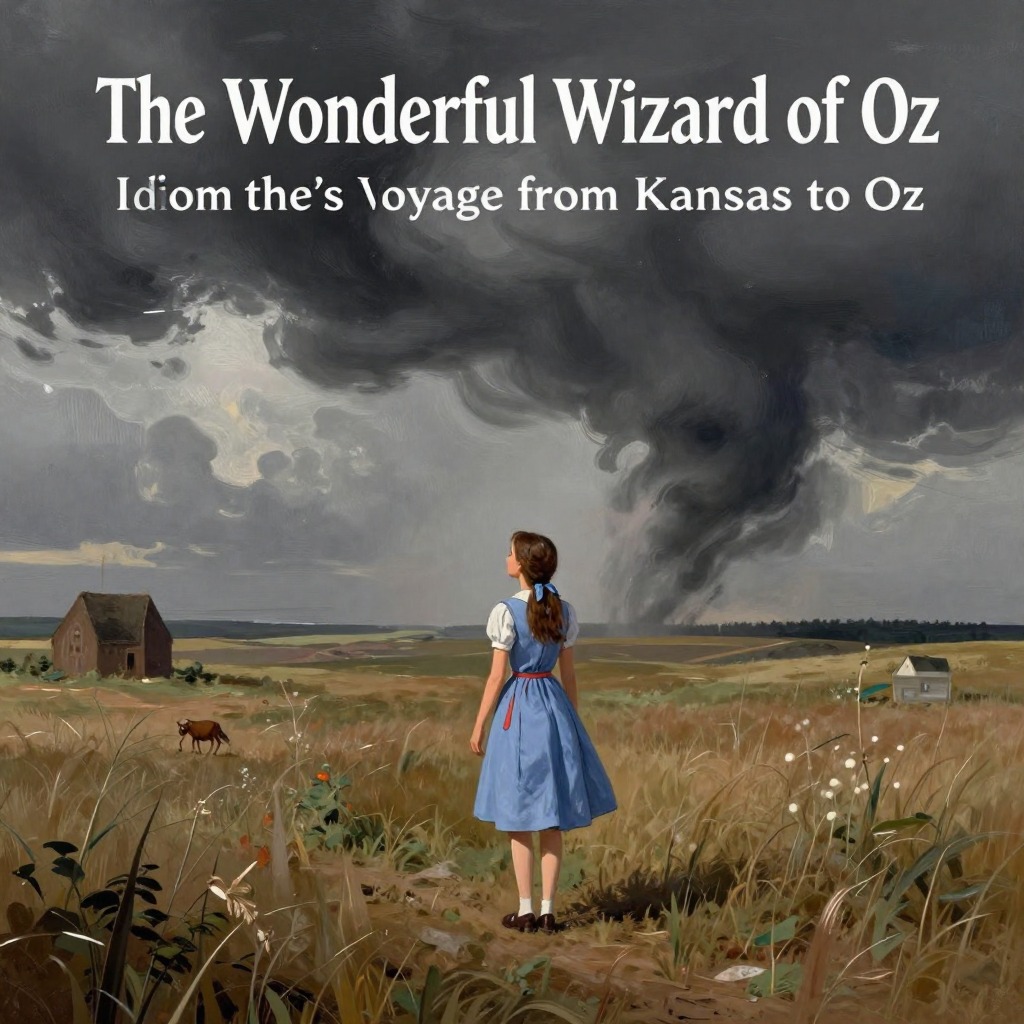
Dorothy's Voyage from Kansas to Oz
Dorothy is swept away by a cyclone from the gray Kansas prairie to the magical Land of Oz, beginning her quest to return home.
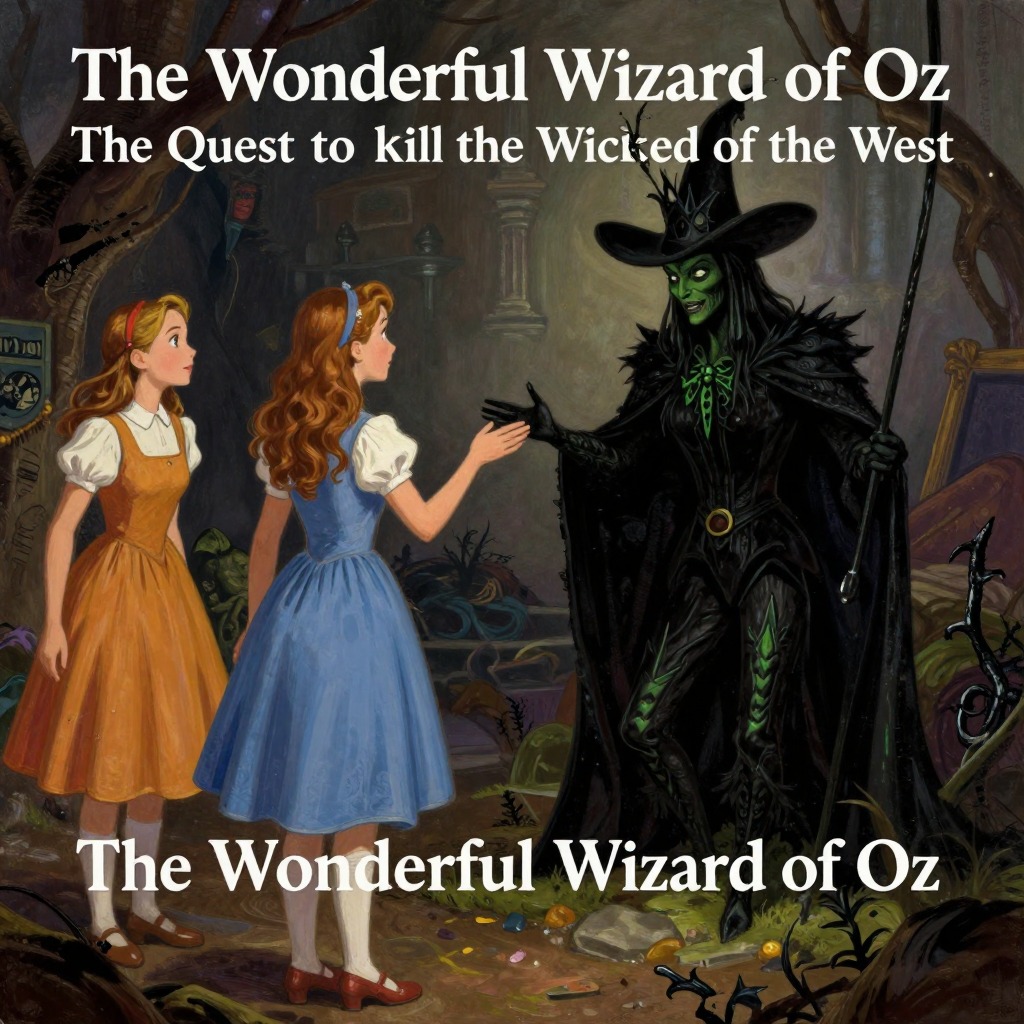
The Quest to Kill the Wicked Witch of the West
Oz sets an impossible task for Dorothy and her friends: destroy the Wicked Witch of the West in exchange for their wishes.
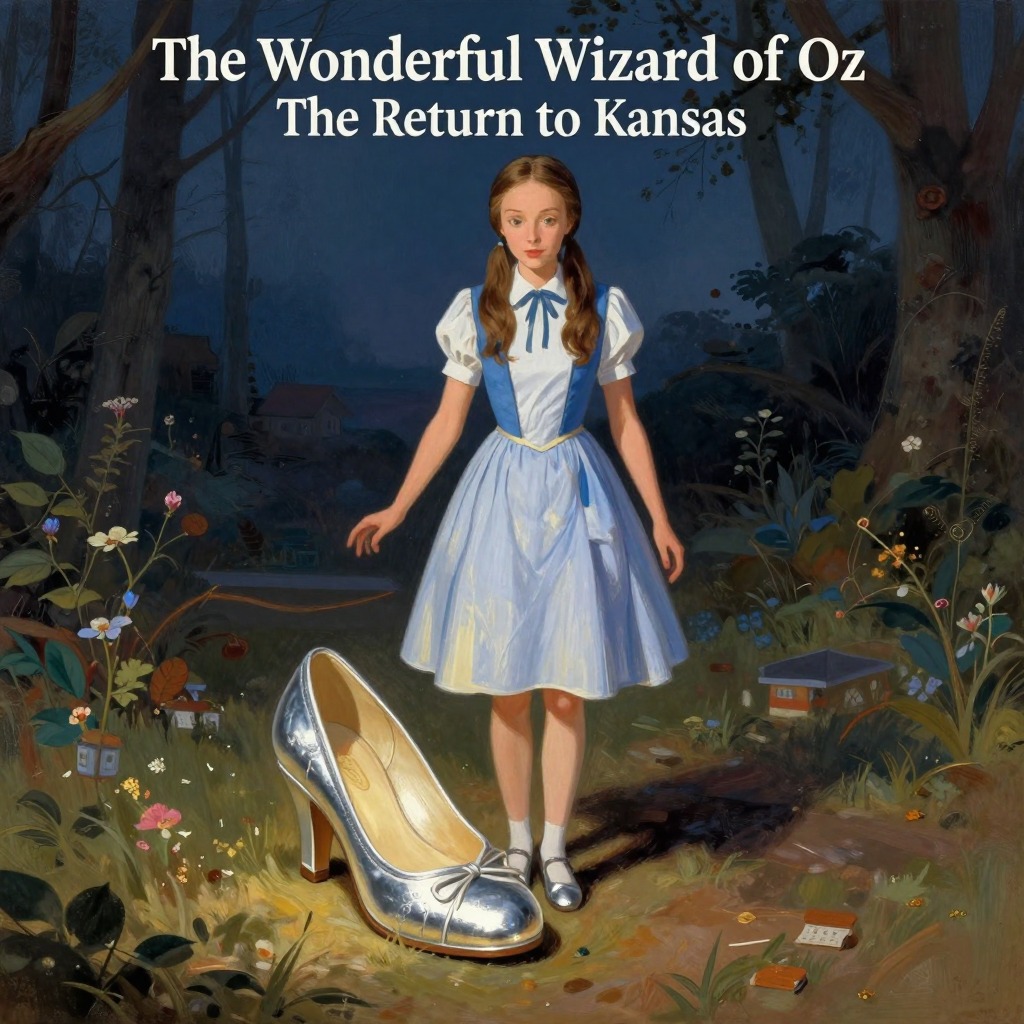
The Return to Kansas
After discovering Oz's true nature, Dorothy ultimately finds her way home through the power of the Silver Shoes.
