Heart
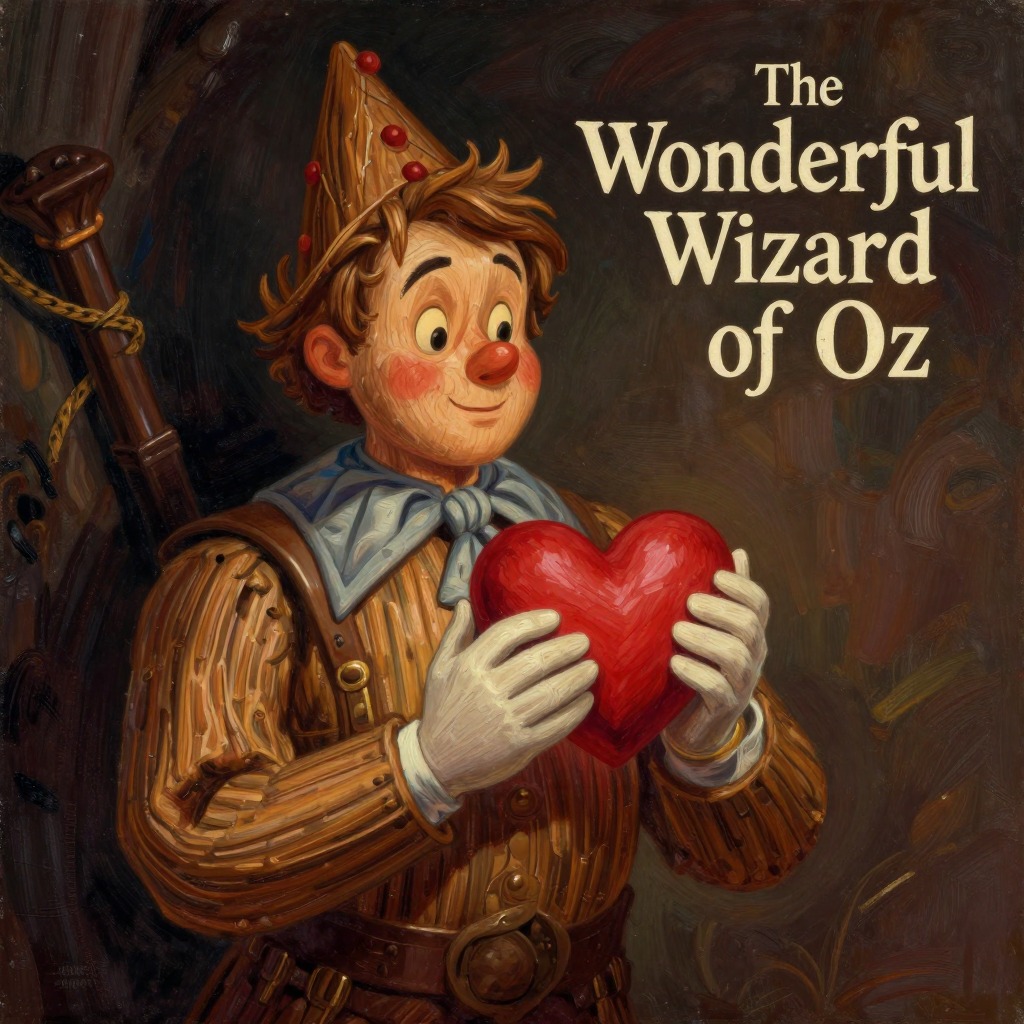
The Wonderful Wizard of OzThe Heart is the object of the Tin Woodman's quest in The Wonderful Wizard of Oz, and its pursuit becomes one of the story's central emotional and thematic engines. More than a mere organ, the Heart stands for the capacity to love, to feel compassion, and to be fully alive—qualities the Tin Woodman believes he has lost and desperately wants to regain. His journey to obtain a heart from the Wizard Oz parallels the Scarecrow's search for brains and the Cowardly Lion's search for courage, and together these three quests form the moral and psychological core of the narrative.
The Tin Woodman's Loss and Longing
The Tin Woodman's desire for a heart is born from a specific, tragic history. He was once a flesh-and-blood woodchopper who loved a beautiful Munchkin girl and planned to marry her. The Wicked Witch of the East, enraged by his happiness, enchanted his axe so that it successively chopped off his legs, arms, head, and finally split his body in two. Each time, a tinsmith replaced the lost part with tin, until the Woodman was entirely made of metal. But when his body was replaced, he lost his heart—and with it, all his love for the Munchkin maiden. "While I was in love I was the happiest man on earth," he tells Dorothy and the Scarecrow, "but no one can love who has not a heart, and so I am resolved to ask Oz to give me one." His story frames the heart not as a biological necessity but as the seat of emotional life, the very thing that makes connection and happiness possible.
The Quest for the Heart
The Tin Woodman joins Dorothy's party specifically to ask Oz for a heart. When he finally gains an audience with the Wizard, Oz appears to him as a terrible Beast—a form that frightens the Woodman not at all, since he has no heart to beat with fear. Oz sets the same condition he gave Dorothy and the Scarecrow: the Woodman must help kill the Wicked Witch of the West before his wish will be granted. Throughout the subsequent dangers—the wolves, the crows, the bees, the Winged Monkeys—the Tin Woodman acts with courage and kindness, even though he believes he lacks the emotional core that would make those actions meaningful. He is careful never to harm any living creature, stepping over ants and weeping when he accidentally kills a beetle, rusting his jaws with his tears. "You people with hearts," he says, "have something to guide you, and need never do wrong; but I have no heart, and so I must be very careful." His behavior suggests that the heart he seeks may already be present in his actions, even if he cannot feel it.
The Bestowal of the Heart
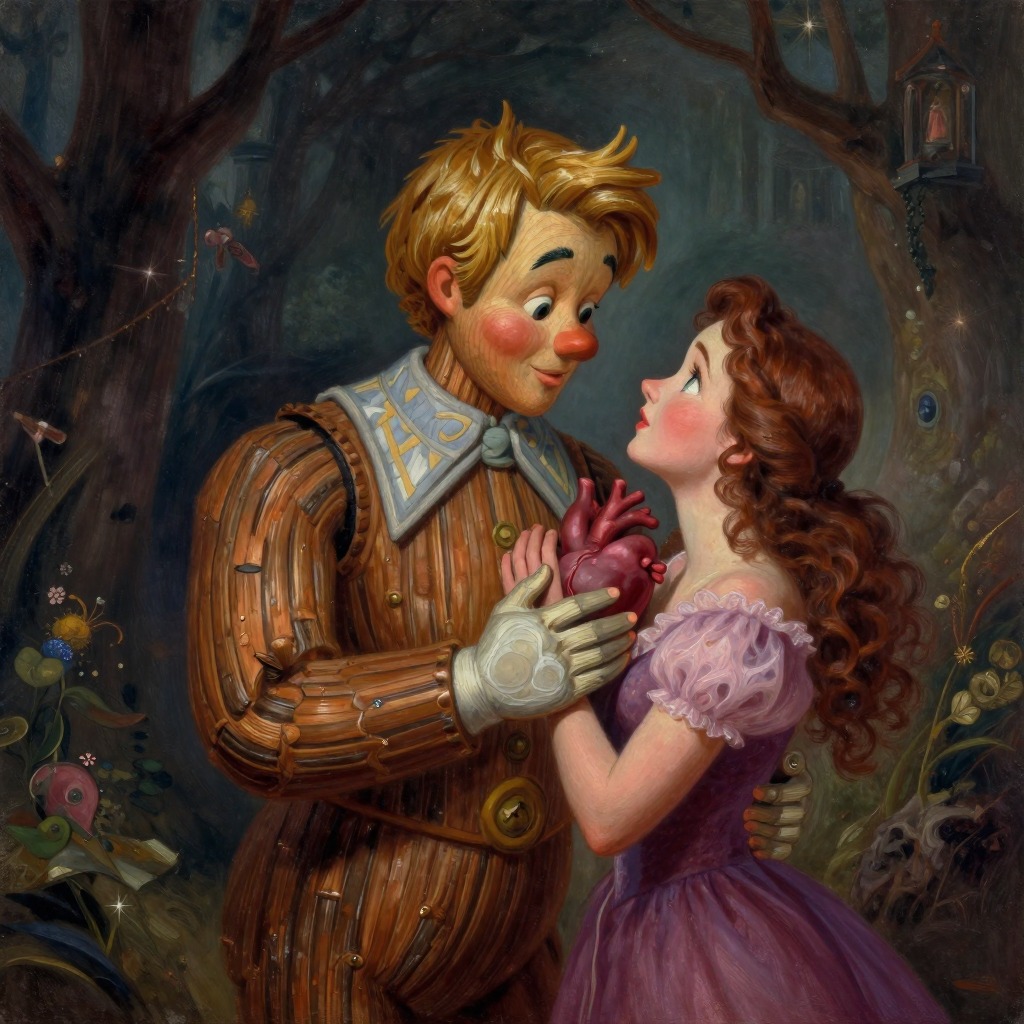
After the Wicked Witch is melted, the travelers return to the Emerald City and discover that Oz is not a wizard at all, but a humbug—a common man from Omaha who has been deceiving everyone with elaborate tricks. Despite his confessed powerlessness, Oz agrees to give each companion what they desire. For the Tin Woodman, he cuts a square hole in the left side of his tin breast with a pair of tinsmith's shears and inserts a heart made entirely of silk and stuffed with sawdust. "Isn't it a beauty?" Oz asks. The Woodman is overjoyed, and when he walks about afterward, he feels his new heart rattling around inside him. He tells Dorothy that it is "a kinder and more tender heart than the one he had owned when he was made of flesh." The irony is unmistakable: the heart is a literal sham, a crafted object with no biological function, yet it produces in the Tin Woodman exactly the emotional experience he had been missing.
The Heart's Thematic Significance
The Tin Woodman's heart—artificial, bestowed by a fraud, yet genuinely felt—embodies the book's central paradox about the nature of desire and fulfillment. Oz himself admits that the Woodman is "wrong to want a heart" because "it makes most people unhappy," but the Woodman insists, "I will bear all the unhappiness without a murmur, if you will give me the heart." The story suggests that what matters is not the objective reality of the thing desired, but the subjective experience it enables. The Tin Woodman, who had already been acting with more kindness and care than any character with a natural heart, becomes fully himself only when he believes he possesses one. His heart, like the Scarecrow's brains and the Lion's courage, is a gift of confidence rather than of substance—a lesson in the power of belief and the importance of the quest itself. At the story's end, Glinda the Good Witch tells the Tin Woodman that he is "really brighter than [the Scarecrow] is—when you are well polished," and he returns to rule the Winkies, his rattling heart a constant reminder that feeling, even when it comes from a silk-and-sawdust source, is real enough to live by.