Full speed in fog
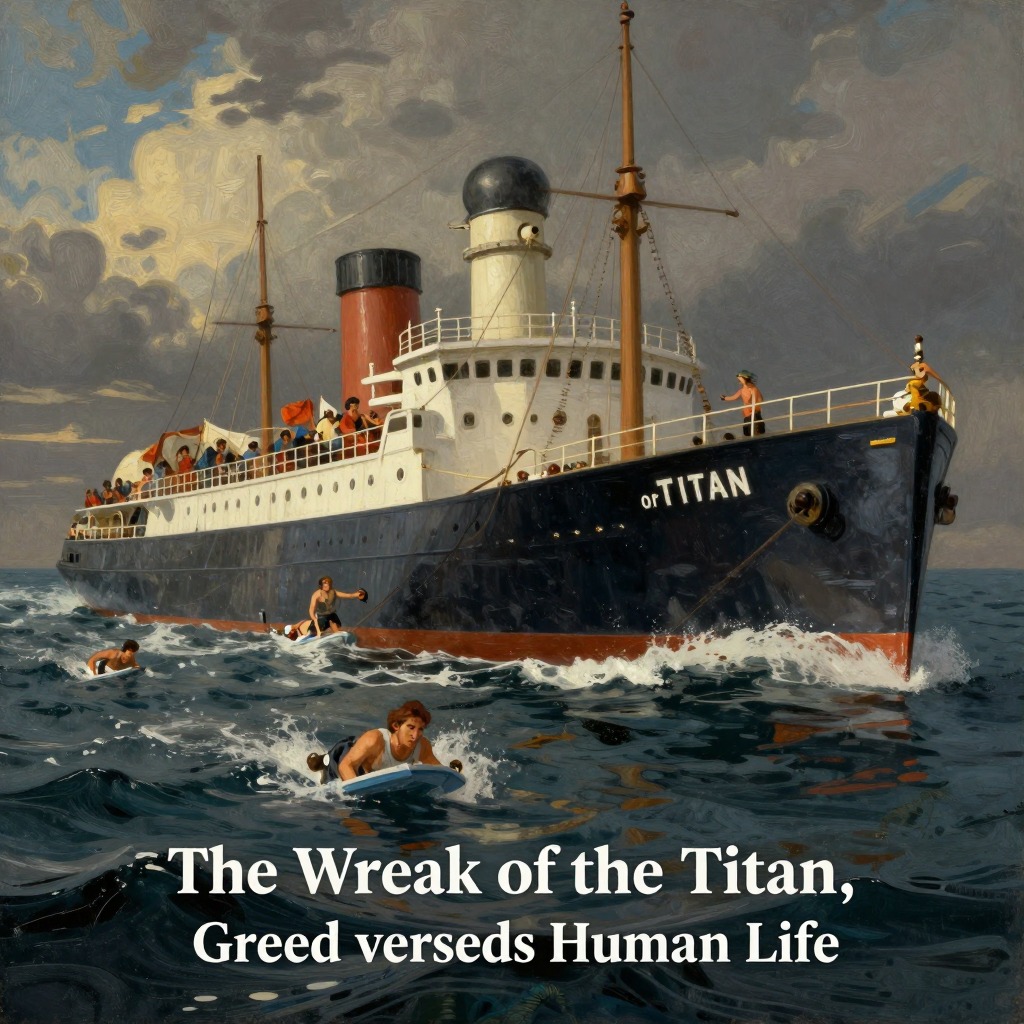
The Wreck of the Titan, or FutilityFull speed in fog is the operational rule adopted by the steamship company for the Titan, mandating that she steam at full speed in fog, storm, and sunshine on the Northern Lane Route, winter and summer. This policy, justified by four stated reasons, directly causes the collision with the Royal Age and the iceberg disaster, and becomes the central object of moral and legal critique in the novella.
The Rule and Its Rationale
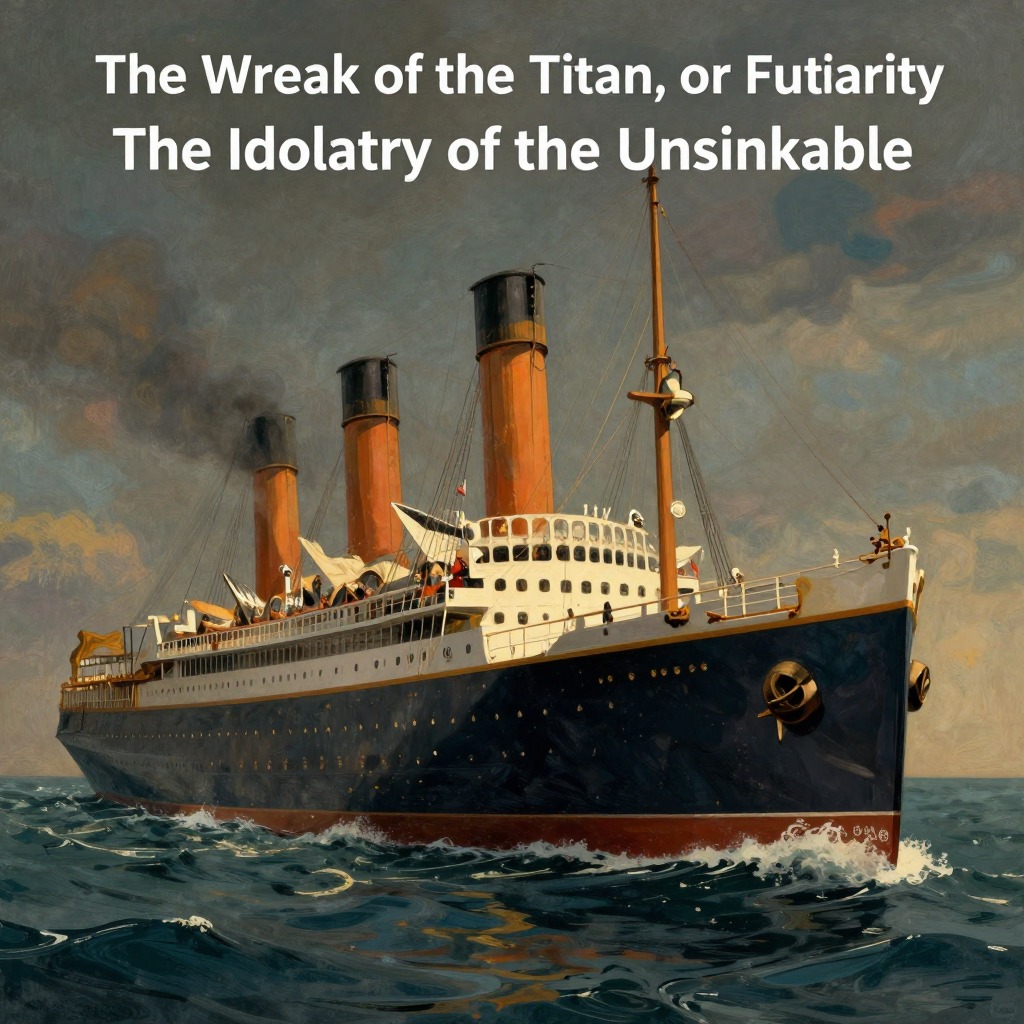
The rule was announced by the steamship company to apply to the Titan, a vessel described as the largest craft afloat and the greatest of the works of men. The company's justification rested on four reasons. First, if another craft should strike her, the force of the impact would be distributed over a larger area if the Titan had full headway, and the brunt of the damage would be borne by the other. Second, if the Titan was the aggressor she would certainly destroy the other craft, even at half-speed, and perhaps damage her own bows; while at full speed, she would cut her in two with no more damage to herself than a paintbrush could remedy. In either case, as the lesser of two evils, it was best that the smaller hull should suffer. A third reason was that, at full speed, she could be more easily steered out of danger. A fourth, that in case of an end-on collision with an iceberg — the only thing afloat that she could not conquer — her bows would be crushed in but a few feet further at full than at half speed, and at the most three compartments would be flooded — which would not matter with six more to spare.
The rule was grounded in the ship's supposed invincibility. The Titan was built of steel throughout, carried no combustible cargo, and had ninety-two doors of nineteen water-tight compartments that could be closed in half a minute; with nine compartments flooded the ship would still float, and so no known accident of the sea could possibly fill this many. She was eight hundred feet long, of seventy thousand tons displacement, seventy-five thousand horse-power, and on her trial trip had steamed at a rate of twenty-five knots an hour over the bottom. She was considered practically unsinkable, and the rule of full speed in fog was a direct expression of that confidence.
The Rule in Operation: Collision with the Royal Age
The rule was put into practice on the Titan's third return trip. On the first night out from New York, the ship plunged into a fog-bank in the afternoon and continued charging with undiminished speed. At a quarter past twelve, the lookout in the crow's-nest reported a ship on the starboard tack dead ahead. The first officer ordered the wheel hard aport, but before three degrees on the compass card were traversed, the square sails of a deep-laden ship appeared, crossing the Titan's bow, not half her length away. The first officer, instead of turning the engine-room telegraph, crouched down, awaiting the crash. There was hardly a crash; a slight jar shook the forward end, and the Titan cut the other ship in two, her two halves sliding past in the darkness. From one half came a sailorly voice: "May the curse of God light on you and your cheese-knife, you brass-bound murderers." The first officer had not turned the lever of the engine-room telegraph; the Titan swung back to her course, and the collision was concealed.
The Rule's Fatal Consequence: Iceberg Collision
The rule's most devastating consequence came the following night. The Titan, still at full speed in fog, struck an iceberg. The impact was not against a perpendicular wall but a low beach, possibly formed by the recent overturning of the berg. The ship rose out of the sea, higher and higher, until the propellers in the stern were half exposed, then heeled, overbalanced, and crashed down on her side. The holding-down bolts of twelve boilers and three triple-expansion engines snapped, and the giant masses of steel and iron punctured the sides of the ship, filling the engine and boiler-rooms with scalding steam, which brought a quick, though tortured death to each of the hundred men on duty. The Titan floated low on her side, a dying monster, groaning with her death-wound. Rowland, who had been drugged and placed on lookout, was on the bridge with the child Myra; he survived on the iceberg, but the ship sank with nearly all of her people.
Critique and Legal Repercussions
The rule became the focus of moral and legal critique. Rowland, in his confrontation with the captain after the Royal Age collision, declared that he would speak of the "wholesale murder" at the first opportunity, hoping to arouse such a sentiment of anger in the two countries as would forever end this wanton destruction of life and property for the sake of speed. He later argued that the cause of the wreck was full speed in a fog, and that all hands on lookout could not have seen the berg. In the legal confrontation at Lloyds, Rowland refused to testify against the insurance claim, reasoning that the underwriters knew the speed and took the risk; let them pay. The magistrate at Rowland's trial in New York noted that the offense was committed on the high seas under the English flag, and the charge was changed to vagrancy, then dismissed. The rule thus stands as the novella's central indictment of technological hubris and corporate greed, a policy that prioritized speed and profit over human life.