John Rowland's alcoholism
The Wreck of the Titan, or FutilityJohn Rowland's alcoholism is a defining trait that shapes his fall from a promising naval officer to a degraded sailor, his vulnerability to the captain's drugging scheme, and his eventual redemption through sobriety, marking a central arc of personal decline and recovery in the novella. His drinking is both a symptom of his shattered love for Myra Selfridge and a tool used against him by his superiors, yet his final renunciation of alcohol becomes the cornerstone of his moral and social rehabilitation.
Identity and Background
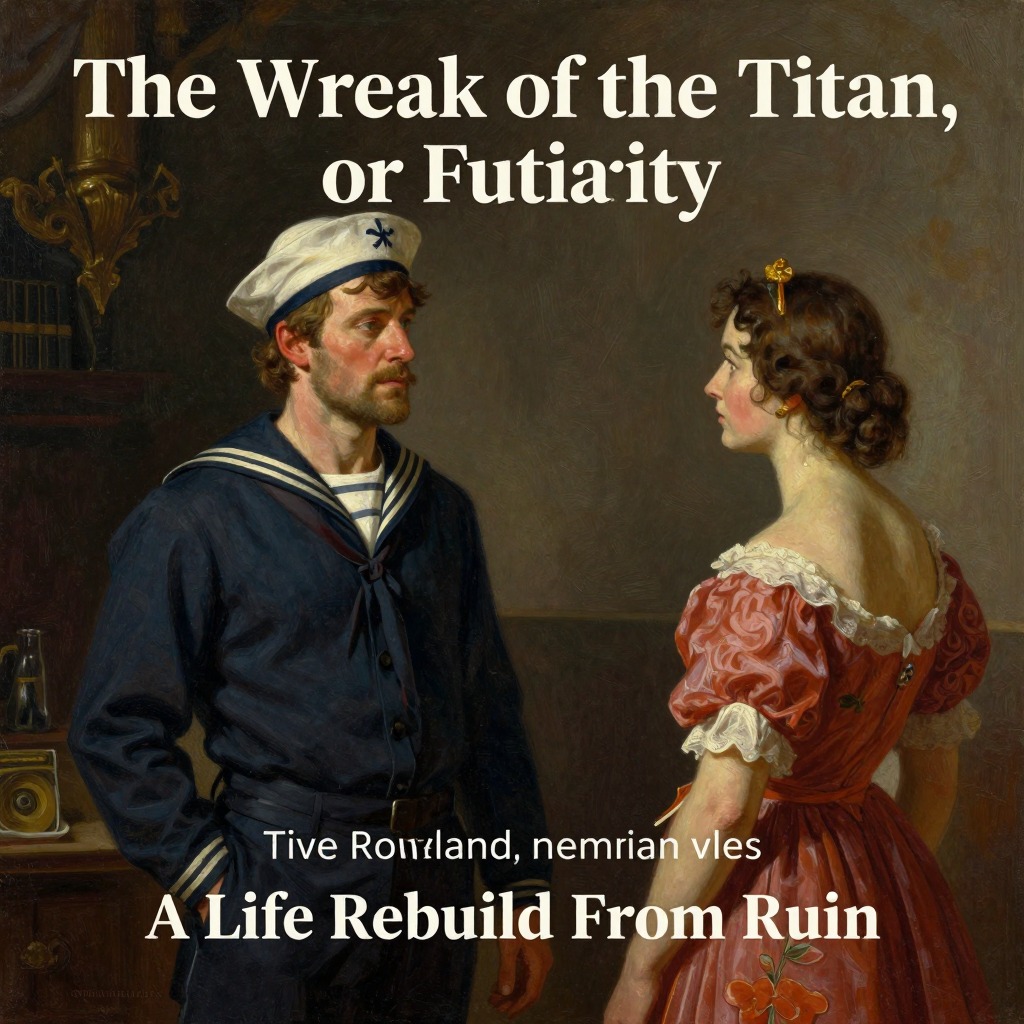
Rowland's alcoholism is introduced as a visible marker of his degradation. When he first appears on the deck of the Titan, he is described as a slight-built man of about thirty, black-bearded and bronzed to the semblance of healthy vigor, but watery-eyed and unsteady of movement. His condition is immediately linked to his past: he was once a graduate of the United States Naval Academy, a lieutenant in the navy, but was broken for conduct unbecoming an officer after getting roaring drunk at the President's levee. This disgrace, compounded by his rejection by Myra Gaunt, who found him an atheist and smelled liquor on his breath, drove him to the merchant service as a common sailor. His drinking is thus both a cause and a consequence of his social fall, a cycle that he himself recognizes when he mutters about "whisky nerves" and "the dying flutter of a starved love."
Life and Plot Trajectory
Rowland's alcoholism is a constant presence throughout the voyage. He is lifted aboard the Titan drunk the day before the collision with the Royal Age, and the first officer notes that he is still drunk when he is assigned to the crow's-nest lookout. His drinking makes him an easy target for the captain's scheme to discredit him: after Rowland refuses the bribe to stay silent about the collision, the captain plots to "fill him up" and study drugs, hoping to render his testimony worthless. Rowland finds a pint flask of whisky in his pea-jacket, which he suspects is drugged, but he later learns it was good whisky, a "leader" to warm his stomach while the captain studied. The actual drugging occurs later, when hasheesh is slipped into his tea, leading to his hallucinatory breakdown on the bridge. His alcoholism is thus exploited by his enemies, who see it as his "weak point."
Key Actions and Objectives
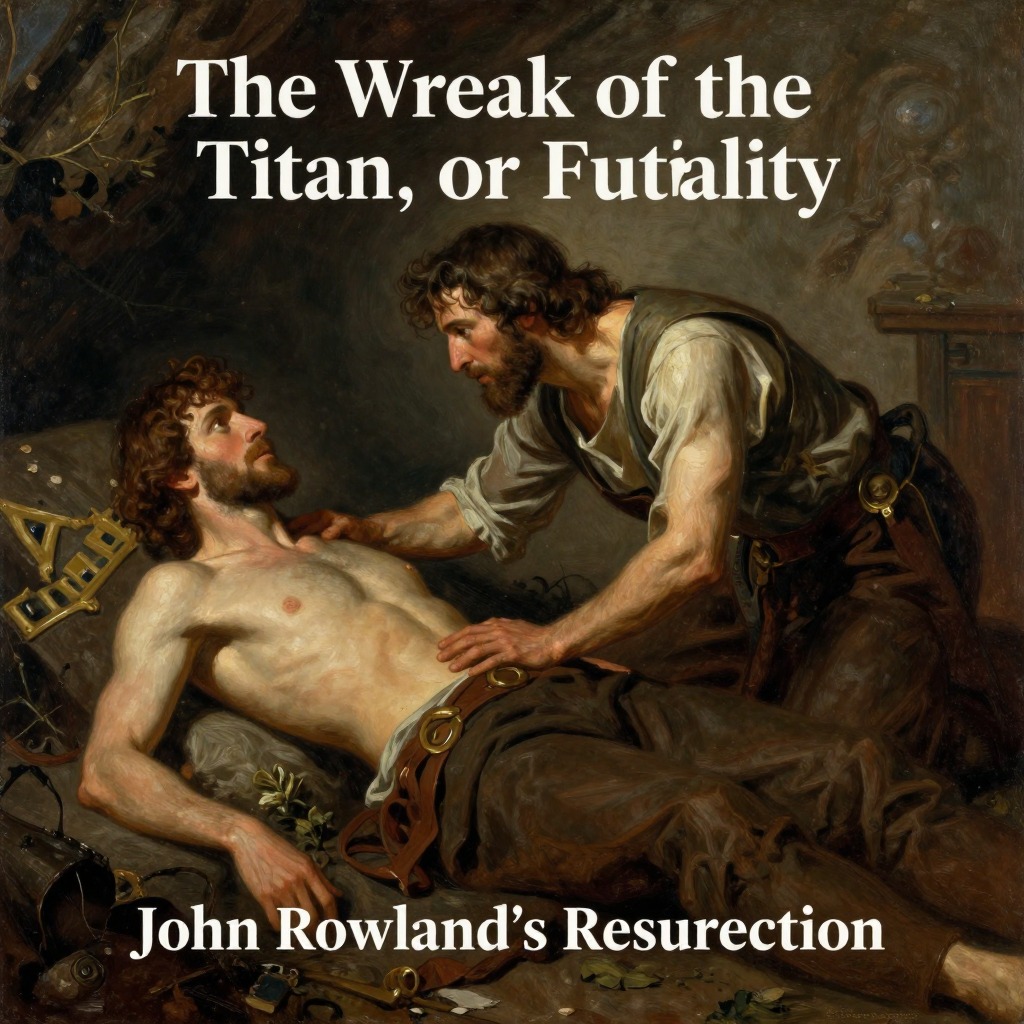
Despite his addiction, Rowland's actions reveal a man fighting against his own weakness. When the captain offers him whisky in the chart-room, Rowland refuses to drink with him, saying "I prefer drinking alone," a small act of defiance that underscores his pride. He saves the whisky from the wreck, intending to use it for survival on the iceberg, but he drinks it recklessly when fever sets in, and it is gone by the end of the first day. His delirium lasts three days, during which he is barely able to care for the child Myra. His recovery is attributed to the vigor of a constitution that years of dissipation had not impaired, or the anti-febrile property of bear-meat, or the absence of the exciting whisky. This marks a turning point: his survival on the ice is achieved without alcohol, and he emerges from the ordeal with a new resolve.
Relationships and Conflict
Rowland's alcoholism is a point of contention in his relationships. Myra Selfridge, who once liked him, gave him up when she smelled liquor on his breath, and she later describes him as having a "dissipated face" and having "fallen so low." The captain and first officer use his drinking against him, both in their attempt to drug him and in their later testimony that he was a drunkard on lookout. In contrast, Captain Barry, who rescues Rowland from the iceberg, becomes his friend and supporter, and it is Barry who later confronts him about his drinking, asking if he is going to begin again. Rowland's answer, "Never again," is a commitment that Barry's friendship helps to sustain.
Change and Ending
Rowland's sobriety is the key to his redemption. After the shipwreck, he is rescued by the bark Peerless, and his arm is amputated at Christiansand. He spends two months without a drink, and when Captain Barry asks if he will start again, he replies, "Never again. I've a future now, as well as a past." This resolve is tested and maintained as he rebuilds his life in New York. He begins as a dock lounger, fishing and trading to survive, then works as a tally clerk, then as an envelope addresser, and finally passes a Civil Service examination to secure a government position. His success is attributed to his sobriety and his ability to impress others with his gentlemanly demeanor. The novella ends with him receiving a letter from Myra Selfridge, asking him to come and see her daughter, and he goes, suggesting that his recovery has opened the door to a new life and possibly a reconciliation with the past.
Narrative Role and Evaluation
Rowland's alcoholism serves as a narrative device to explore themes of degradation, redemption, and the power of will. His drinking is both a personal flaw and a social marker, used by others to dismiss and exploit him. Yet his recovery is portrayed as a triumph of character, achieved through his own efforts and the support of a true friend. The novella uses his alcoholism to critique the hypocrisy of those who judge him, while also celebrating his ability to overcome it. His final sobriety is not just a personal victory but a moral one, allowing him to reclaim his identity as a gentleman and to look forward to a future that is his own.