Rowland's prayer
The Wreck of the Titan, or FutilityRowland's prayer is the spiritual and narrative fulcrum of the novella, the moment when a man who has built his identity on atheism and bitter rationalism breaks down and appeals to a God he has publicly denied. Stranded on an iceberg with the injured child Myra, he prays not for himself but for the little girl's life and for the safety of her mother, and his supplication is answered almost instantly by the appearance of a rescue ship. The scene crystallizes the book's central tension between materialist philosophy and the human need for faith, and it sets in motion Rowland's redemption from a life of alcoholism, disgrace, and despair.
Background and Character Context
Rowland's atheism is not a casual disbelief but a fiercely held intellectual position that he has defended in personal confrontations. Years earlier, when he was courting Myra Gaunt (later Mrs. Selfridge), she tried to convert him to Christianity, but he refused to be a hypocrite and expressed his "honest unbelief" . He told her that he would not pretend to believe in God to win her approval, and he ridiculed the idea of a loving, merciful deity. On the night of the Titan's wreck, while drugged with hasheesh and standing lookout on the bridge, he delivered a long, bitter monologue against the concept of a just God, arguing that the universe is governed only by cause and effect and the survival of the fittest . He declared that if a God existed, that God had given him his defects and his capacity for love, then placed Myra Gaunt in his path only to see him suffer—and that he owed no love or gratitude to such a being. This philosophical stance, hardened by years of disappointment and drinking, forms the background against which his prayer on the iceberg becomes a radical departure.
The Setting and the Crisis
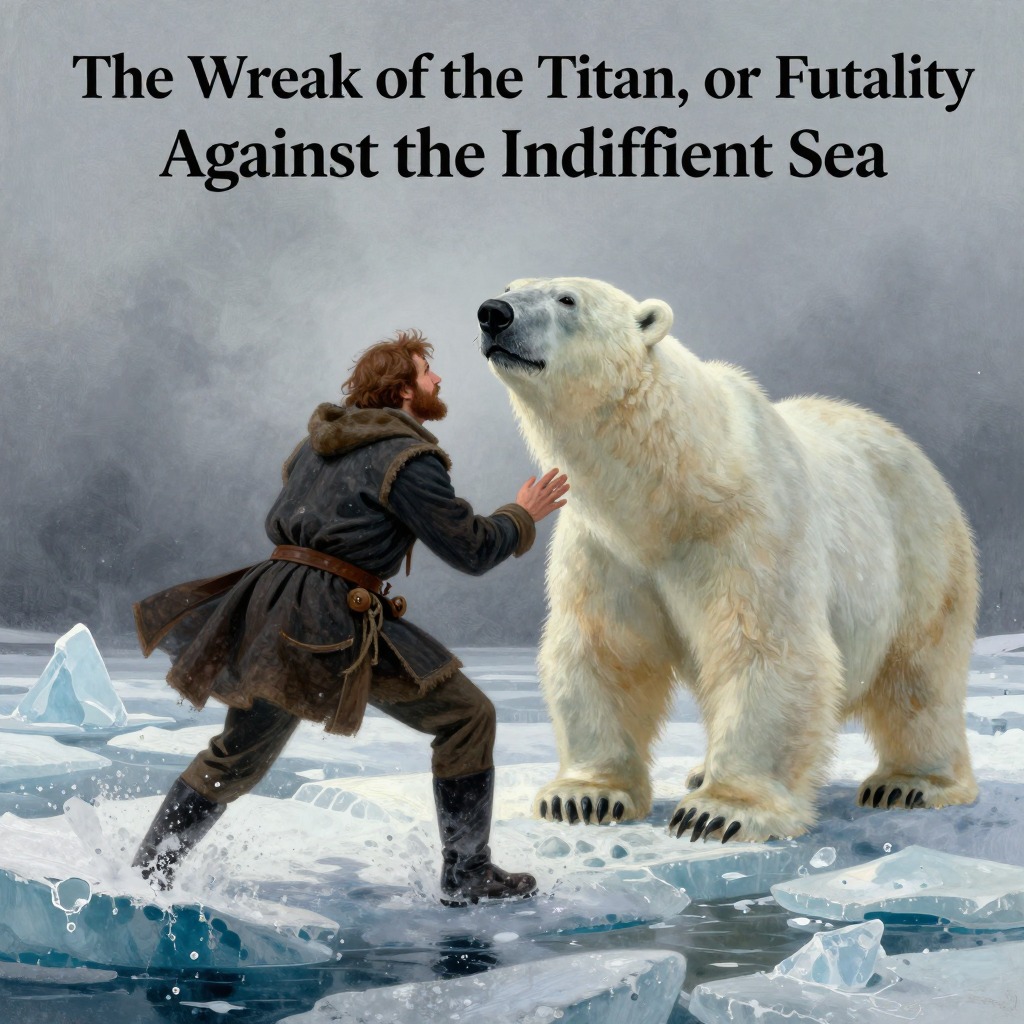
After the Titan's collision with the iceberg, Rowland finds himself stranded on a floating island of ice with the toddler Myra, whom he has rescued. He has just fought and killed a polar bear with a knife, suffering a crushed arm and broken ribs in the process . The child is bleeding from four deep claw wounds on her back, and Rowland, though himself in agony, has dressed her injuries as best he can with canvas and bear fat. By the third day, his fever has broken, but he is weak, alone, and without hope of rescue. The moon rises over the iceberg, casting an ashen-gray light on the cascades and pools of melting ice, and Rowland is overwhelmed by a crushing sense of loneliness and littleness—as though the vast pile of inorganic desolation is far more important than himself and all the hopes and plans of his lifetime . He paces the ice, tormented by the thought that the mother of the child may have drowned, and he curses the steamship company for its greed and negligence.
The Prayer Itself
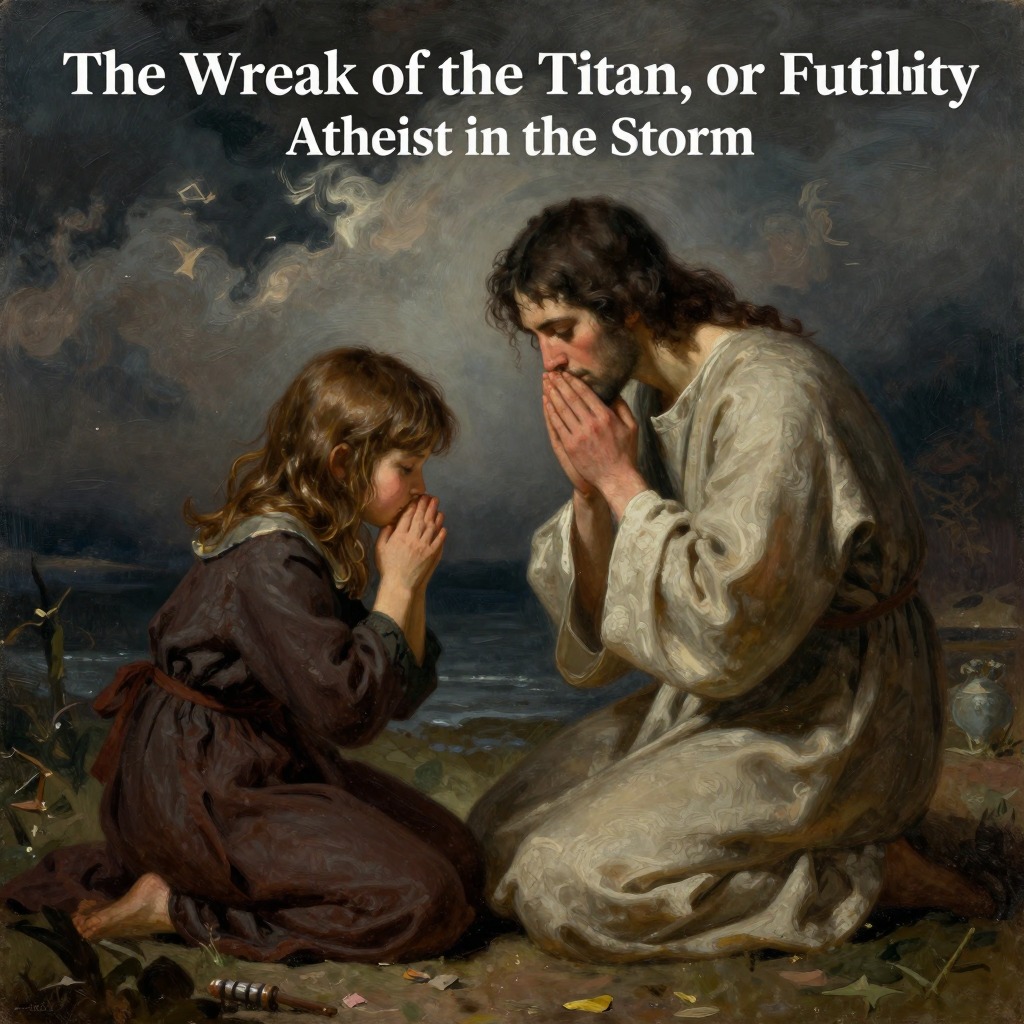
In this state of utter helplessness, Rowland walks softly to the boat where the child is sleeping, looks at her for a moment, and then raises his head and whispers: "For you, Myra" . Sinking to his knees, the atheist lifts his eyes to the heavens and, with his feeble voice and the fervor born of helplessness, prays to the God that he has denied. He begs for the life of the waif in his care, for the safety of the mother so needful to the little one, and for courage and strength to do his part and bring them together. But beyond this appeal for help in the service of others, not one word or expressed thought of his prayer includes himself as a beneficiary. So much for pride, the narrator observes . As he rises to his feet, the flying-jib of a bark appears around a corner of ice, and a moment later the whole moonlit fabric comes into view, not half a mile away. The ship is the Peerless, and it takes him and the child to safety.
Consequences and Aftermath
The prayer is answered with such immediate and dramatic timing that Rowland himself is left to wonder. As he watches the approach of the rescue boat, he mutters: "That bark was there—half a mile back in this wind—before I thought of praying. Is that prayer answered? Is she safe?" . The question is never resolved in the text, but the event changes Rowland's trajectory. He is rescued, taken to Christiansand, and eventually brought to London, where he confronts the Titan's officers and refuses to testify against the insurance company in order to protect the child's inheritance. He later travels to New York, is arrested for kidnapping, and is vindicated in court. After a long struggle, he finds steady government employment and declares that his future is his own. But the prayer marks the point at which his self-destructive cycle is broken: he stops drinking, he accepts help from others, and he begins to rebuild his life. The final line of the novella—"And the man went to see Myra"—suggests that the prayer's third petition, for the reunion of the child with her mother, has been granted, and that Rowland himself is now ready to re-enter the human community he had rejected.