Rowland's sobriety
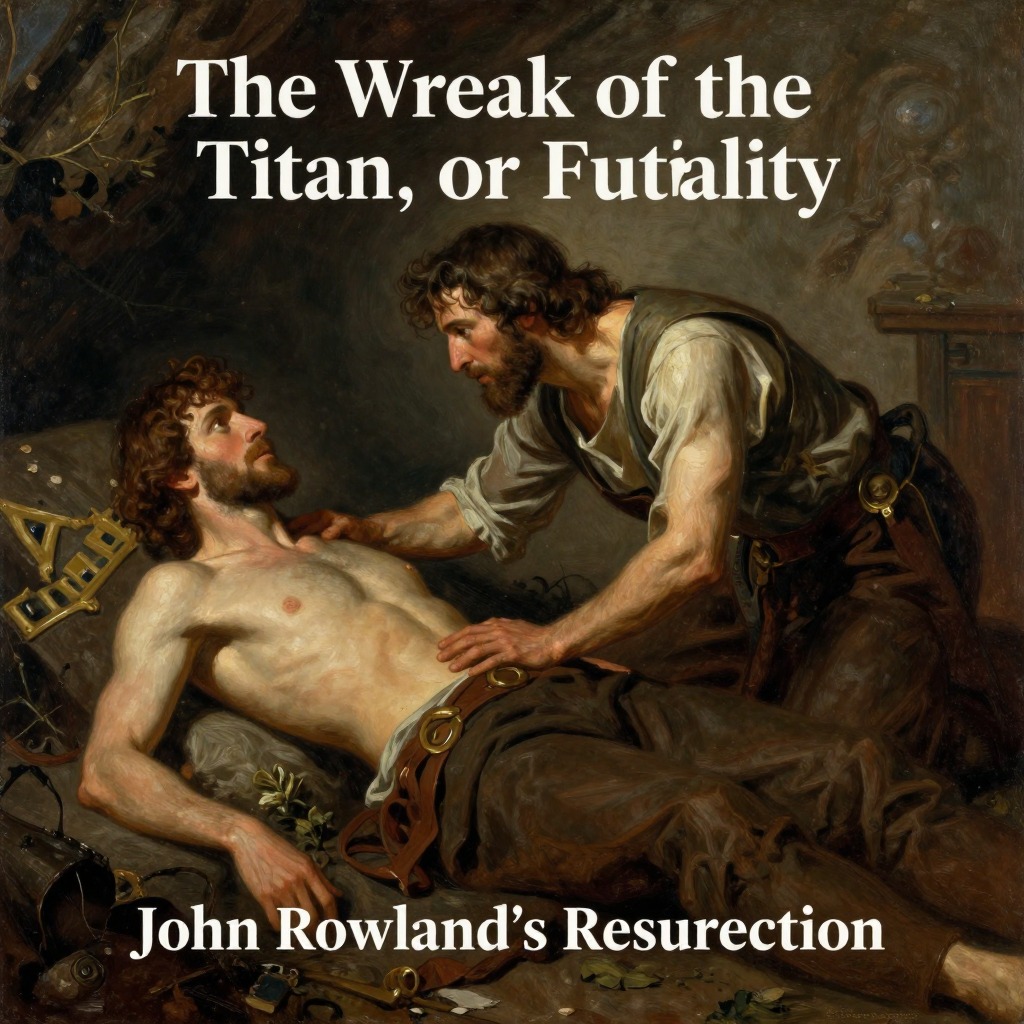
The Wreck of the Titan, or FutilityRowland's sobriety is the quiet, hard-won culmination of his redemption arc in The Wreck of the Titan. After years of dissipation that reduced him from a promising naval officer to a common sailor, and after surviving shipwreck, drugging, and a crippling fight with a polar bear, Rowland's decision to give up alcohol becomes the foundation of his moral and social rebirth. It is the one personal victory he achieves entirely on his own terms, and it stands in stark contrast to the chaos and degradation that alcohol once brought into his life.
From Addiction to the Brink
Rowland's alcoholism is established early as both a symptom and a cause of his downfall. Myra Selfridge, the woman he loved and lost, recalls that he "always smelled of tobacco" and that one day she "smelled liquor on his breath," which confirmed her decision to abandon him. His drinking had already cost him his naval career—he was "broken for conduct unbecoming an officer" after getting "roaring drunk at the President's levee." By the time he ships aboard the Titan, he is a "broken-down wreck," a man whose trembling hands and watery eyes betray his addiction. When the captain offers him whisky during their confrontation over the collision with the Royal Age, Rowland accepts it with a bitter, self-contemptuous laugh, listing "whisky" among his basic wants. The captain, recognizing this weakness, later plants a flask of whisky in Rowland's pea-jacket, hoping to keep him drunk and discredited. Rowland, however, sees through the ploy, calling it "drugged Dutch courage," and saves the bottle for evidence—though he does drink from it later, both on the iceberg and during his recovery.
The Turning Point on the Ice
Rowland's sobriety begins not with a conscious resolution but with necessity and suffering. Stranded on the iceberg with the child Myra, he initially uses the whisky to warm himself and to medicate the little girl, adding "a few drops" to her water. But the bottle is soon empty, and he falls into a three-day delirium, during which he is "delirious with fever." When he emerges, he is "sane, but feeble in body and mind," and he credits his recovery to "the absence of the exciting whisky" as much as to his constitution or the bear-meat he eats. This period of forced abstinence, combined with the physical ordeal of fighting the polar bear and caring for the child, begins to cleanse his system. By the time he is rescued by the bark Peerless, he has not had a drink for weeks, and his face, "refined by suffering to the almost spiritual softness of age," shows the first signs of his transformation.
The Vow and Its Aftermath
Rowland's commitment to sobriety becomes explicit in his conversation with Captain Barry after the confrontation at Lloyds. When Barry asks, "You haven't had a nip for two months. Are you going to begin?" Rowland answers, "Never again. I've a future now, as well as a past." This vow is not merely personal; it is tied to his new sense of purpose—reuniting Myra with her mother and rebuilding his own life. His sobriety enables him to function in the world again. After arriving in New York, he is arrested and briefly jailed, but even that humiliation does not drive him back to drink. Instead, he emerges from the trial and begins a methodical ascent: he fishes, trades, and sells to buy clothes; he works as a tally clerk; he learns to address envelopes; and he passes a Civil Service examination. Within two years, he is appointed to a lucrative government position. As he sits at his desk, he tells himself, "Now John Rowland, your future is your own. You have merely suffered in the past from a mistaken estimate of the importance of women and whisky." The statement is ironic—he will soon receive a letter from Myra Selfridge that reopens his emotional life—but it marks the definitive end of his addiction.
The Significance of Abstinence
Rowland's sobriety is more than a personal reform; it is the moral counterweight to the novel's critique of reckless speed and corporate greed. Just as the Titan's full-speed rule represents a destructive disregard for human life, Rowland's drinking represents a self-destructive disregard for his own. His recovery, achieved through suffering and willpower, mirrors the novel's hope that individuals can rise above their circumstances. His one-armed disability, a permanent reminder of his ordeal, does not prevent him from achieving respectability; rather, it becomes a badge of his courage. In the end, Rowland's sobriety allows him to reclaim his identity as a gentleman, and it is this reformed self that the final letter from Myra Selfridge addresses, inviting him to "come and see Myra." The story closes with him going to her, sober and whole in spirit, ready to face the future.