Royal Age
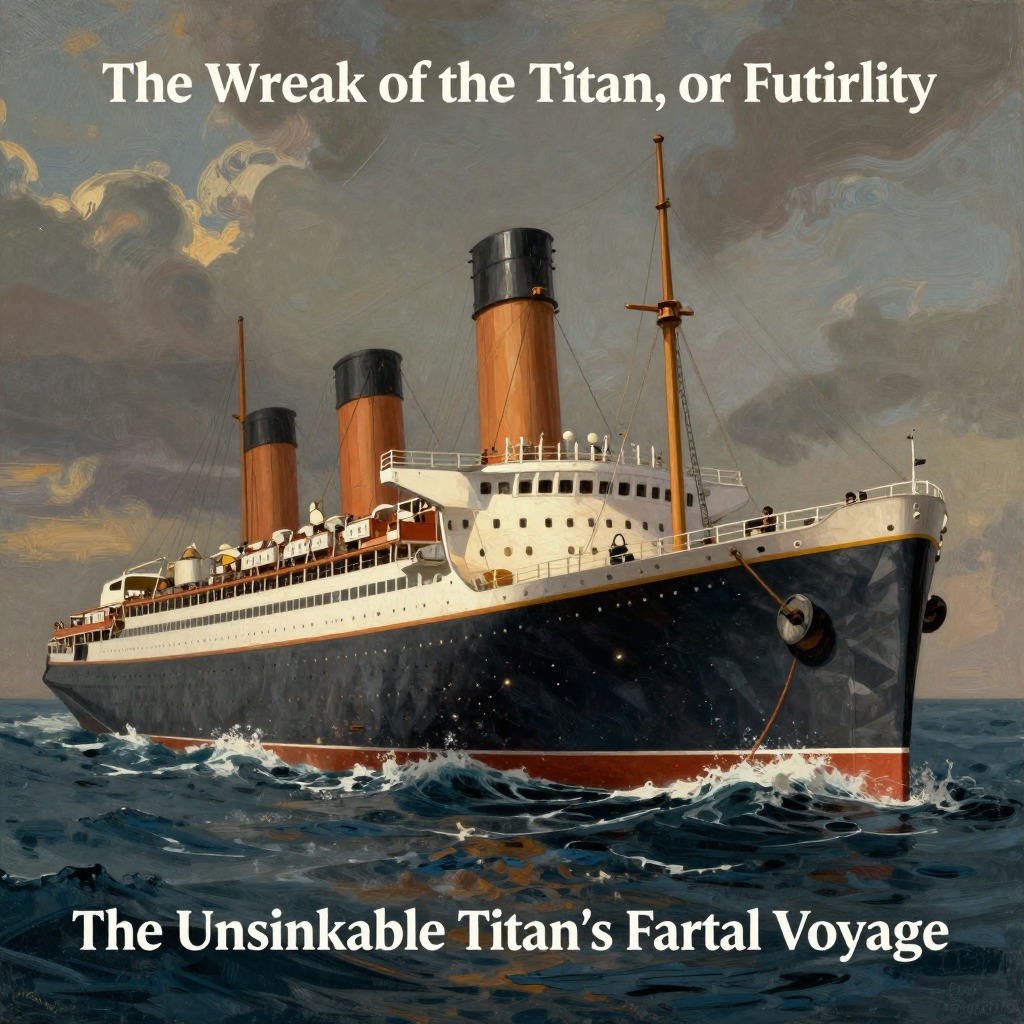
The Wreck of the Titan, or FutilityThe Royal Age is a deep-laden merchant ship that appears only briefly in the narrative but whose destruction sets in motion the legal and moral conflicts that drive the second half of the novella. She is the unnamed vessel that the Titan, steaming at full speed through a thick fog on the Northern Lane Route, cuts cleanly in two on the first night out from New York. The collision is witnessed from the crow's-nest by John Rowland, who reports the ship dead ahead, but the Titan's first officer, Mr. Austen, does not even turn the engine-room telegraph, and the great liner plows through the smaller craft with hardly a crash. The two halves of the Royal Age slide past in the darkness, and from one of them, where a binnacle light still burns, a sailorly voice hurls a curse at the "brass-bound murderers" of the Titan. The ship sinks with all hands, and the incident is immediately suppressed by the Titan's captain, Captain Bryce, who attempts to buy Rowland's silence with one hundred pounds and later tries to discredit him by drugging his tea with hasheesh.
The Collision and Its Immediate Aftermath
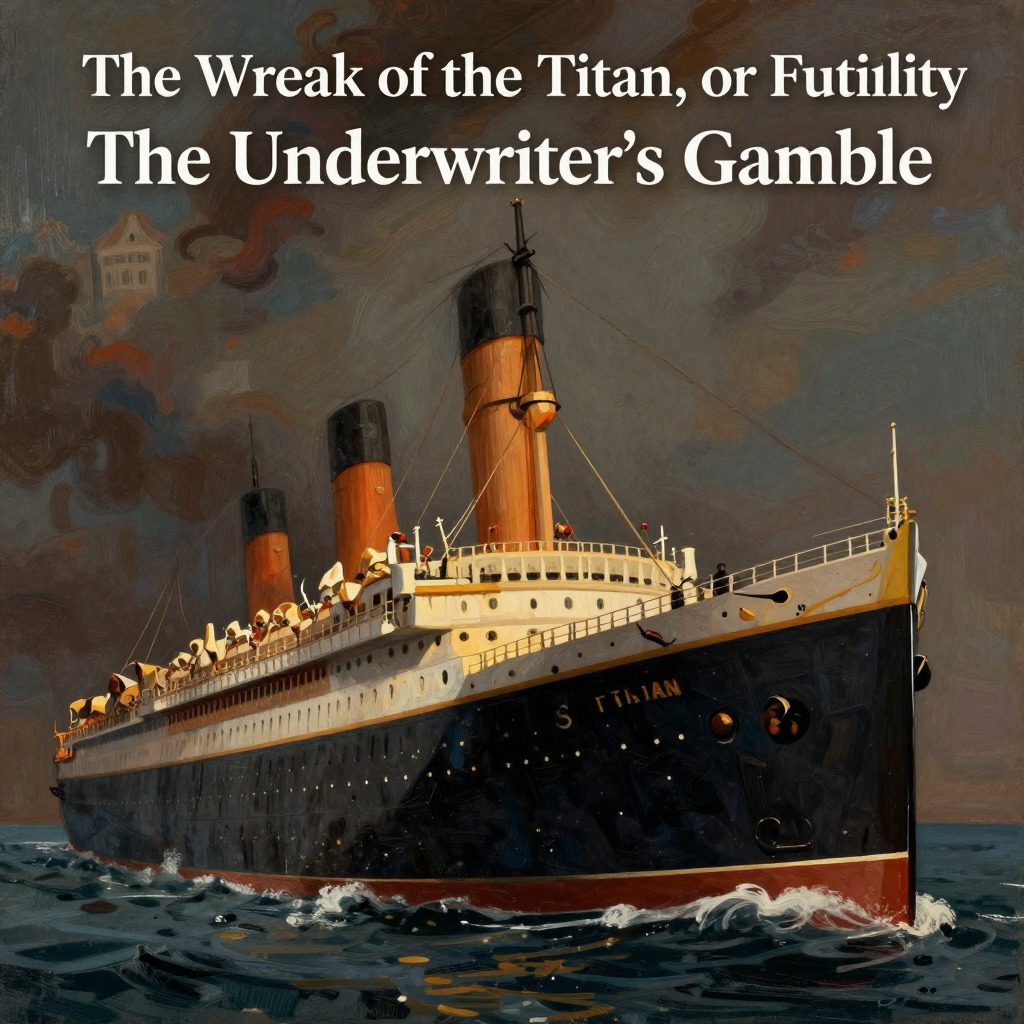
The Royal Age is first mentioned in the context of the Titan's collision with an iceberg, when Rowland, stranded on the ice with the child Myra, reflects on the earlier disaster. He recalls that the ship he had seen cut in half was a deep-laden vessel on the starboard tack, and he later learns from the bulletin at Lloyds that a life-buoy of the Royal Age, London, was picked up among wreckage in latitude 45-20 N, longitude 54-31 W by the ship Arctic, Captain Brandt. This bulletin, posted on the tenth day after the Titan's loss, is the first public confirmation that the Royal Age has been destroyed, and it throws the underwriter Mr. Meyer into a panic, as he had insured the Royal Age for ten thousand pounds and had also covered the largest share of the Titan. The Royal Age had been overdue for two months and was spoken the same day fifty miles east of the iceberg, making it clear that the two disasters were connected.
The Concealment and the Legal Dispute
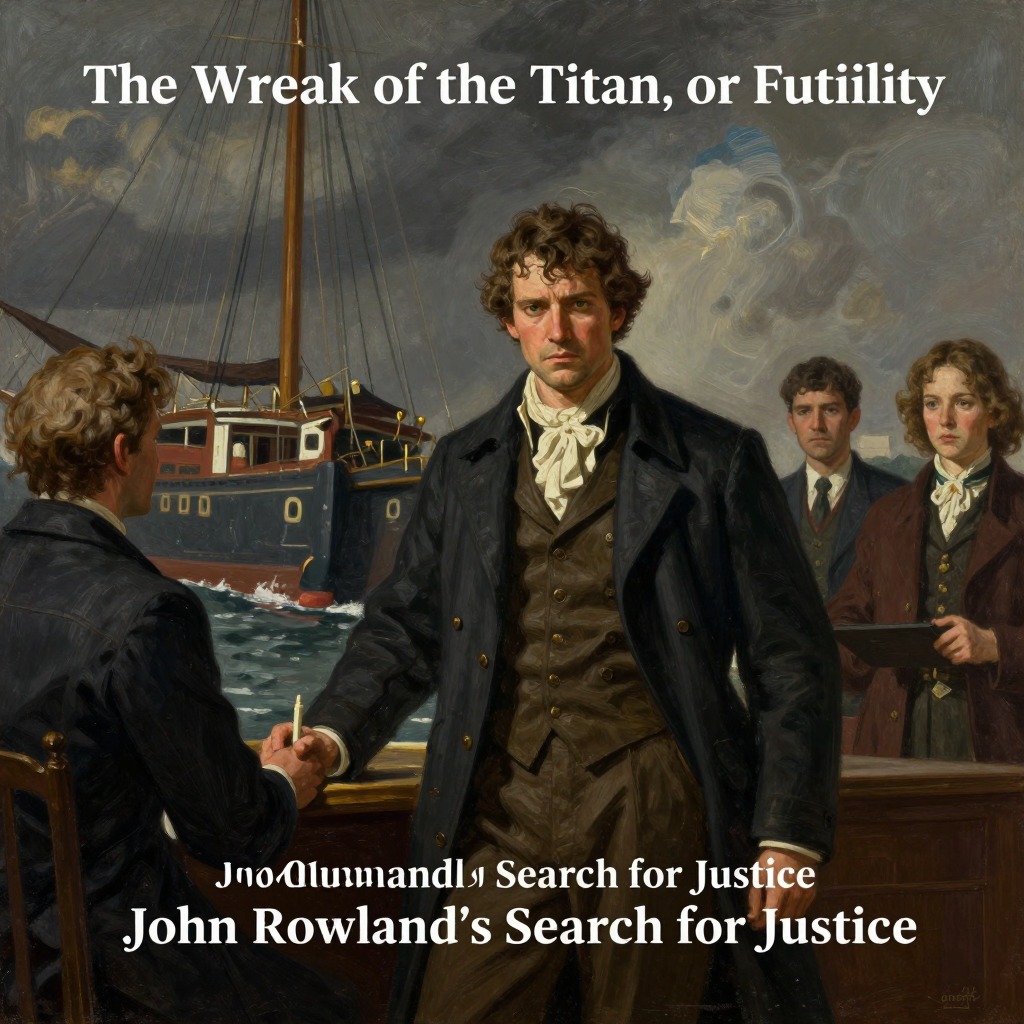
The Royal Age becomes the central issue in the insurance dispute at Lloyds. Captain Bryce, in his sworn affidavit, claims that the Titan's voyage was uneventful up to the moment of the wreck, concealing the collision with the Royal Age. Mr. Meyer, the underwriter, confronts Bryce and his first officer, Mr. Austen, with the accusation that they collided with and sank the Royal Age on the night before the Titan's own loss. Bryce and Austen deny it, claiming that Rowland was a drunkard and unreliable, but Rowland, brought to Meyer's office by Captain Barry of the Peerless, tells the full story of the cutting in half of the ship, the attempted bribery, and his refusal to accept it. The attorney for the steamship company argues that the concealment has no bearing on the validity of the insurance policy, but Meyer insists that the fact that a drunken man was on lookout when the Titan struck the iceberg would void the policy. Rowland, however, turns the tables by pointing out that Bryce and Austen, as part owners of the Titan, had committed barratry by drugging a sailor and placing him on lookout, which nullifies the insurance. Bryce, enraged, lunges at Rowland and is knocked down by Captain Barry.
The Fate of the Royal Age and Its Consequences
The Royal Age's destruction has far-reaching consequences. Mr. Selfridge, the largest stockholder in the Titan, had invested his entire fortune of one hundred thousand pounds in the ship, and when Meyer declares that the insurance will not be paid, and that the Titan's company must reimburse him for the insurance he must pay to the Royal Age owners, Selfridge collapses and dies of heart failure. Rowland, however, refuses to testify against the Titan, reasoning that the cause of the wreck was full speed in a fog, and that the underwriters knew the speed and took the risk. He chooses not to break the child Myra, who is Selfridge's granddaughter, and the insurance is ultimately paid. The Royal Age thus serves as the instrument of poetic justice: the concealment of her loss leads to the exposure of Bryce and Austen's crimes, the ruin of an innocent man, and the moral vindication of Rowland, who had once sailed in her and who, in the end, refuses to let her memory be used to destroy a child's future.