Trial of John Rowland
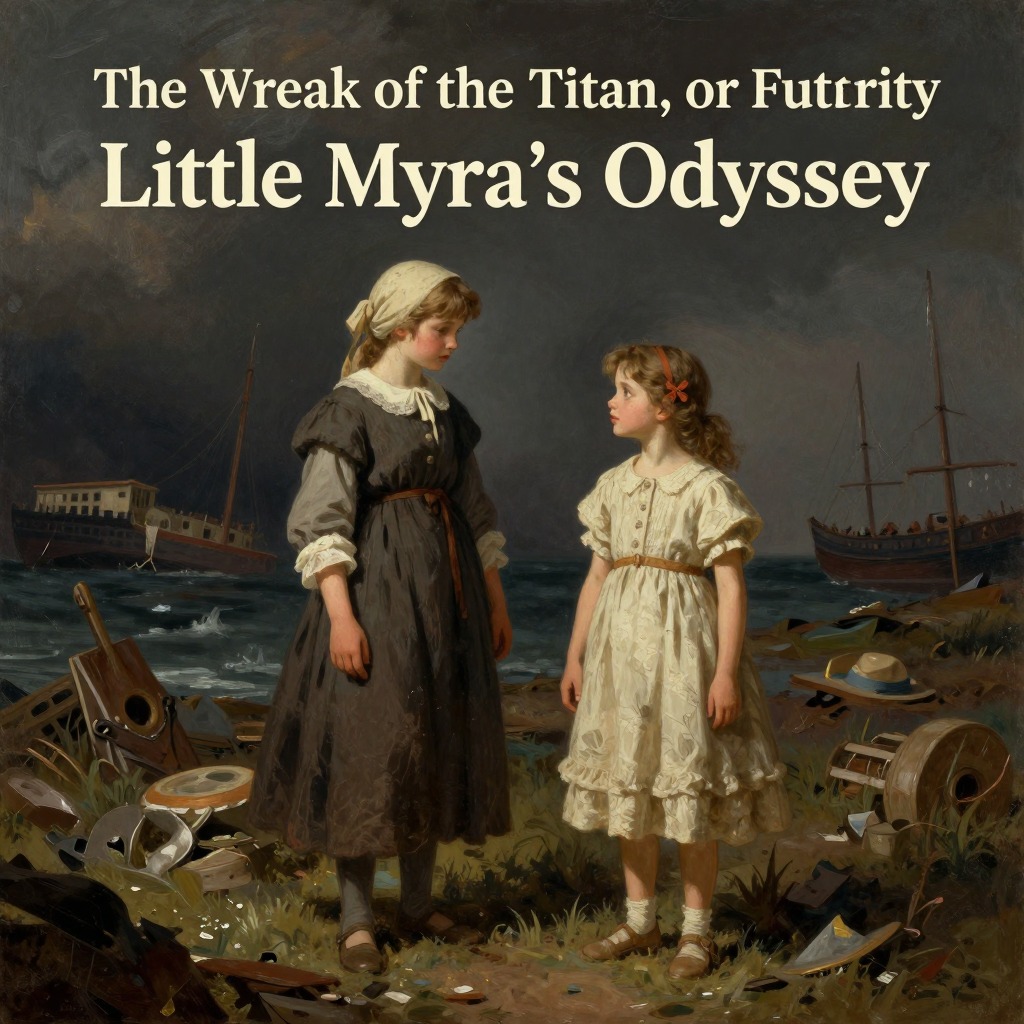
The Wreck of the Titan, or FutilityThe Trial of John Rowland is the pivotal courtroom scene in Morgan Robertson's novella The Wreck of the Titan, where the disgraced former naval officer, accused of kidnapping and harming the child Myra, is dramatically vindicated when the magistrate learns of his heroic rescue of the girl from an iceberg and his fight with a polar bear. The trial exposes the gap between public perception and private heroism, and it marks the turning point in Rowland's rehabilitation, leading to his eventual recovery and reunion with the child.
Background and Arrest
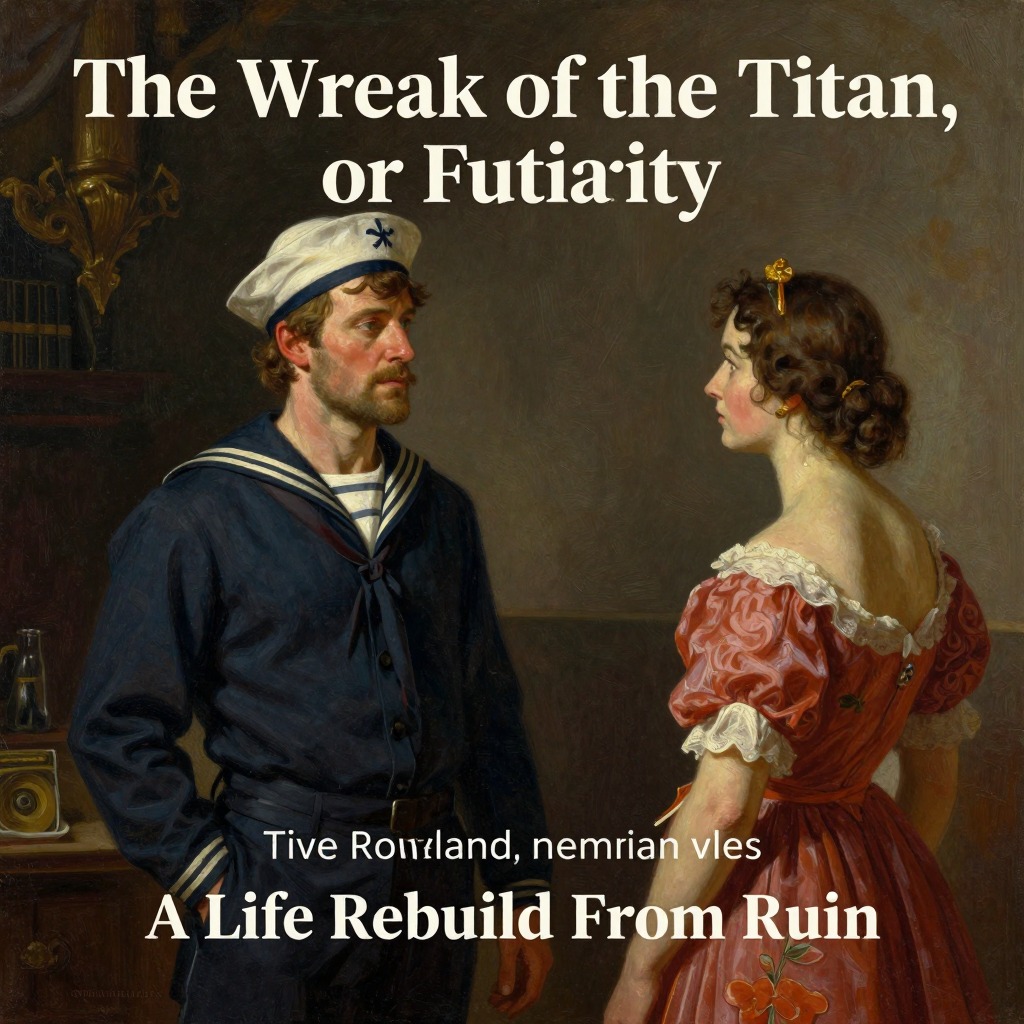
The trial follows Rowland's arrest on Broadway, where he was stopped by a policeman who saw him emerging from a department store with the child Myra, dressed in new finery purchased with his last sixteen dollars and a half. The officer, marveling at the juxtaposition of Rowland's ragged clothes and the child's ribbons, demanded to know whose child he had, and when Rowland haughtily replied that he believed she was the daughter of Mrs. Colonel Selfridge, the officer took him back into the store to verify the claim. At the door, they were met by Mrs. Selfridge, who uttered a piercing shriek, snatched the child from Rowland's shoulder, and fainted in the arms of an indignant old gentleman—her father, Mr. Gaunt. The old gentleman flourished his cane over Rowland's head and ordered the officer to take him to the station-house, charging him with kidnapping in the name of his daughter. The crowd applauded as the man who had fought and conquered a hungry polar bear was dragged through the streets like a sick animal by a New York policeman, a moment the narrator attributes to the stultifying effect of a civilized environment.
The Courtroom Scene
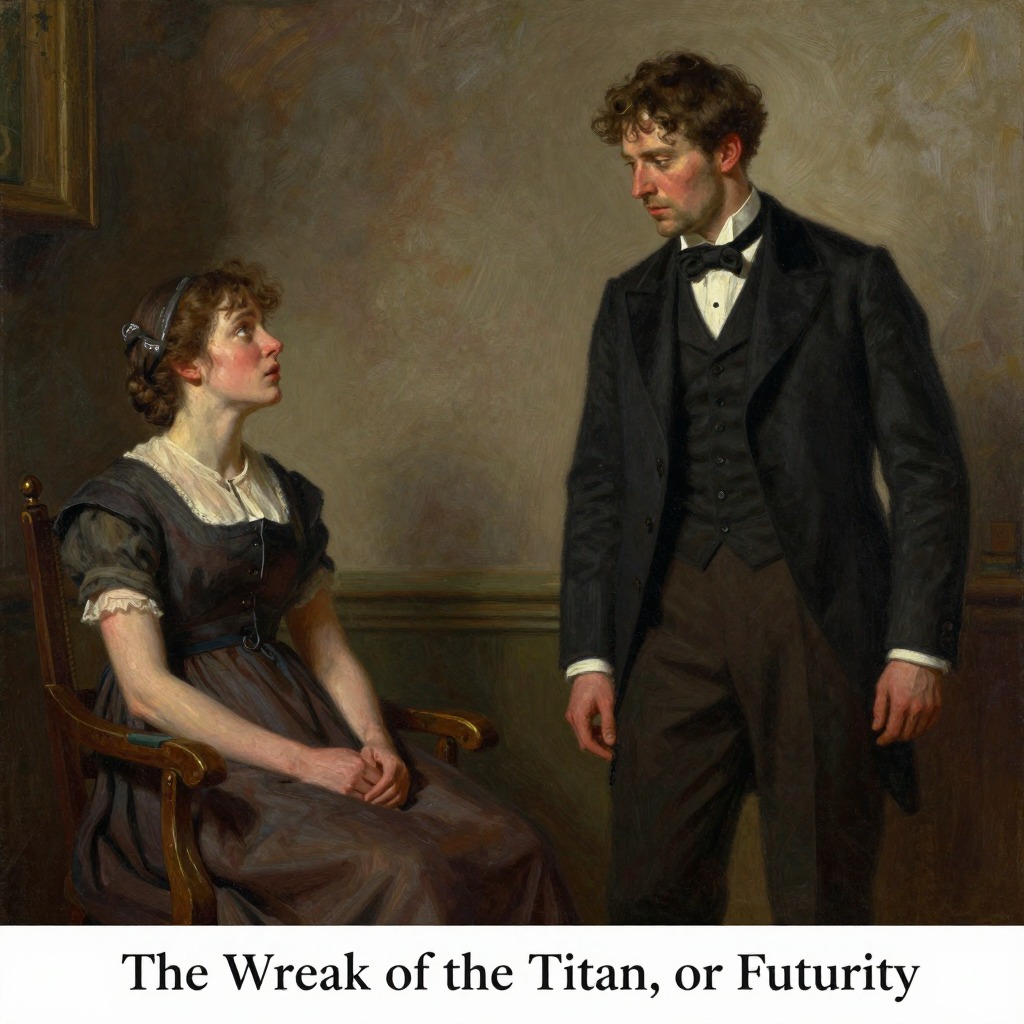
The next morning, Rowland stood in the anteroom of a New York police court, ragged, disfigured by the clubbing he had received, and disheveled by his night in a cell. Three reporters, sent by editors who punished failed interviews by assigning them to police courts, attended the hall of justice presided over by a late-rising magistrate. When Rowland's name was called, he was hustled through a door, along a line of policemen who each gave him a shove, and into the dock, where the stern-faced and tired-looking magistrate glared at him. In a corner of the court-room sat the old gentleman of the day before, the young mother with little Myra in her lap, and a number of other ladies, all excited in demeanor, and all but the young mother directing venomous glances at Rowland. Mrs. Selfridge, pale and hollow-eyed but happy-faced, allowed no wandering glance to rest on him.
The officer who had arrested Rowland was sworn and testified that he had stopped the prisoner on Broadway while making off with the child, whose rich clothing had attracted his attention. Disdainful sniffs were heard from the corner, with muttered remarks about the flimsiest prints. Mr. Gaunt, the prosecuting witness, was called to testify. He began excitedly, telling the court that Rowland was once a gentleman and a frequent guest at his house, that he had asked for the hand of his daughter, and that when his request was not granted, he threatened revenge. He went on to claim that out on the broad Atlantic, where Rowland had followed his daughter in the guise of a sailor, he had attempted to murder the child—his grandchild—but was discovered. The magistrate interrupted, instructing him to confine his testimony to the present offense. Mr. Gaunt then asserted that Rowland had stolen or enticed the little one from its bed, and that in less than five minutes the ship was wrecked, and he must have escaped with the child. When asked if he had witnessed this, he admitted he was not there, but said they had it on the word of the first officer, a gentleman. The magistrate told him to step down.
The officer was asked if the offense was committed in New York, and he replied that he had caught the prisoner himself. When asked who the child was stolen from, he pointed to the lady over yonder. Mrs. Selfridge was then sworn, and with her child in her arms, she repeated what her father had said in a low, quavering voice. Being a woman, she was allowed by the woman-wise magistrate to tell her story in her own way. When she spoke of the attempted murder at the taffrail, her manner became excited. She told of the captain's promise to put the man in irons on her agreeing to testify against him, of the consequent decrease in her watchfulness, and her missing the child just before the shipwreck. She recounted her rescue by the gallant first officer, and his assertion that he had seen her child in the arms of this man—the only man on earth who would harm it. She told of the later news that a boat containing sailors and children had been picked up by a Mediterranean steamer, of the detectives sent over, and their report that a sailor answering this man's description had refused to surrender a child to the consul at Gibraltar and had disappeared with it. She spoke of her joy at the news that Myra was alive, and her despair of ever seeing her again until she had met her in this man's arms on Broadway the day before. At this point, outraged maternity overcame her. With cheeks flushed and eyes blazing scorn and anger, she pointed at Rowland and all but screamed that he had mutilated and tortured her baby, that there were deep wounds in her little back, and that the doctor had said they were made by a sharp instrument. She added that he must have tried to warp and twist the mind of her child, for he taught her to swear horribly, and that last night at bedtime, when she told her the story of Elisha and the bears and the children, she burst out into uncontrollable screaming and sobbing. Her testimony ended in a breakdown of hysterics, between sobs of which were frequent admonitions to the child not to say that bad word, for Myra had caught sight of Rowland and was calling his nickname.
The Magistrate's Discovery and Discharge
The puzzled magistrate asked what shipwreck this was and where it was, and half a dozen newspaper men across the room called out "The Titan." The magistrate repeated the name and noted that the offense was committed on the high seas under the English flag, and he could not imagine why it was brought into this court. He asked the prisoner if he had anything to say, and Rowland answered in a kind of dry sob, "Nothing, your Honor." The magistrate scanned the ashen-faced man in rags and said to the clerk of the court to change the charge to vagrancy. But the clerk, instigated by the newspaper men, was at his elbow. He laid a morning paper before him, pointed to certain big letters, and retired. The business of the court suspended while the court read the news. After a moment or two, the magistrate looked up and sharply ordered the prisoner to take his left sleeve out of his breast. Rowland obeyed mechanically, and it dangled at his side. The magistrate noticed and read on. Then he folded the paper and asked if Rowland was the man who had been rescued from an iceberg. The prisoner bowed his head. The magistrate roared "Discharged!" in an unjudicial manner, and added, with a kindling light in his eye, that this man had merely saved her child's life, and that if she read of his defending it from a polar bear when she went home, he doubted that she would tell it any more bear stories. He remarked "Sharp instrument—umph!" which was equally unjudicial on the part of the court.
Mrs. Selfridge, with a mystified and rather aggrieved expression of face, left the court-room with her indignant father and friends, while Myra shouted profanely for Rowland, who had fallen into the hands of the reporters. They would have entertained him after the manner of the craft, but he would not be entertained—neither would he talk. He escaped and was swallowed up in the world without, and when the evening papers appeared that day, the events of the trial were all that could be added to the story of the morning.
Aftermath and Significance
The trial marks the culmination of Rowland's public vindication, but it also underscores the irony of his situation: the man who had saved the child from a polar bear and nursed her through fever was accused of harming her, and the wounds on her back were the very scratches inflicted by the bear's claws, not by a sharp instrument as the mother believed. The magistrate's reading of the newspaper story, which had been embellished by Mr. Meyer and the reporters, particularly in the part pertaining to the polar bear, provided the key to Rowland's innocence. The trial thus exposes the power of narrative and public perception, and it sets the stage for Rowland's quiet rehabilitation. After the trial, he disappears into the city, and the final chapter shows him rebuilding his life from the bottom up: he finds an old fish-hook and some string, catches fish, trades and sells them, sleeps under the docks, and gradually works his way up to tallying cargo, addressing envelopes, and finally passing a Civil Service examination. Two years later, he is appointed to a lucrative government position, and he remarks that his future is his own, having suffered in the past from a mistaken estimate of the importance of women and whisky. But he is wrong, for in six months he receives a letter from Mrs. Selfridge, who writes that Myra will not let her rest, that she asks for him continually and cries at times, and that she can bear it no longer. She asks him to come and see Myra, and the man went to see Myra. The trial, therefore, is not only a legal exoneration but also the hinge on which Rowland's entire redemption turns, leading him from the depths of disgrace to a position of respectability and, ultimately, to the possibility of reconciliation with the woman he once loved.