Captain Barry
The Wreck of the Titan, or FutilityCaptain Barry is the commanding officer of the bark Peerless, a vessel that plays a decisive role in the latter half of Morgan Robertson's novella. He first appears as the rescuer who brings John Rowland and the child Myra, survivors of the Titan's catastrophic collision with an iceberg, to safety. His significance extends far beyond this act of rescue: he becomes Rowland's protector, witness, and friend, and his unwavering support is instrumental in exposing the crimes of the Titan's officers and in securing a just outcome for Rowland and the child. Barry embodies a rugged, unpretentious heroism that contrasts sharply with the corrupt authority of Captain Bryce and the calculating self-interest of the underwriter Mr. Meyer.
Rescue and Nursing of Rowland
Captain Barry's first recorded action is his arrival at the iceberg where Rowland, crippled and delirious, has been stranded with the child Myra. He brings the Peerless alongside and takes them aboard, despite Rowland's grave condition. Barry later describes how he witnessed Rowland's fight with a polar bear, a feat that he recounts with admiration: "I saw a polar bear that this man killed in open fight. I saw his arm afterward, and while nursing him away from death I heard no whines or complaints." This testimony establishes Barry as a firsthand witness to Rowland's courage and suffering. He nurses Rowland through his illness, and it is during this period that Rowland's left arm is amputated at Christiansand, a loss that Barry later references with respect. Barry's care is not merely physical; he also provides emotional support, and his loyalty to Rowland becomes a defining trait.
Advocacy at Lloyds
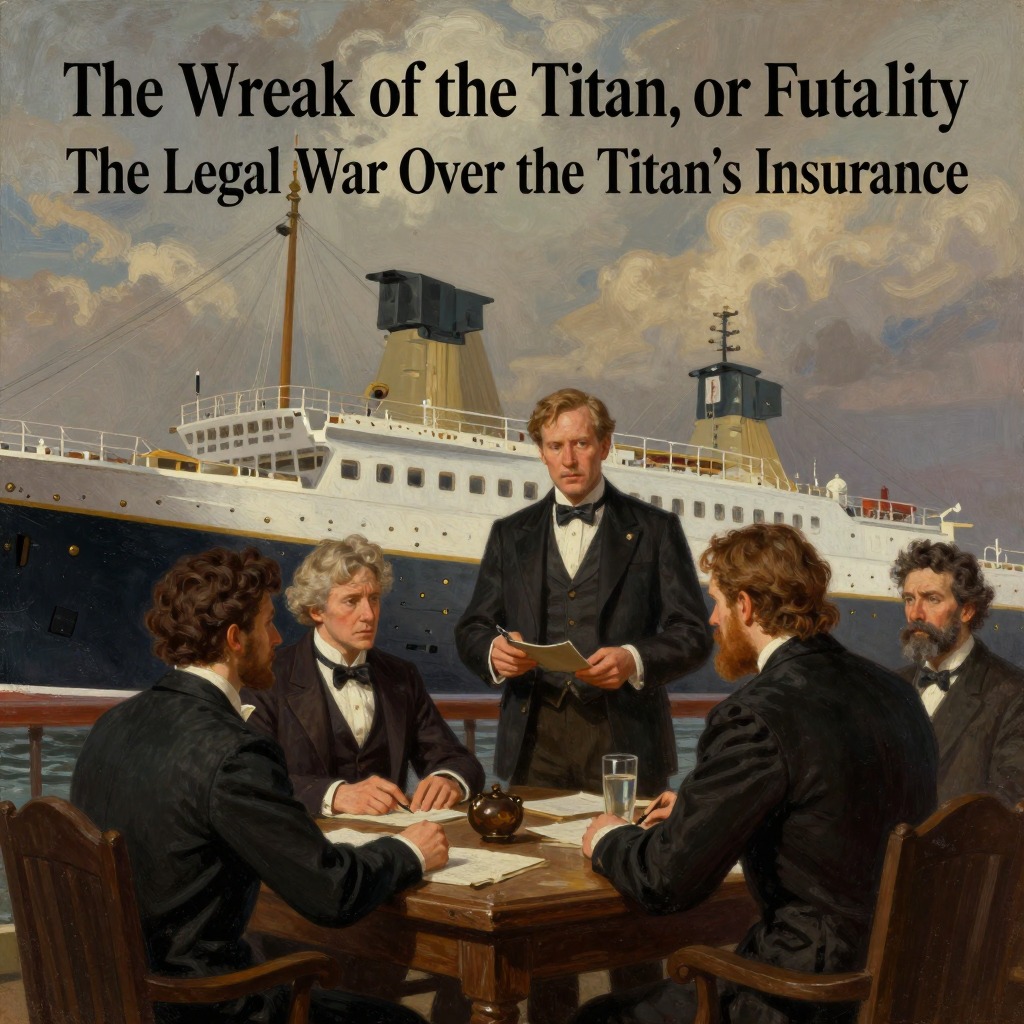
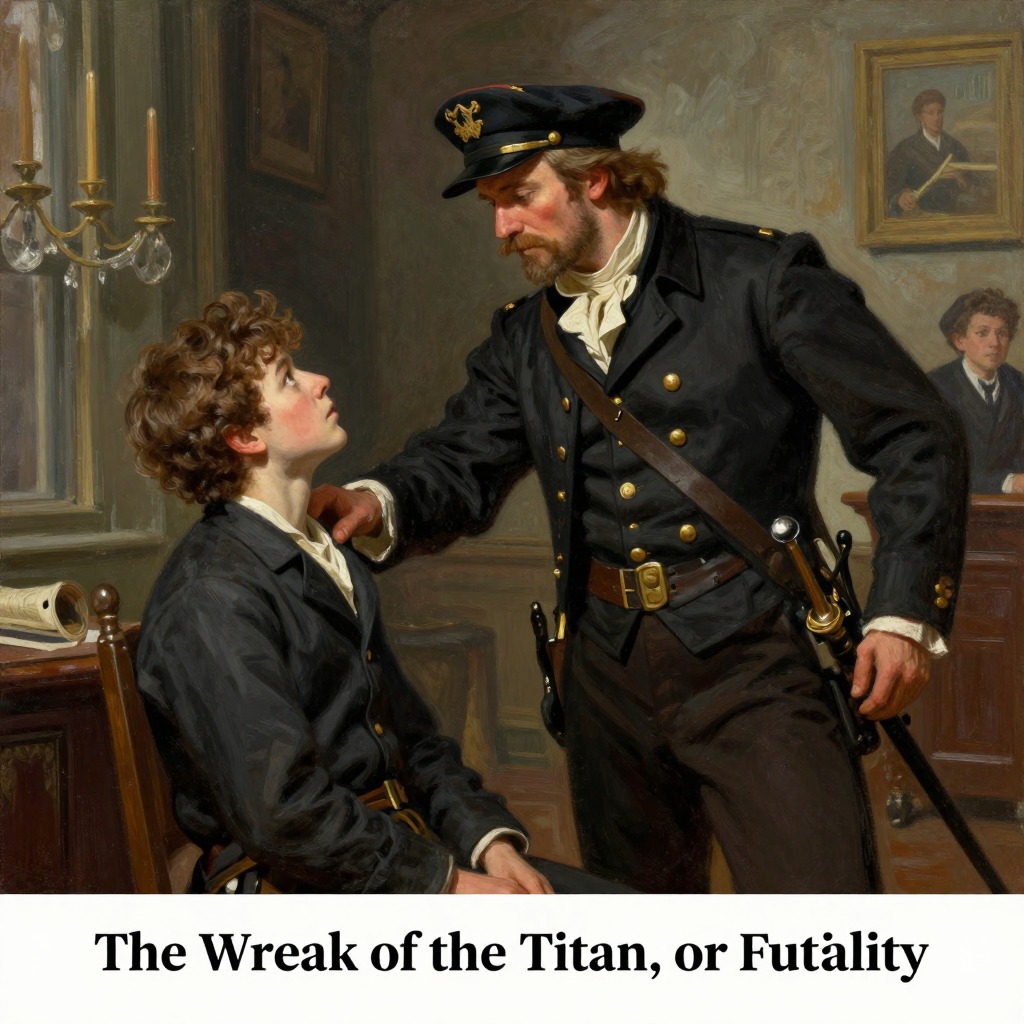
Barry's role as Rowland's advocate comes to the fore during the confrontation at Lloyds in London, where the underwriter Mr. Meyer has gathered the captain and first officer of the Titan, Captain Bryce and Mr. Austen, along with the attorney Mr. Thompson, to contest the insurance claim. Barry accompanies Rowland, carrying the child Myra on his shoulder, and introduces himself with the breezy, quarter-deck tone: "Well, I've brought him, half dead; but why couldn't you give me time to dock my ship? A mate can't do everything." When Captain Bryce dismisses Rowland's account of the collision with the Royal Age as a lie, Barry intervenes physically, knocking Bryce across the room with a single blow. He warns, "If you insult him again in my presence I'll knock your teeth down your throat." This act of violence, though shocking, underscores Barry's role as Rowland's champion and his willingness to use force to defend his friend's honor.
Witness to the Drugging Confession
Barry's presence is also crucial when Captain Bryce, in a moment of fury, inadvertently confesses to drugging Rowland. When Rowland explains that he was drugged with hasheesh, Bryce snarls, "'twas not hasheesh; 'twas an infusion of Indian hemp; you don't know—" before being silenced by Mr. Austen. Mr. Meyer immediately seizes on this as a confession and appeals to Barry as a disinterested witness: "You hear him, Captain Barry. You are disinterested. You are a witness. You hear?" Barry replies, "Yes, I heard it — the murdering scoundrel," thereby confirming the confession and providing the evidence needed to void the insurance policy. This moment is pivotal: Barry's testimony, though he later claims to have a "blamed bad memory" when it suits him, is what allows Rowland to expose the officers' misconduct.
Refusal to Testify and Loyalty to Rowland
When Rowland decides to refuse to testify against the Titan's owners, thereby allowing the insurance to be paid and saving Mr. Selfridge's estate from ruin, Barry stands by him without hesitation. Mr. Meyer, desperate, tries to persuade Barry to testify instead, but Barry refuses, saying, "I stand by Rowland. I don't remember what was said, anyhow; got a blamed bad memory." He then threatens to kick down the door when Meyer locks it, and ultimately breaks it from its hinges. This act of solidarity is a testament to Barry's loyalty and his willingness to defy powerful interests for the sake of his friend. He later explains to Rowland that he understands the game: "you don't want to break this child," referring to Rowland's desire to protect Myra from the financial ruin that would follow if the insurance were voided.
Friendship and Practical Support
Barry's friendship with Rowland extends beyond the courtroom. He offers Rowland a berth as mate on the Peerless, saying, "you can have a berth mate with me as long as I sail a ship — if you'll take it; and you're to make my cabin your home as long as you like." He also secures Rowland's wages from the steamship company's attorney, Mr. Thompson, and arranges for two first-class tickets from Liverpool to New York so that Rowland can take Myra to her mother. Barry's practical kindness is matched by his emotional warmth; he tells Rowland, "I'd travel round the world to stand in your shoes when you hand Myra over. I've got a child of my own," and his eyes are described as "winking hard and fast" with emotion. When Rowland declines the mate's berth, citing his missing arm, Barry insists, "I'll take you mate without any hands at all while you had your brains." This offer, though declined, highlights Barry's respect for Rowland's intellect and character over his physical disability.
Thematic Significance
Captain Barry serves as a counterpoint to the corrupt and self-serving figures who populate the novella. Where Captain Bryce and Mr. Austen lie to protect their interests, Barry is forthright and honest. Where Mr. Meyer schemes to avoid paying the insurance, Barry acts out of loyalty and friendship. His physical courage, demonstrated in his willingness to fight for Rowland, and his moral courage, shown in his refusal to be intimidated by the underwriters, make him a model of the "good, strong act" that Rowland himself aspires to. Barry's presence also underscores the theme of redemption: he is the one who helps Rowland transition from a broken, alcoholic sailor to a man with a future, and his friendship is a key factor in Rowland's eventual sobriety and reintegration into society. In a narrative dominated by disaster and betrayal, Barry stands as a beacon of integrity and human decency.