The future is your own
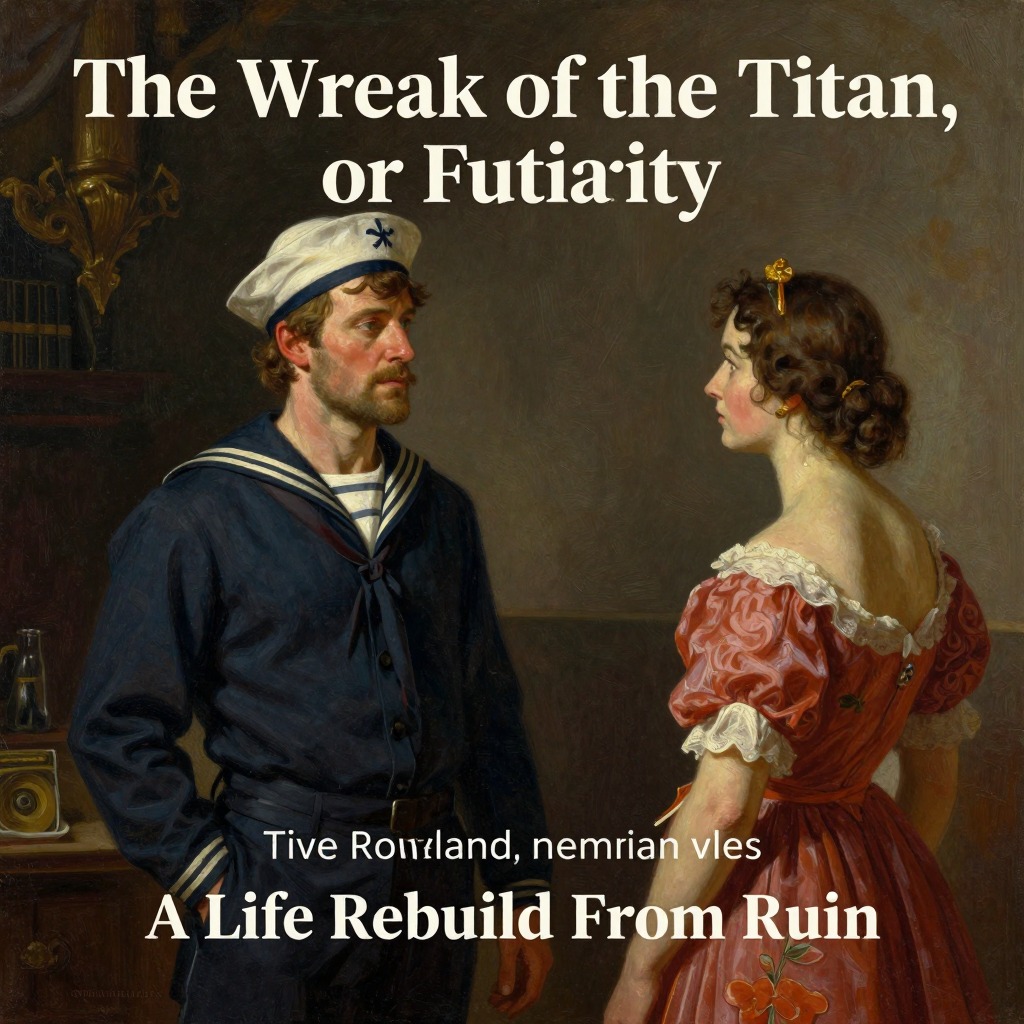
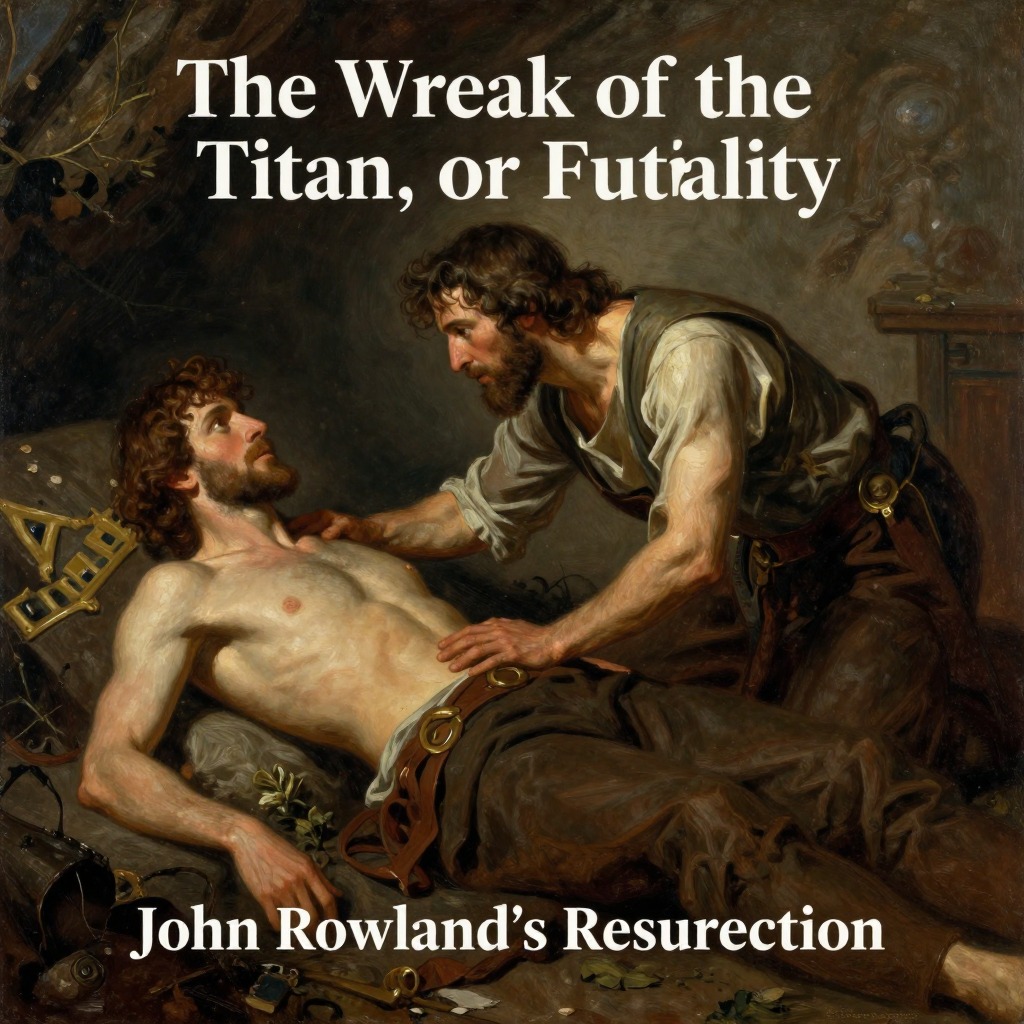
The Wreck of the Titan, or FutilityThe future is your own is the private motto John Rowland speaks to himself at the climax of his long rehabilitation, when he has finally secured a lucrative position under the Government. The words are a declaration of independence from his former life, a claim that his destiny is now entirely in his own hands. They come at the end of a remarkable ascent: from a penniless, one-armed dock lounger who slept under the docks and caught fish to trade for meals, to a man who, through steady work and self-discipline, passed a Civil Service examination and was appointed to a government post. The phrase is thus both a personal credo and a verdict on his past, encapsulating the novel's belief that a man can remake himself through will and effort alone.
The Road to the Declaration
The declaration is the culmination of a long, deliberate process of self-reconstruction that begins after Rowland's trial and discharge in New York. Penniless and with his left arm amputated at Christiansand, he starts at the very bottom of society. He finds an old fish-hook and some pieces of string, knots them together, digs bait, and catches a fish. Hungry and without fire, he trades it to a coaster's cook for a meal, and before night catches two more, one of which he trades and the other sells. He sleeps under the docks, paying no rent, and for a month he fishes, trades, and sells. This primitive subsistence is the foundation of his recovery: it requires no capital, no connections, and no alcohol, and it provides just enough to begin climbing. His changed appearance eventually induces a boss stevedore to hire him tallying cargo, which is more lucrative than fishing and furnishes, in time, a hat, a pair of shoes, and an overcoat. He then rents a room and sleeps in a bed for the first time since his ordeal. The progression is methodical and almost ascetic, each step building on the last, and it is this discipline that makes the eventual declaration credible.
The Meaning of the Phrase
When Rowland speaks the words, he is not merely celebrating his appointment; he is articulating a philosophy of personal agency that stands in stark contrast to the fatalism and determinism he had expressed throughout the novel. Earlier, on the bridge of the Titan, he had mused on "the survival of the fittest" and "cause and effect," seeing himself as a victim of an impersonal universe. He had spoken of "the immutable law of chance" and "the governing balance of events," ideas he had once used to explain his rejection by Myra Gaunt. The new phrase rejects this passive worldview. "Now John Rowland, your future is your own," he says to himself, and then adds the crucial qualification: "You have merely suffered in the past from a mistaken estimate of the importance of women and whisky." This is a direct repudiation of the two forces that had destroyed him: his unrequited love for Myra Selfridge and his alcoholism. The phrase thus functions as a kind of self-administered therapy, a verbal commitment to sobriety and self-sufficiency that he had already begun to practice.
The declaration also carries a note of hard-won irony. Rowland has lost his arm, his career as a sailor, and any hope of returning to the sea. When Captain Barry offered him a berth as mate, Rowland had refused, saying, "my going to sea is ended. Even a mate needs two hands." The future he claims as his own is therefore not the one he had once imagined for himself as a naval officer or even as a sailor; it is a future built on entirely new foundations, in a world of desks and government offices rather than decks and rigging. The phrase acknowledges this transformation while insisting that it is still his own achievement.
The Undermining of the Declaration
The novel does not allow the declaration to stand unchallenged. Within six months of his appointment, Rowland receives a letter from Myra Selfridge, the woman whose rejection had set him on his downward spiral. The letter reads, in part: "Do not think me indifferent or ungrateful. I have watched from a distance while you made your wonderful fight for your old standards. You have won, and I am glad and I congratulate you. But Myra will not let me rest. She asks for you continually and cries at times. I can bear it no longer. Will you not come and see Myra?" The letter is a direct appeal to the very attachment he had declared himself free of. The child Myra, whom he had saved from the iceberg and the polar bear, has become the instrument of his reconnection to her mother. The final line of the novel, "And the man went to see Myra," is a quiet but devastating reversal of his confident assertion. The future he claimed as his own is revealed to be still entangled with the past he thought he had escaped. The phrase "The future is your own" thus becomes a statement of intention rather than a statement of fact, a hope that the novel itself gently, and perhaps ironically, refuses to confirm.
The Phrase as a Motif of Recovery
The declaration is the culmination of a series of moments in which Rowland confronts his addiction and his past. Earlier, on the iceberg, he had found the bottle of whisky in his pocket and had raised it to hurl it away, but stopped himself, reasoning that "it may be safe in small quantities, and we'll need it on this ice." This pragmatic compromise was a step toward sobriety, but it was not a commitment. Later, when Captain Barry asked him if he was going to begin drinking again, Rowland replied, "Never again," and added, "I've a future now, as well as a past." This is the first articulation of the idea that his future is something he possesses, and it directly foreshadows the later phrase. The progression from "I've a future now" to "your future is your own" marks the completion of his recovery: the first is a claim of possession, the second a claim of control. The phrase thus serves as the final seal on his sobriety, the verbal equivalent of the empty sleeve that reminds him of his sacrifice. It is a motto that he has earned through suffering, and it is precisely because he has earned it that its subsequent undermining is so poignant.