
Bormann’s Private Power
The Zone of InterestThis thread follows Martin Bormann’s use of political influence, family relationships, and trivial personal ambitions during the regime’s decline.
increasing Bearing strength in each event
 decreasing
Bearing strength in each eventdecreasingThe Nephew’s Place
The Nephew’s Place
An inherited connection
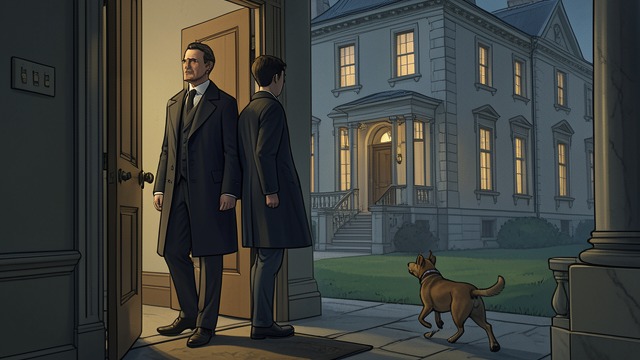
After Angelus Thomsen’s parents die, Martin Bormann informally takes him under his protection. Thomsen’s family connection gives him access to senior political circles without the ordinary route through rank.
Privilege shapes responsibility
The connection offers security and influence but also binds Thomsen to the regime’s inner world. His ability to act comes from the same power structure he is trying to undermine.
A Family Governed by Ideology
A Family Governed by Ideology
Children as political symbols
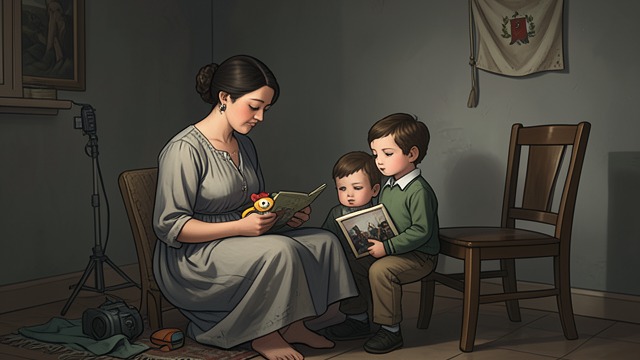
Thomsen visits Gerda Bormann and her children, whose names and family life reflect the regime’s leaders and ideals. Gerda counts even her dead children toward her desired motherhood medal.
The private home echoes the state
Family, faith, and reproduction are treated as political matters. The household’s warmth cannot conceal the grotesque ideology governing its choices.
Bormann’s Small Priorities

Bormann’s Small Priorities
Power applied to trivial ends
Martin Bormann asks Thomsen to help locate a secretary with whom he had a sexual encounter. He gives attention to this private pursuit while the war and mass murder continue around him.
Political access becomes personal service
Thomsen’s usefulness to his uncle rests partly on his ability to solve such requests. The episode portrays power not as serious governance but as a means of gratifying personal desire.
The Cosmic Ice Assignment

The Cosmic Ice Assignment
A bizarre political concern
Bormann asks Thomsen to assess the Ahnenerbe’s cosmic-ice theory because Adolf Hitler may believe it could provide a mandate for the Reich. The task competes for attention with the war and the camp.
Ideology seeks fabricated proof
The theory is not valuable for its science but for its political use. Thomsen advises Bormann to distance himself from it and concentrate on the struggle over succession.
Power Without a Future

Power Without a Future
Demands continue despite defeat
Bormann pressures Hungarian representatives to impose anti-Jewish restrictions and prepare for deportation. He speaks with confidence even as Germany’s military situation deteriorates.
Authority outlives its credibility
The meeting shows the regime’s ability to command other governments while revealing its priorities. Bormann uses power to extend persecution, not to address the approaching collapse.
Before the main events, after Thomsen’s parents die
Christmas 1942, at Pullach
Christmas 1942, during Thomsen’s visit
Late December 1942, before Thomsen returns east
Spring 1943, during Bormann’s meeting with Hungarian officials
