
The Growth of the Killing System
The Zone of InterestThis thread traces the expansion of mass murder from early authorization to increasingly organized camp operations and late-war acceleration.
increasing Bearing strength in each event
 decreasing
Bearing strength in each eventdecreasingAuthorization at the Height of Power
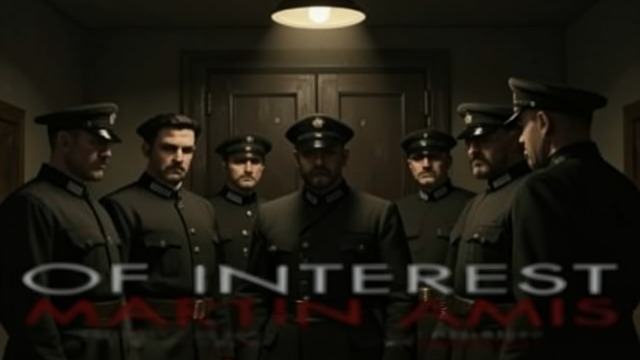
Authorization at the Height of Power
A policy gains authority
The novel’s account of the crime without a name points to an authorization letter drafted by Reinhard Heydrich and Adolf Eichmann and signed by Hermann Göring. It gives officials the authority to proceed with a total solution.
Policy outruns public explanation
The language is administrative, but the consequence is the expansion of organized murder. The authorization makes state power a mechanism for turning persecution into a continental program.
Expansion Beyond the Earlier Killings
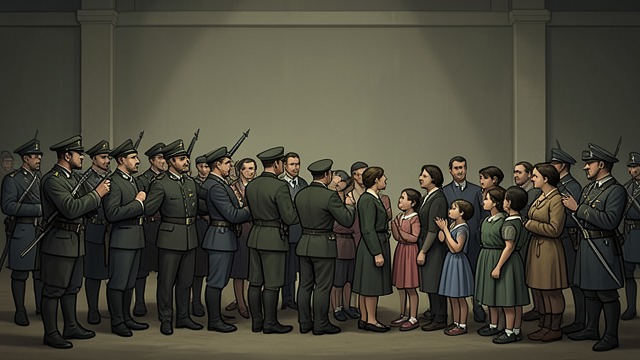
Expansion Beyond the Earlier Killings
A threshold is crossed
The killing program expands from men to women and children as authorities search for a total answer to the presence of Jews in occupied territory. Political and administrative pressure pushes officials toward greater extremity.
Violence becomes comprehensive
The change makes clear that the policy is not a temporary security measure. The intended target is a population, including people who pose no military threat.
The Chełmno Killing Operation
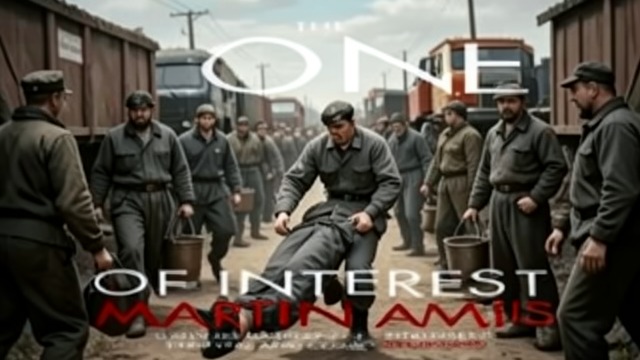
The Chełmno Killing Operation
A camp built around death
At Chełmno, killing and body disposal proceed through forced labor, trucks, pits, and armed guards. Szmul is drawn into this system after being deported with his sons.
Victims are made to assist
The operation coerces prisoners into moving and processing bodies. The forced labor deepens the violence by making survival depend on participation in the destruction of others.
The Auschwitz Complex Expands
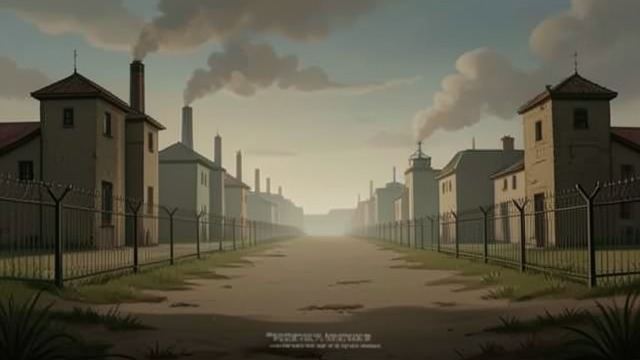
The Auschwitz Complex Expands
Camps are reproduced
Kat Zet III is built with the familiar infrastructure of the other camps: wire, towers, punishment cells, a hospital, and a crematory. Its financing links the killing system directly to industrial expansion.
Scale becomes routine
The repetition of the camp model makes extraordinary violence appear administratively ordinary. Each new facility extends the system’s capacity to imprison, exploit, and kill.
Acceleration in Defeat
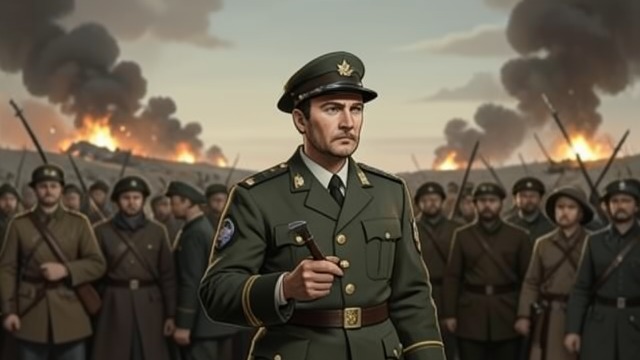
Acceleration in Defeat
Military collapse does not end the policy
As Germany loses ground, Szmul sees selections spread through the camp. The failure of the war does not stop the destruction of Jews.
Murder becomes a remaining objective
The narrative suggests that the regime may still have time to kill many more people even as it loses to the Allies. Defeat therefore intensifies the urgency of the danger.
July 31, 1941
August–September 1941
January 1942, during the “Silent Boys” incident
Summer 1942, with the construction of Kat Zet III
Spring 1943, after the German defeats
