
The Silent Boys and Szmul’s Memory
The Zone of InterestThis thread follows the traumatic history of Szmul’s sons and the event that shapes his understanding of survival, complicity, and death.
increasing Bearing strength in each event
 decreasing
Bearing strength in each eventdecreasingA Family Before the War
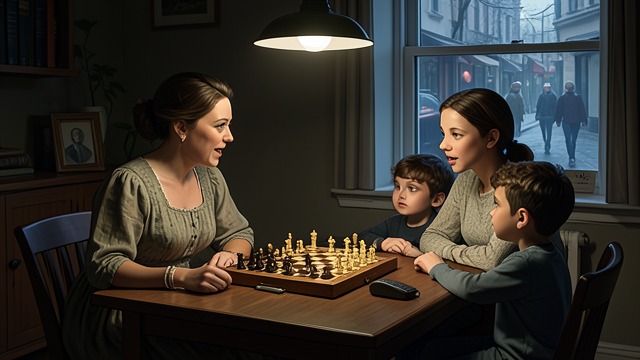
A Family Before the War
Ordinary life before catastrophe
Szmul recalls walking home from school with his sons and sharing a meal with his family. Their life includes routine conversation, relatives, and a game of chess.
Memory holds what the camp destroys
The domestic scene makes his later work among the dead inseparable from the family life he has lost. Remembering becomes a form of attachment as well as a source of pain.
The Deportation to Chełmno
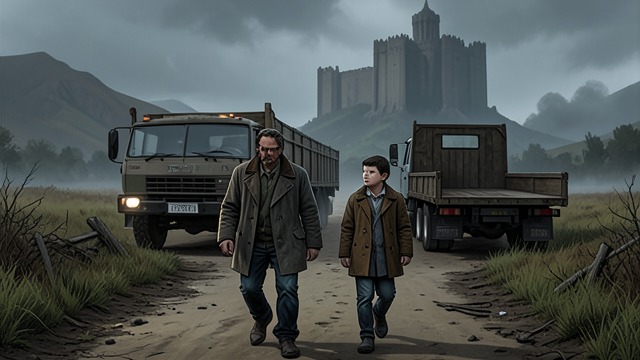
The Deportation to Chełmno
A false promise of work
Szmul travels with his sons expecting employment in Germany. He does not understand that the journey will carry them into a killing operation.
A family is divided by selection
The men and boys are separated from those sent directly to death. The promise of work disguises the system’s intention and makes the survivors’ later labor part of the same crime.
The Silent Boys
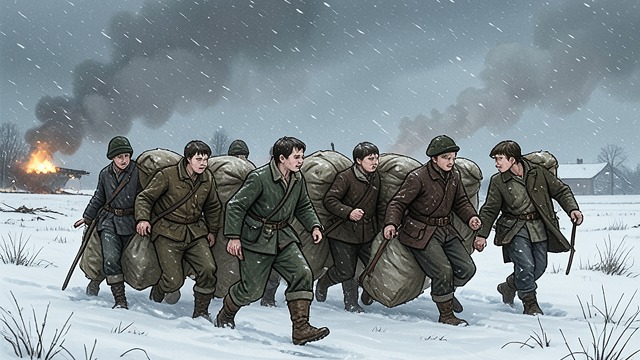
The Silent Boys
Forced labor in the snow
Teenage boys are made to drag bodies under the lash, naked in freezing conditions and without food or water. At the end of the day, the guards lead them to the pits.
Silence becomes unbearable
The boys do not cry out as they are killed. Szmul remembers the sounds of the beating and shooting, and the absence of protest becomes a wound that returns throughout his life.
The Sons Among the Dead
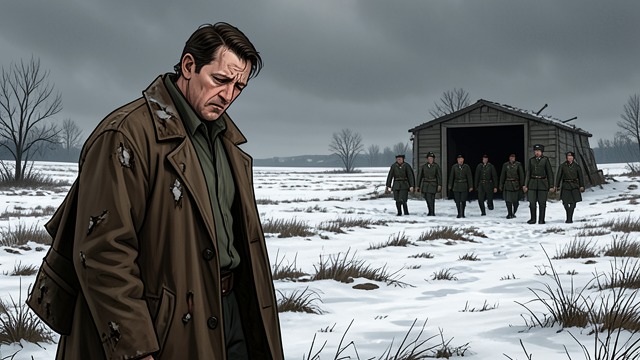
The Sons Among the Dead
Personal loss inside mass murder
Szmul says that his sons Chaim and Schol were among the silent boys. His knowledge of their fate turns an already unbearable camp history into an intimate family catastrophe.
Survival becomes morally complex
He continues living and working among the dead, unable to separate his own survival from the system that killed his children. His testimony refuses an easy account of endurance.
A Life That Cannot Be Continued
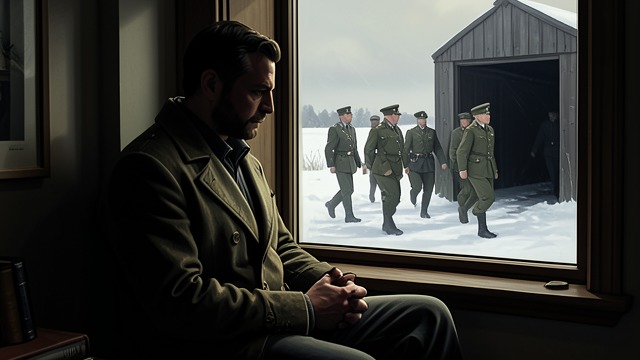
A Life That Cannot Be Continued
Memory returns at the end
Szmul writes that every hour of his life in the camp would take an hour to remember. He expects his memories and writings to end with him, unless he can leave a record behind.
A final claim of agency
He decides that his life is his own and hides his writings before going to meet Doll’s planned death. The decision cannot undo the past, but it determines what he will do with the last act available to him.
August 1939, before the invasion of Poland
After the invasion of Poland, before January 1942
January 21, 1942, at Chełmno
After the massacre, recalled in Szmul’s testimony
April 1943, as Szmul approaches his death
