
The Spring Meadow Cremation Project
The Zone of InterestThis thread follows the practical expansion of corpse disposal and reveals how bureaucratic efficiency and technical failure coexist with mass murder.
increasing Bearing strength in each event
 decreasing
Bearing strength in each eventdecreasingThe Meadow’s Growing Crisis

The Meadow’s Growing Crisis
The disposal problem
The accumulated bodies at Spring Meadow contaminate the water table and create an unbearable smell. Doll faces pressure to remove the remains before the crisis becomes impossible to conceal.
Management responds to exposure
The project arises not from concern for victims but from the practical consequences of leaving their bodies in the landscape. The camp’s environmental damage threatens both its operators and nearby residents.
A Single Continuous Pyre

A Single Continuous Pyre
Technical advice from a prisoner
Szmul recommends maintaining one pyre continuously and using human fat to sustain combustion. His knowledge makes the operation more efficient and reduces its use of fuel.
Expertise under coercion
The advice comes from a man forced to process the dead and facing eventual liquidation himself. The camp turns his skill into an instrument of its own concealment.
The Fire’s New Architecture
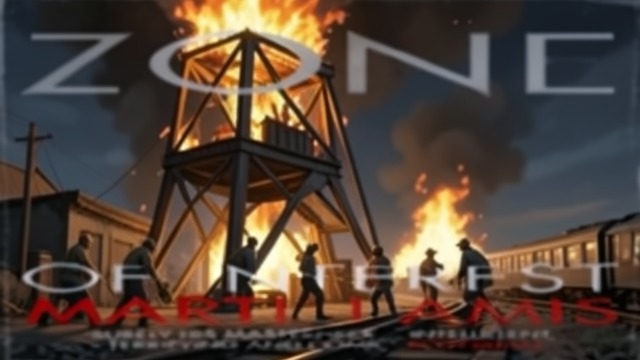
The Fire’s New Architecture
A vast industrial scene
The Sonderkommando prisoners build a towering structure from railway tracks and feed it with remains. At night the glowing metal and flames make the site look like an immense machine.
Modernity and ancient violence
Thomsen sees both industrial organization and forced labor in the structure. The scene makes the camp’s modern technical ambition inseparable from archaic mass killing.
Counting the Dead
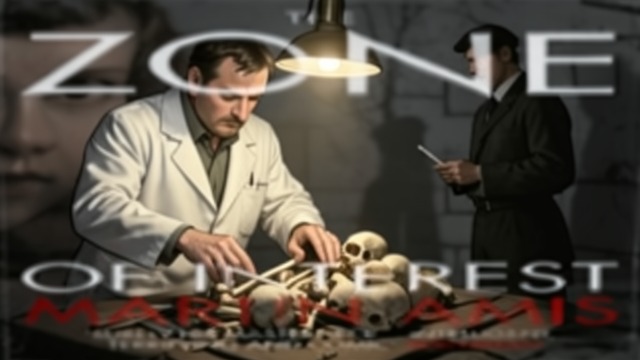
Counting the Dead
A calculation of remains
Szmul explains that counting skulls is unreliable because many were damaged. The camp estimates the dead by counting femurs and dividing the total by two.
Numbers displace persons
The procedure is presented as scientific bookkeeping. Its precision cannot restore the identities of those counted; it demonstrates how easily killing becomes a quantity in the perpetrators’ records.
Crematorium Failure

Crematorium Failure
The equipment breaks down
Crematory IV suffers repeated failures as the rear wall collapses and the installation burns out. Doll complains about materials and transport delays while more bodies accumulate.
Capacity outruns control
The breakdown exposes the limits of the camp’s technical system, but the response is to seek alternative ways to dispose of the dead. Administrative frustration never becomes moral reconsideration.
September 1942, when the remains begin to affect the water supply
Autumn 1942, as Szmul advises the cremation method
Autumn 1942, after the pyre system is established
Late 1942, after Szmul reports the body count
Early 1943, during the operation’s expansion
