
Szmul’s Witness and Last Choice
The Zone of InterestThis thread follows Szmul’s forced role in the killing process, his struggle to bear truthful witness, and his final attempt to reclaim agency.
increasing Bearing strength in each event
 decreasing
Bearing strength in each eventdecreasingThe Mirror That Cannot Be Escaped
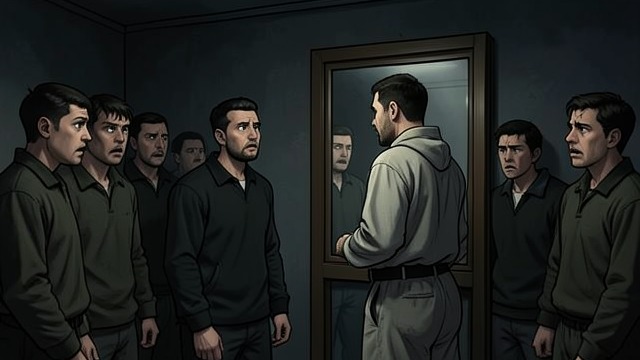
The Mirror That Cannot Be Escaped
A witness without distance
Szmul calls the concentration camp a mirror that reveals the soul but offers no way to turn away. As a Sonderkommando prisoner, he works among the dead and sees the machinery of killing directly.
A paradoxical survival
He describes the prisoners as both victims and participants in a process they did not choose. His account refuses the comfort of innocence without treating forced participation as freely chosen guilt.
One Life Per Transport
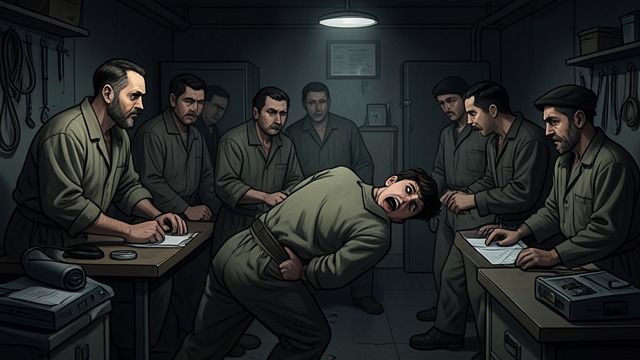
One Life Per Transport
A covert intervention
Szmul and the other prisoners sometimes save one young male prisoner during a transport, selecting someone with a trade who may survive longer. The rescue must happen before the formal screening closes off the chance.
A tiny margin of resistance
The practice cannot stop the larger killing system, but it prevents a small number of deaths. Szmul measures that difference against a system designed to make every individual seem disposable.
Josef’s Buried Testimony
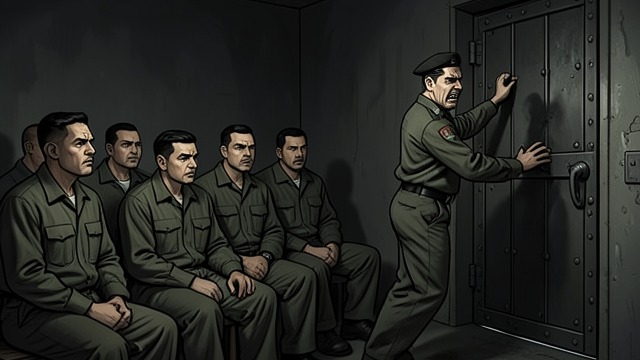
Josef’s Buried Testimony
Words that wound their readers
The Sonderkommando prisoners recover Josef’s buried manuscript and read an account of children condemning the prisoners’ role. The group interrupts the reading, disputing the testimony’s dramatic claims and its portrayal of their situation.
The burden of truth
Szmul fears that testimony can become false or unclean even when written with good intentions. The episode complicates the idea of witness: recording horror does not guarantee a truthful account of it.
Shulamith as a Hostage
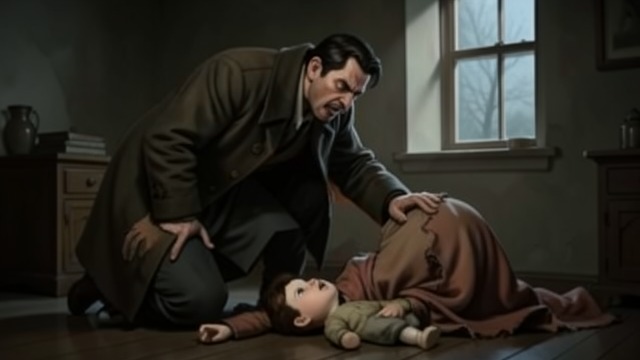
Shulamith as a Hostage
Doll’s coercive bargain
Paul Doll tells Szmul that Shulamith can be seized unless he obeys. He turns Szmul’s love for his wife into leverage, making the threat personal as well as political.
A choice stripped of freedom
Szmul’s work cannot be understood as voluntary collaboration when his family is held under threat. The coercion deepens his despair and shapes the dangerous task Doll later assigns him.
The Final Refusal
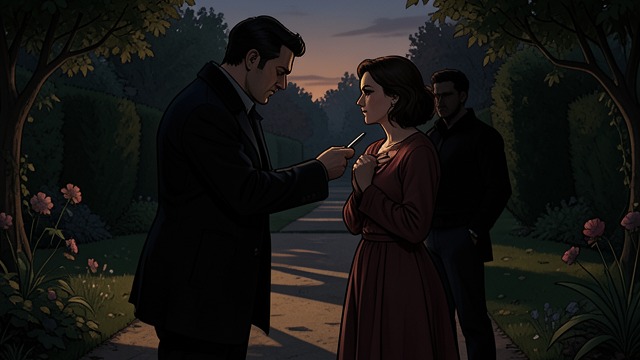
The Final Refusal
An imposed killing plan
Doll orders Szmul to kill Hannah, then rehearses the act with him. At the garden, Szmul instead turns the concealed spike toward himself and explains that Doll wanted him to harm her.
Agency at the end
Doll shoots Szmul rather than allow him to choose his own death. The act ends Szmul’s life but leaves Hannah with the knowledge that he looked her in the eye at last.
Early in the Sonderkommando section
Early in the Sonderkommando account
During the expanded cremation operation, autumn 1942
Early 1943, before Walpurgis Night
April 30, 1943, at dusk
