
The Role of Humor in a Criminal World
The Zone of InterestThis thread follows the novel’s dark humor as a means of exposure, self-protection, and complicity rather than simple relief.
increasing Bearing strength in each event
 decreasing
Bearing strength in each eventdecreasingThomsen and Boris Tease
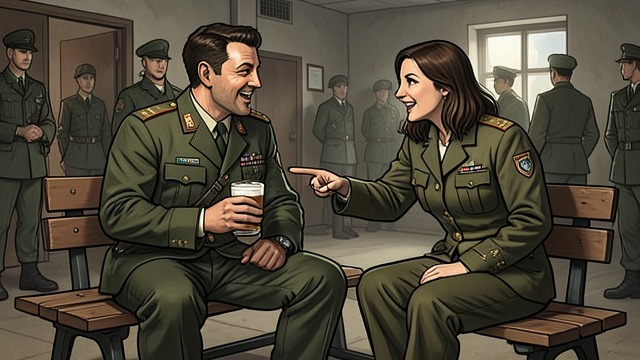
Thomsen and Boris Tease
Friendship uses irreverence
Thomsen and Boris joke about women, rank, and camp life while discussing the arrival of Hannah. Their banter displays the ease and intimacy of lifelong friends.
Humor coexists with complicity
The jokes do not remove the reality of the men’s positions. Their lightness sits beside duties that send prisoners to death.
Doll’s Official Jokes
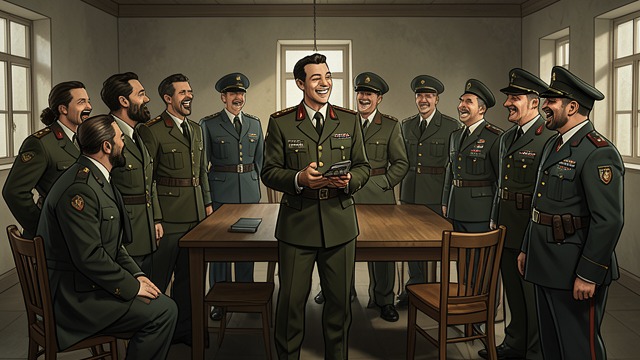
Doll’s Official Jokes
The commandant performs wit
Doll jokes with doctors and officers while preparing a transport reception. He treats the odd composition of the passengers as a comic inconvenience.
Laughter normalizes atrocity
The humor gives officers a sense of collegial normality as they prepare to kill people. The scene makes laughter part of the camp’s social machinery.
Bormann’s Story of Kruger
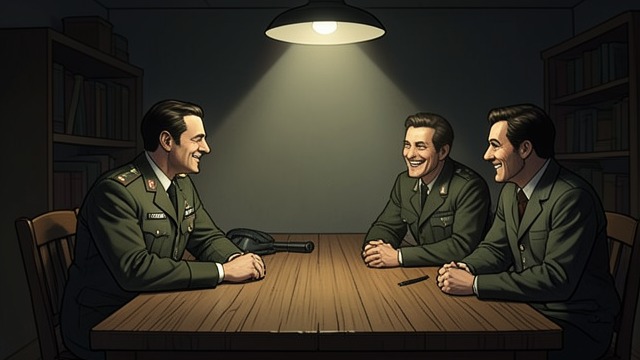
Bormann’s Story of Kruger
A killing becomes entertainment
Martin Bormann tells Thomsen about the mock honors imposed on Dieter Kruger before his execution. He remembers the event as hilarious and expects Thomsen to share the joke.
Humor reveals moral corruption
The story shows cruelty preserved as an amusing memory among powerful men. Thomsen’s discomfort exposes the gulf between the teller’s pleasure and the victim’s humiliation.
The Joke That Fails
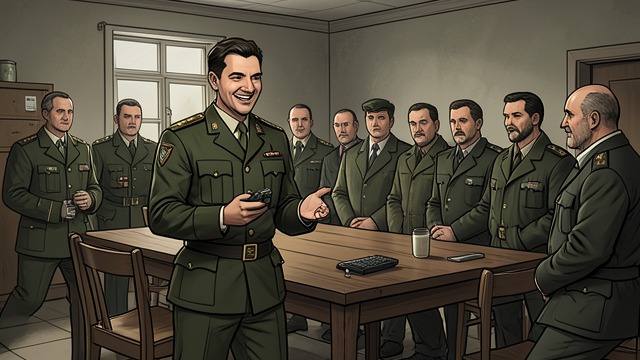
The Joke That Fails
Doll uses humor as control
Doll mocks prisoners, his wife, and his own position as a supposedly powerless cog. He tries to make his authority appear casual even while exercising deadly control.
The performance becomes incoherent
As his psychological state worsens, the jokes no longer stabilize him. Their repetition exposes a mind trying to turn guilt and fear into a performance of mastery.
Postwar Humor Cannot Heal
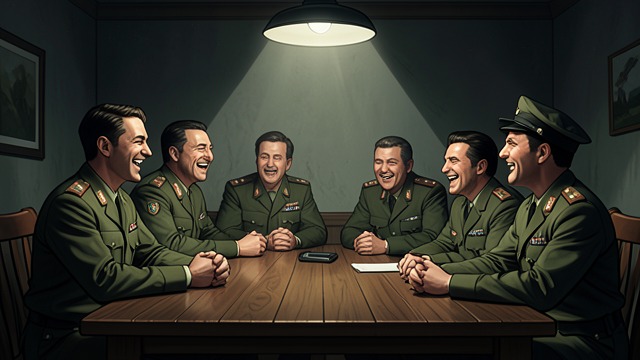
Postwar Humor Cannot Heal
A society makes an excuse into a joke
Thomsen’s colleagues treat the claim of knowing nothing as a new national anthem. The humor recognizes a widespread evasion even as it risks turning responsibility into a punchline.
Irony leaves judgment open
The novel’s humor repeatedly exposes absurdity but does not offer moral relief. Laughter can reveal the truth, conceal it, or show that people have learned to live beside it.
August 1942, at the Officers’ Club
August 1942, during Doll’s account of Special Train 105
Late December 1942, during the drive to the station
Early 1943, during Doll’s increasingly unstable days
September 1948, during Thomsen’s thoughts about Germany
