
The Imperial Fantasy of Lebensraum
The Zone of InterestThis thread follows the expansionist promise of living space as it changes from a confident war aim into an implausible postwar fantasy.
increasing Bearing strength in each event
 decreasing
Bearing strength in each eventdecreasingThe East as a Future Empire
The East as a Future Empire
Conquest is treated as destiny
Officers imagine German control extending across Eurasia and expect victories in Russia to secure living space. The projected empire is spoken of as a natural consequence of military superiority.
Expansion depends on violence
The fantasy is built on occupation, displacement, and mass killing. Its confident language hides the human cost required to make the imagined territory German.
Resources and Autarky
Resources and Autarky
Industrial output is expected to secure victory
Buna-Werke promises synthetic rubber and fuel that could reduce dependence on outside sources. Its planners treat economic self-sufficiency as a strategic answer to the war.
A factory cannot replace reality
The project depends on forced labor and a military situation already deteriorating. The confidence placed in autarky postpones recognition that conquest and production cannot guarantee victory.
The Russian Resistance
The Russian Resistance
The war defies German assumptions
The Red Army and Soviet population resist the German advance despite enormous losses. The officers who once dismissed Russia begin to acknowledge the scale of the country and its ability to continue fighting.
Ideology obscures military judgment
Racial insults persist even as the strategic situation worsens. The language of superiority prevents clear assessment of an enemy the regime has underestimated.
The Retreat from the East
The Retreat from the East
The promised conquest fails
The Sixth Army surrenders, and German forces lose the initiative around Stalingrad. The east no longer appears to be an open path toward a continental empire.
The imperial story is revised
Leaders and officers turn defeat into a new story of sacrifice and future victory. The fantasy remains politically useful even after its central military premise has collapsed.
A Compromise Imagined After Defeat
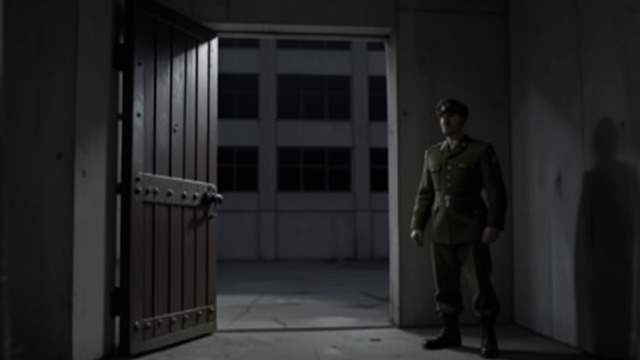
A Compromise Imagined After Defeat
Doll negotiates with himself
Doll imagines retaining parts of the conquests even if German supremacy does not survive. He treats the loss of major territories as a matter for negotiation rather than a sign that the project has failed.
Fantasy protects the perpetrator
His private planning helps him avoid confronting defeat and responsibility. The imagined compromise shows how expansionist ideas persist as psychological defenses after their political foundation is gone.
Autumn 1942, during officers’ conversations about victory
Autumn 1942, during discussion of Buna-Werke
Winter 1942, as the Sixth Army is encircled
February 1943, after the defeat at Stalingrad
Early 1943, during Doll’s private planning
