
The Politics of Racial Categories
The Zone of InterestThis thread follows the regime’s racial classifications as they reorder the lives of Jews, Roma and Sinti, and people whom Nazi bureaucracy claims to define.
increasing Bearing strength in each event
 decreasing
Bearing strength in each eventdecreasingA Hierarchy Claimed as Science

A Hierarchy Claimed as Science
Race is presented as biology
Officers invoke racial purity and racial strength to explain why Jews are enemies and why the regime’s policies are necessary. Their claims turn prejudice into supposed scientific fact.
Ideology authorizes violence
The language of biological threat helps justify deportation and murder. It also gives officials a vocabulary for treating individuals as representatives of categories rather than as people.
The Star and Identification
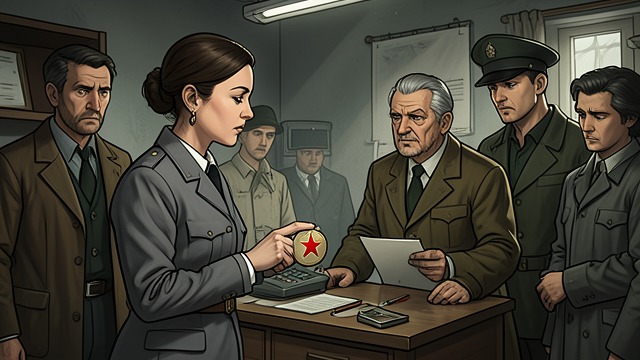
The Star and Identification
A marker sorts people
Alisz explains that her Sinti ancestry was already recorded in a file, and that the Star helps the authorities identify Jewish prisoners. Classification becomes visible on clothing and changes how others treat the wearer.
Bureaucracy makes persecution portable
A file or badge follows a person into a new place and converts ancestry into an administrative sentence. Individual history matters less than the category assigned by the state.
The Roma and Sinti Camp
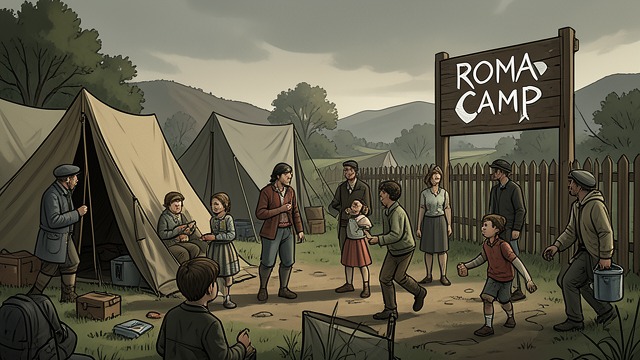
The Roma and Sinti Camp
A separate category is maintained
Doll describes a family camp for Roma prisoners who are classified differently from other inmates. Their status is tied to racial policy rather than a meaningful distinction in their vulnerability.
Classification changes with policy
The narrative shows that categories can be rearranged whenever the regime decides to expand persecution. No label offers durable security to the people being classified.
Mischlinge as a Bureaucratic Problem
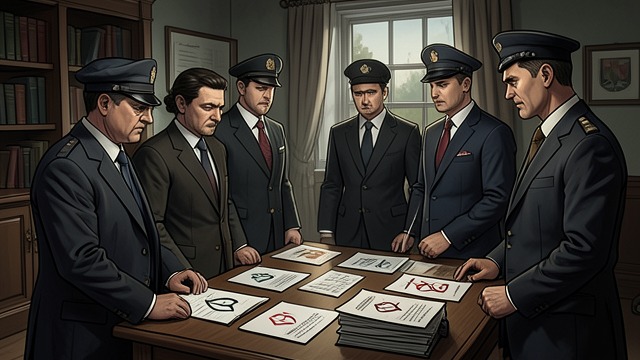
Mischlinge as a Bureaucratic Problem
The regime seeks a definition
Martin Bormann works with officials to define mixed-ancestry people and decide what should be done to them. The discussion turns human identities into a technical problem for policy makers.
Categories reveal arbitrary power
The same bureaucracy that claims racial certainty struggles to define its own boundaries. The uncertainty does not soften persecution; it expands the state’s control over people’s lives.
Ancestry Turns Against the Elite
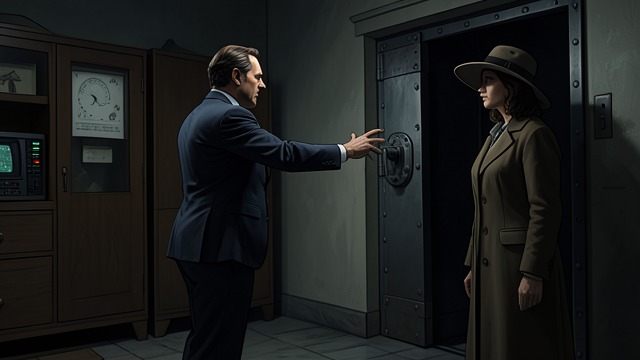
Ancestry Turns Against the Elite
The powerful seek proof
Bormann worries about the unknown parentage of an ancestor and his ability to prove Aryan ancestry to the required depth. His position does not exempt him from the system’s demands.
A hierarchy without stable foundations
The episode shows the racial order as a political construction, not a consistent science. Its leaders fear the same arbitrary scrutiny they direct at others.
Autumn 1942, during the officers’ dinner conversation
Before Alisz’s return to the camp
Late 1942, during Doll’s account of camp groups
December 1942, during Bormann’s discussions
Late 1942, during the inquiry into Bormann’s family history
