Dieter Kruger
The Zone of InterestDieter Kruger is a Communist academic and street activist whose brief relationship with Hannah Doll becomes the enduring point of reference in her private life. Arrested after the Reichstag Fire as a pretext for Nazi power consolidation, he is imprisoned at Dachau, where Paul Doll serves among his jailers. Kruger’s fate is reported as an early death in Leipzig, but the novel surrounds that fact with fabricated torments, political jokes, and unresolved suspicion. He is both a historical victim and a figure whom others repeatedly remake to serve their needs.
Identity and Political Background
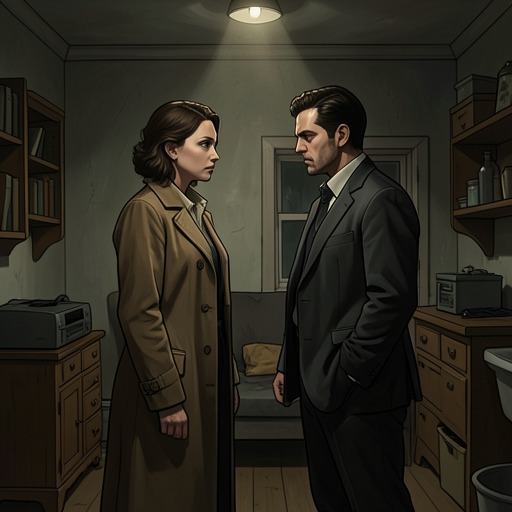
In 1928, Hannah enrolled at the University of Rosenheim to study French and English. Kruger, thirty-four to her eighteen, was a member of the faculty who lectured on Marx and Engels. His good looks first drew Hannah and two friends to his lectures; his politics emerged when he asked whether she was passionate about the Communist cause. She falsely said that she was, and he invited her to the weekly meetings he chaired in the back room of a downtown café.
The group’s activity placed Kruger beyond the role of a university intellectual. He was an activist and a street fighter amid armed clashes involving the Roter Frontkämpferbund and right-wing factions, including the NSDAP. The contrast between his academic post and the street violence is integral to Hannah’s memory of him: he was not merely an attractive lecturer, but a political figure whose commitments carried real danger. The narrative also identifies him as a published political philosopher and a fervent Communist, though it gives no account of his writings beyond that description.
Hannah and the Affair
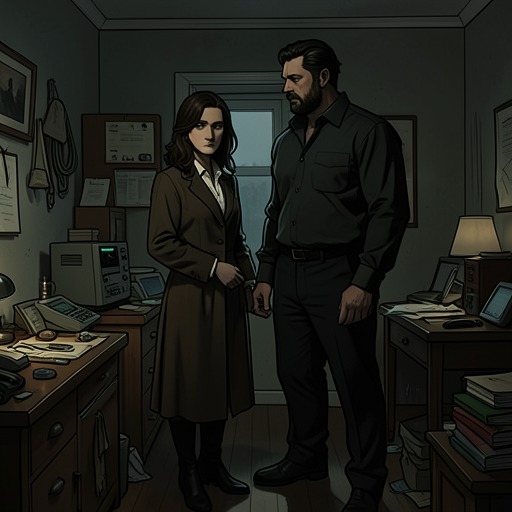
Kruger and Hannah began an affair and, in effect, moved in together by taking adjacent rooms. Their age difference—he was thirty-four, she eighteen—marks the relationship as unequal in experience, although the available account does not elaborate on how either understood that imbalance. After six months, Kruger left her. The relationship was brief, but its ending did not make it emotionally marginal: much later, Hannah’s memory of him remains powerful enough that Kruger’s fate can be used to reach her when other appeals cannot.
Hannah’s attachment is described as the decisive emotional fact of the relationship’s afterlife. Paul Doll recalls that Kruger’s fate held sway over her and that invoking him could sometimes prompt her to respond sexually. The memory of the earlier affair thus becomes something Doll can exploit. This does not make Kruger responsible for Doll’s conduct; rather, it shows how a past intimacy, carried forward by Hannah as grief and attachment, is turned into leverage by a man who knows its importance to her.
Arrest, Imprisonment, and Reported Death
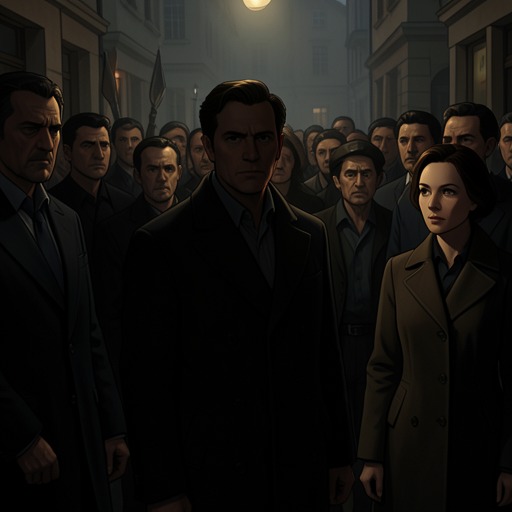
In March 1933, following the fire at the Reichstag, four thousand prominent leftists were arrested, tortured, and imprisoned; Kruger was among them. He was sent to Dachau, where Corporal Doll was one of his jailers early in his confinement. The novel establishes this connection in a compressed, consequential way: Hannah’s former lover and her future husband occupy opposite sides of the camp’s coercive order.
A letter from the Reich Chancellery eventually supplies a terse account of Kruger’s fate. Doll opens the envelope, addressed to him in Indian ink and bearing the Chancellery’s gilt crest, and reads that Kruger was shot while attempting to escape in Leipzig on January 12, 1934. The official notice offers a place, date, and stated cause of death, but little else. It does not describe the circumstances beyond the claim of an attempted escape, leaving a void that becomes available for rumor and invention.
Years later, Konrad Peters connects the January 1934 execution of the Dutch arsonist to Kruger’s fate and asks whether Kruger might have had something to do with the fire. The suggestion is left as a question, not an established explanation. The book therefore keeps distinct what the report asserts and what characters speculate: Kruger’s Communist politics and the timing of his death make him part of a charged political history, but the evidence presented does not confirm any role for him in the Reichstag fire.
Doll’s Stories and the Politics of Mockery
Kruger’s imprisonment continues to occupy Doll’s imagination long after the official report has arrived. Doll later admits that he and his associates had a very good time with Kruger in his Dachau cell in 1933. In the years that followed, he mentally moved Kruger from prison to prison and camp to camp, assigning him suffering according to his own invention: forced labor, solitary confinement, starvation rations, medical experiments, and beatings. Doll acknowledges that he overdid these imagined torments until they ceased to be believed. His stories are not evidence of Kruger’s actual treatment; they reveal Doll’s capacity to turn a prisoner’s suffering into private entertainment and then to confuse invention with memory.
Martin Bormann’s anecdote makes the mockery more public and ritualized. As later recounted by Angelus Thomsen to Hannah, Bormann and friends visited Kruger on death row with champagne on the night before his execution. They stood him up, tore off his shirt, cuffed his hands behind his back, and pinned mock awards to his bare chest, including the Iron Cross with Oak Leaves and the Order of the German Eagle. They then praised him in speeches as the father of fascist autocracy. The grotesque joke was that a fervent Communist would be sent to his death decorated as a hero of National Socialism. The episode is presented as Bormann’s story, and its force lies in the deliberate conversion of a prisoner into a prop for the victors’ amusement.
Narrative Significance and Afterlife
Kruger’s death is confirmed most plainly near the end, when Hannah asks what Doll said happened to him. Doll’s versions had included lurid claims of bodily mutilation and confinement in a freezing chamber. Thomsen rejects those details and gives the simpler account: Kruger was martyred for his cause, and died quickly in January 1934, a fact Thomsen says he learned from the Reichsleiter. The correction separates the known outcome from Doll’s elaborate fantasies without making the historical violence less severe. Kruger was imprisoned, and his death came early; the invented horrors belong to Doll’s storytelling, not to the account offered here as fact.
The novel’s larger political discussion sharpens the significance of that distinction. Konrad Peters describes the mass murder of women and children as a development driven through both central authorization and pressure among officials in Poland, while emphasizing that gas chambers and crematories accelerated killing rather than created the will to kill. This account does not establish a direct connection between Kruger and those later crimes. Instead, placed alongside his fate, it frames his death within a regime whose violence cannot be contained by its official language, its bureaucratic explanations, or the false stories told by its perpetrators.
Kruger survives in the narrative less as a fully recovered biography than as a contested absence: Hannah’s lost lover, Doll’s former prisoner and imagined victim, Bormann’s object of mockery, and the subject of an official notice that says little. The repeated retellings do not restore him. They expose the competing uses of his memory, while the plain facts of his political commitment, imprisonment, and early death remain beneath them.