Friedrich Paulus
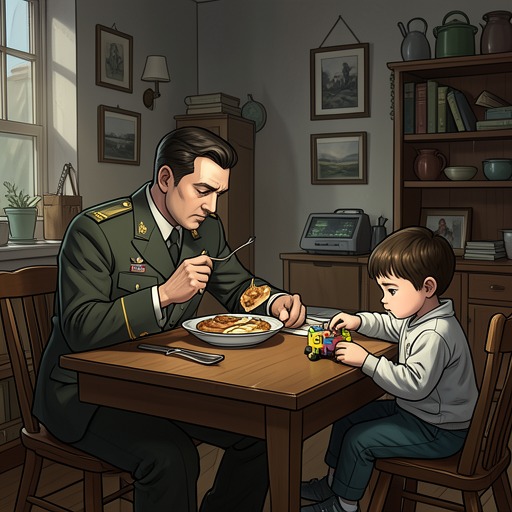
The Zone of InterestFriedrich Paulus is presented indirectly, through the reports and arguments of others, as the commander whose fate makes German defeat impossible to ignore. In the Stalingrad discussions, he shifts from a supposedly secure commander awaiting rescue to a bedridden, surrounded man reported to have surrendered and become a prisoner. Because Paul Doll cannot absorb that reversal, Paulus’s name becomes a test of the distance between battlefield reality and the certainty Doll performs as Kommandant.
Identity and Introduction
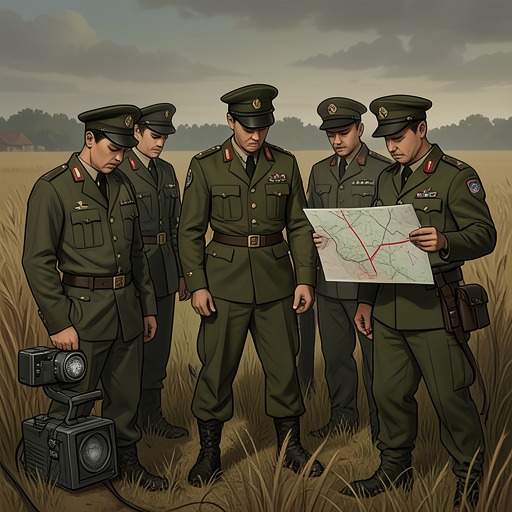
Paulus enters the narrative as a subject of conversation rather than as a speaking or physically present character. In a military discussion, Paul Doll asks Wolfram Prufer about Paulus’s health. Prufer reports that Paulus is bedridden with dysentery, but immediately frames the condition as secondary to the prospects of relief: even if the army is technically surrounded, Erich von Manstein will break through with six divisions and turn the situation around. The exchange gives Paulus a concrete vulnerability while keeping attention fixed on the hope that another commander can rescue him.
That hope is reinforced by Doll’s dismissive confidence in Georgy Zhukov. Doll treats Zhukov as too unintelligent to exploit the German position and invokes the supposed impossibility of German defeat. The contrast is telling: Paulus’s illness and the possibility of encirclement are already present in the conversation, yet Doll answers these signs of danger with contempt for the enemy and confidence in German command. Paulus is therefore introduced within a world of military information that is heard but not yet accepted.
From Expected Rescue to Encirclement
The prediction of relief collapses when news arrives that Erich von Manstein has been turned back and driven into retreat after Georgy Zhukov mauled his forces west of the position. Doll responds not by discussing the failure of the rescue plan but by announcing that he has stepped in a puddle with both feet. The trivial mishap interrupts the military crisis at the moment when those present are looking to him for a response in his capacity as Kommandant. He then resumes his performance of authority, insisting that the Sixth Army will continue fighting alone and expressing confidence that Paulus will take the necessary measures to avoid encirclement.
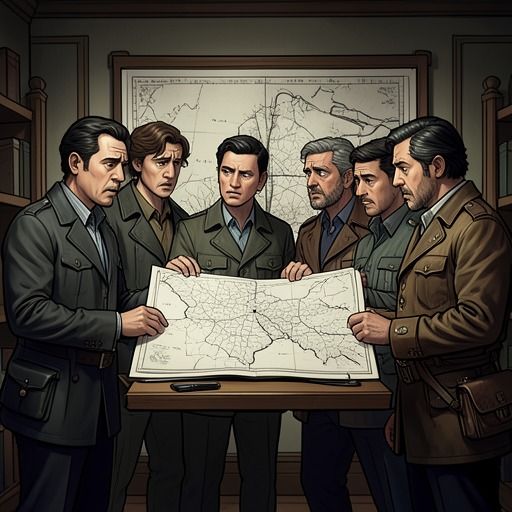
The interruption makes Doll’s reaction visible without requiring an explanation of his private thoughts: a wet pair of shoes briefly occupies the space opened by news that his assurances are failing. Fritz Mobius corrects him directly. Zhukov has already broken through the Romanian lines, Mobius says, and the Germans are surrounded. Paulus’s situation has thus moved beyond the conditional danger raised earlier. The circle Doll had treated as preventable is now described as closed, while his confidence continues to speak as if decisive action remains available.
Surrender, Captivity, and Competing Accounts
The discussion eventually turns from encirclement to the Sixth Army’s surrender. Doll invokes the language of soldiers laying down their lives, but is told that they did not die in that manner: they surrendered. He reacts with disbelief at the very possibility of capitulation. The reported scale makes the news harder to dismiss: 150,000 are said to be dead and 100,000 captured. Doll’s first attempt to accommodate the information is to ask whether it will serve as propaganda, shifting attention from the defeat itself to how the enemy may use it.
The conversation supplies a public emblem of that defeat as well as its human scale. Those present hear that London is already melting the so-called Sword of Stalingrad, commissioned by the king, for Winston Churchill to present to Joseph Stalin at a coming summit. The ceremonial object turns the military outcome into an anticipated political spectacle. When Doll tries to preserve an image of Paulus as a true warrior who took the honorable course, another speaker rejects the account and says Paulus is in Moscow, associating him instead with captivity. The passage does not give Paulus a reply or an independent account of his decision; it stages the clash between Doll’s preferred story and the reports that contradict it.
Narrative Function and Significance
Paulus’s importance in these scenes lies partly in his absence. His condition and actions reach the reader through Prufer’s forecast, the later military reports, and the arguments around Doll. Each new report narrows the space in which confident interpretation can survive: first Paulus is ill but expected to benefit from a relief force; then that force retreats and the Sixth Army is surrounded; finally, surrender and captivity replace Doll’s language of heroic sacrifice. The sequence gives the news a cumulative force without placing Paulus at its center as a direct witness or speaker.
For Doll, Paulus becomes a measure of how long reassurance can withstand evidence. Even after the encirclement is stated plainly, Doll publicly declares confidence that Paulus will prevent it. After the surrender is reported, he recasts the outcome in terms of propaganda and tries to attach it to a heroic image. The narrative leaves the difference between that image and the reports exposed in dialogue. Paulus’s offstage trajectory consequently serves as a focal point for the unravelling of German claims to military invulnerability: his reported fate is concrete, while Doll’s explanations grow less compatible with it.