Georgy Zhukov
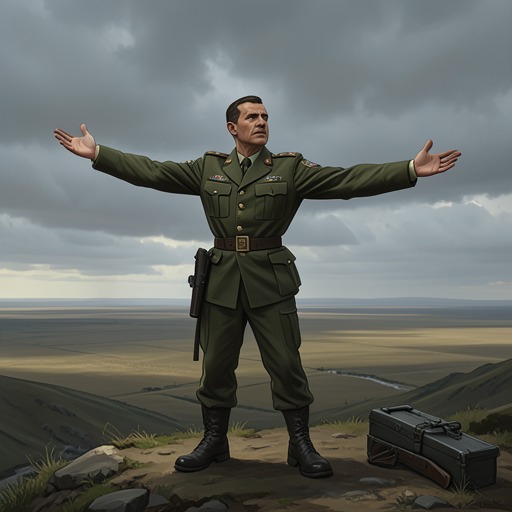
The Zone of InterestGeorgy Zhukov is an offstage but consequential presence in the Stalingrad passages: his actions arrive as news, and each report makes the German leadership’s confident account of the war harder to sustain. The contrast is sharpest in Paul Doll’s contemptuous dismissal of Zhukov, followed by the revelation that Zhukov has already helped encircle the German Sixth Army and turned Erich von Manstein back.
Identity and Introduction
The supplied passages identify Zhukov as a Soviet commander whose decisions and battlefield successes shape the German characters’ understanding of events at Stalingrad. He does not appear in person here. Instead, readers encounter him through the assessments of Wolfram Prufer, Paul Doll, and Fritz Mobius, whose contrasting statements reveal as much about their own assumptions as about Zhukov’s military impact.
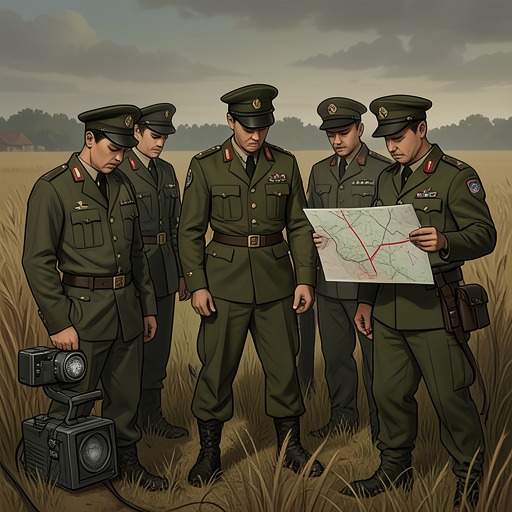
Prufer raises the danger of encirclement and identifies the Romanian forces as a vulnerability: if he were in Zhukov’s position, he says, he would attack them directly. Doll rejects the suggestion, portraying Zhukov as too stupid to think strategically and incapable of matching a German commander. The exchange establishes a divide between Prufer’s uneasy military assessment and Doll’s reflexive faith in German superiority.
Actions at Stalingrad
The reports that follow confirm the danger Prufer had anticipated. Mobius announces that Manstein has been turned back and is retreating after Zhukov mauled his forces fifty kilometres to the west. When Doll continues to speak as though the German Sixth Army can avoid encirclement, Mobius corrects him: Zhukov broke through the Romanians weeks earlier, and the German forces are already trapped.
The sequence makes Zhukov’s achievement legible through its consequences. The earlier breakthrough is not merely a threat that might materialize; it has already changed the position of the Sixth Army. Manstein’s retreat then defeats the hope that a relief force can reverse the situation. Zhukov remains outside the scene, but his reported actions leave the German characters with fewer plausible ways to deny the encirclement.
German Denial and Narrative Significance
Doll’s confidence turns the news into an exposure of his judgment. He treats Zhukov’s supposed inferiority as proof that German forces cannot be defeated, even as Prufer’s warning and Mobius’s account demonstrate the failure of that assumption. His reliance on the imagined incompetence of an opponent contrasts with the concrete military developments being reported around him.
The next day, the radio station Doll permits himself to hear continues to describe a heroic German stand in the Caucasus and compares the Sixth Army to the Spartans at Thermopylae. That propaganda does not undo the facts Mobius has just delivered. Zhukov’s narrative role is therefore also structural: reports of his victories interrupt the language of German invincibility, while official optimism carries on as if the defeat it cannot acknowledge were still avoidable.