Hannah Doll—Dieter Kruger
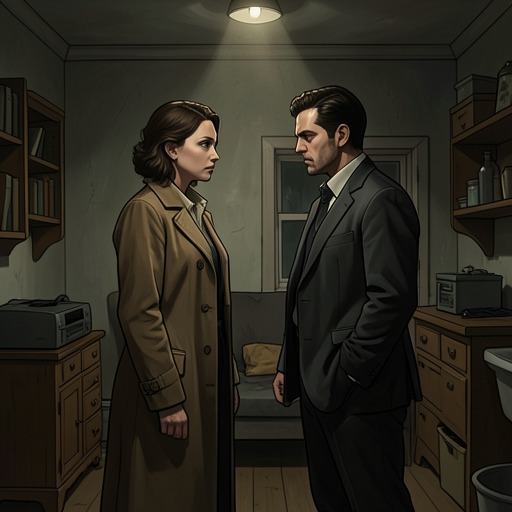
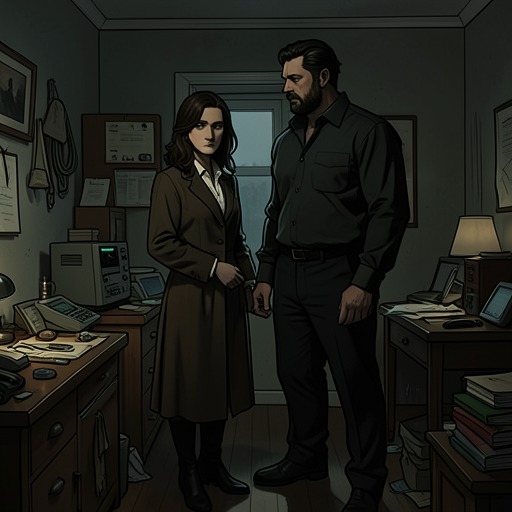
The Zone of InterestHannah Doll and Dieter Kruger’s relationship is an early romance whose personal intimacy is repeatedly tested against political conviction. Hannah is drawn to Kruger’s looks before she understands the depth of his activism; she joins his circle, but does not share its ideals. When he finally leaves her, the break is followed by a breakdown and a suicide attempt. Years later, the reversal of their positions is stark: Kruger is imprisoned at Dachau, and Paul Doll, who had nursed Hannah through her crisis, is among his early jailers.
Meeting and Political Beginnings
In 1928, Hannah had enrolled at the University of Rosenheim in southern Bavaria to study French and English. Dieter Kruger taught Marx and Engels there. Hannah and two friends began attending his lectures because he was handsome; her attraction preceded any serious commitment to the politics that organized his life. When Kruger privately asked whether she felt passionate about the Communist cause, Hannah said that she did, although she later acknowledged that this was untrue.
Kruger invited her to the weekly meetings he chaired in the back room of a downtown Kaffeehaus. There she encountered a side of him that the lecture room did not show: he was both an academic and an activist, a university don and a streetfighter. His political world included running battles involving guns and even grenades, as the Roter Frontkampferbund fought the NSDAP and other right-wing factions. The relationship therefore began across a gap Hannah initially concealed. She entered the Group because of Kruger, while he treated political belief as a serious measure of intimacy.
Intimacy and Unequal Commitment
Hannah and Kruger began an affair and, in practice, moved in together, though their arrangement was described as taking adjacent rooms. Kruger was thirty-four and Hannah was eighteen. The age difference and the disparity in their political experience form part of the relationship’s circumstances: she was a young student attracted to a charismatic lecturer, while he was an established activist for whom belief was bound up with personal loyalty.
Their intimacy did not make Hannah a convert. She recalled that she did not believe in the Communist cause and disliked its promised utopia. Her lack of conviction also appeared in the Group’s meetings: she repeatedly fell asleep while Kruger was speaking. The contrast is not simply between public politics and private romance. The same question—whether Hannah truly belonged to the cause—entered their private life and became, in Kruger’s eyes, a condition of whether the relationship could continue.
Separation and Hannah’s Crisis
Kruger left Hannah six months after the relationship began, but the separation was not immediately a clean break. Hannah remembered that he continued to return for a night, or had her come to him. She thought at first that he had stopped wanting to sleep with her, yet his visits made the situation more confusing. His stated objection was instead ideological: he told her she was not sufficiently left-wing. Hannah understood that he was right about her lack of belief; she had never accepted the cause or its utopia.
The end came after Kruger was badly beaten by a gang of Browns. Hannah recalled that the assault made him more steely. He then judged it inconceivable for someone as committed as himself to remain with a woman who did not truly share his faith, and left for good. His choice made political allegiance decisive where attraction and sexual intimacy had not been enough to bridge their difference. For Hannah, the finality of his departure brought severe distress: she described herself as pathetic, said she had a complete breakdown, and disclosed that she had tried to kill herself by cutting her wrists.
The physical traces remained visible when she recounted the episode in the gazebo on the border of the Zone. She showed the pale, cross-hatched seams across her blue veins. The scars make the recollection more than a report of a failed romance: they register the bodily consequence of a rupture Hannah had experienced as devastating. The scene also preserves her own account of the relationship’s terms. Kruger’s repeated returns had prolonged intimacy after his first departure, while his eventual insistence on ideological compatibility ended it decisively.
Paul Doll and the Later Historical Reversal
After the suicide attempt, it was Paul Doll who found Hannah and took her to hospital. She remembered him as kind to her during that period. He nursed her and gave her medicine, including sedatives; Hannah described what followed as feeling like a dreadful dream. She then discovered she was pregnant and, after that, found herself married. Her account places these events in the aftermath of Kruger’s departure and alongside Paul Doll’s care, but does not establish a more specific causal link between them.
The history of Hannah and Kruger later intersects with the regime that transformed private loyalties into imprisonment. In March 1933, following the Reichstag Fire, thousands of left-wing notables were arrested, tortured, and imprisoned, and Kruger was among them. He was sent to Dachau. Corporal Paul Doll was one of his jailers early in his imprisonment. The contrast sharpens the relationship’s retrospective significance: the man whose political commitment had been the ground on which he rejected Hannah became a prisoner of political persecution, while the man who had cared for her after her collapse occupied a position of authority over him. The evidence does not resolve what either man made of that reversal, but it places their linked histories within the same increasingly coercive political world.