Jehovah's Witnesses
The Zone of InterestJehovah's Witnesses appear through two brief but sharply contrasting accounts: Humilia's refusal to renounce her faith despite the cost to her family, and a prisoner's reported response to corporal punishment. Together, these episodes place religious conviction inside a system that offers release in exchange for abjuration and turns suffering into a subject of uneasy speculation.
Identity and Introduction
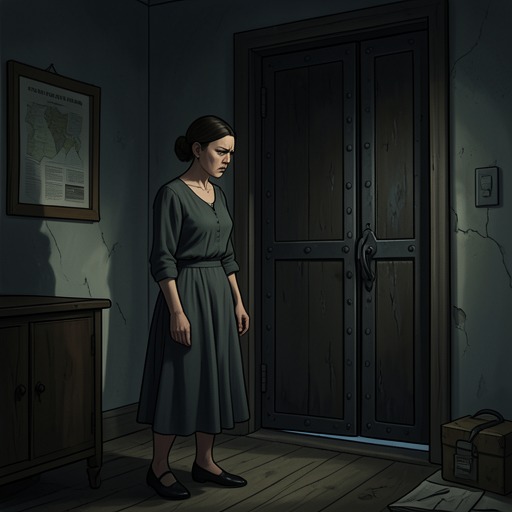
Humilia, a maid in Hannah Doll's household, is identified as one of Jehovah's Witnesses when Angelus Thomsen asks Hannah about her. Hannah describes Humilia as having a religious face and says she does not understand the Witnesses. Thomsen's reply is less a description of the group than an interpretation of Humilia: he suggests that she looks as she does because she believes she will never die. The exchange establishes faith as something visible to the observers but not fully understood by them.
Humilia's Choice
Hannah explains that Humilia could sign a document renouncing her faith and thereby become free. The choice has an intimate and practical consequence: Humilia has a twelve-year-old son in state care, and signing would allow her to go and get him. Yet she will not sign. Hannah's account makes this refusal more than an abstract declaration of belief, since it places religious commitment against the possibility of reunion with her child.
That decision sits alongside Humilia's care for Hannah's two girls. Hannah calls her devoted to them, while also describing the son she cannot reclaim without renouncing her faith. The contrast does not resolve Humilia into a simple emblem of sacrifice: the scene gives her commitments a concrete, painful shape, with affection and separation present at once.
Suffering and the Narrator's Account
Hannah wonders whether Jehovah's Witnesses are meant to like suffering. Thomsen recalls a description by Boris Eltz of a Witness at a flogging post who pleaded for more. He withholds that story from Hannah, then interprets the prisoner's response as gratification of faith and concludes that the Witnesses love suffering. The episode is explicitly mediated through recollection and interpretation: the reported plea is Boris's account, while the explanation of what it means belongs to Thomsen.
The scene therefore leaves a tension rather than a settled account of the group. Humilia's refusal to sign is presented through the consequences Hannah names; the flogging-post story reaches the reader at one remove and is framed by Thomsen's attempt to explain it. In both cases, faith is encountered under pressure, but the text distinguishes the observed choice from the outsiders' effort to interpret it.