Josef
The Zone of InterestJosef is a Czech Jewish chemist from Brno whose surviving presence in the story is an eight-page testimony, written in Yiddish and hidden beneath the hedge bordering Paul Doll’s garden. Though Josef is already gone when the document is recovered, his words confront the prisoners who read them with the acts they have witnessed and the burden of recording them. The manuscript becomes more than a message from the dead: it exposes the conflict between bearing witness and feeling unable to endure, or trust, what witness contains.
Identity and the Hidden Manuscript
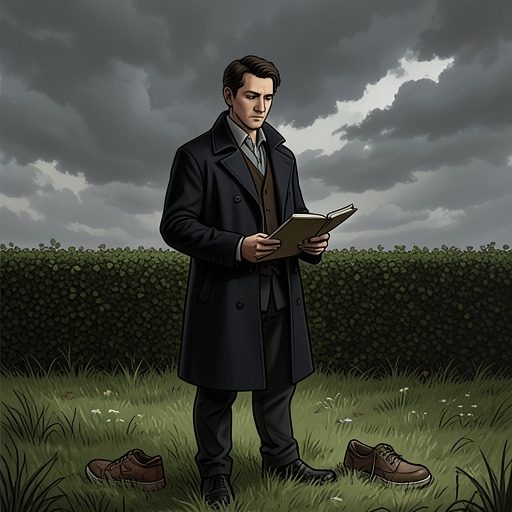
Josef is identified as a chemist from Brno, a serious man known to the narrator at the Lager. His testimony was written in black ink, in Yiddish, and concealed inside a child’s galosh beneath the hedge along Doll’s garden. The hiding place gives the manuscript a precarious, material existence: it has survived underground, but its recovery means deciding whether to expose its contents to readers who are themselves trapped in the world it describes.
The prisoners do not retrieve it casually. After disputation and a show of hands, they resolve to exhume the document temporarily and acquaint themselves with it. The narrator says he is instinctively, perhaps superstitiously, opposed. His reluctance precedes the reading, and he later calls this one of the Lager episodes he would least soon relive. Josef is thus introduced through a double absence: he is gone, and his writing has been buried; making it present again is an uneasy collective choice.
What the Testimony Records
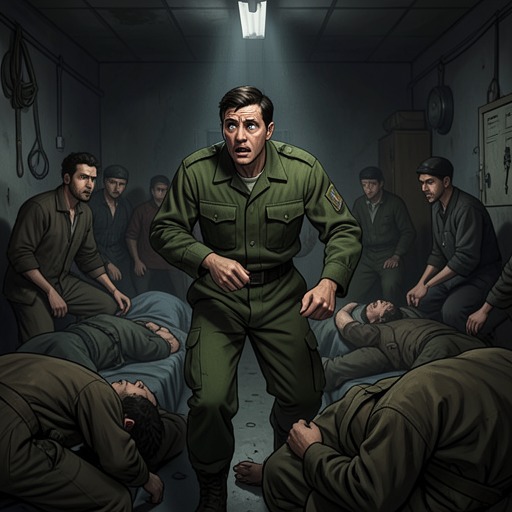
The narrator begins reading aloud from Josef’s pages. The first passage describes a five-year-old girl undressing her one-year-old brother. When a member of the Kommando comes to undress the child, the girl calls him a Jewish murderer and says she is the boy’s mother, insisting that he will die in her arms with her. The narrator breaks off to question whether the account is mixed up. The others press him to continue, and he hesitates before asking whether he should go on. Their response is divided: one says no, another says yes.
The fragment is specific in its ages, gestures, and words. It places the smallest child in the care of his sister, while the impending arrival of the Kommando turns the act of undressing into an encounter with the machinery of death. The girl’s declaration that she is his mother gives the moment its devastating force: she assumes the role of protection even as she understands that she cannot save him. The reader encounters this scene not directly but through Josef’s written account, the narrator’s faltering voice, and the group’s argument over whether to hear more.
The manuscript continues to describe a young Polish woman making a brief, fiery speech in the gas chamber. She condemns Nazi crimes and oppression, speaks of her nation’s future, and is followed by the Poles kneeling in prayer. They rise to sing the Polish anthem; the Jews sing Hatikvah. Josef’s account describes the two anthems as merging through their shared fate at the site. The testimony therefore records not only terror but also public acts of defiance, prayer, and collective expression among people facing death.
Reading, Doubt, and Burial
The narrator eventually stops, and the men turn away and move toward their bedding. One voice demands that the document not be returned to the earth but destroyed unread. The group’s divided response has shifted from the decision to read toward the wish to end the reading altogether. Yet the narrator continues silently through the page, confronting more of Josef’s account without sharing it aloud.
He then questions the testimony’s truth. Josef’s intentions, he says, were of the best, perhaps the highest, but he judges what Josef writes to be untrue and unclean. He doubts that a five-year-old girl or an eight-year-old boy could understand the situation of a Sonder. That objection reveals the narrator’s difficulty with the account, but it does not settle the matter for the reader: the text gives his judgment alongside the scene he has just read, not independent proof that the testimony is false. His certainty about Josef’s limitations sits beside his own fear of what writing might require.
The narrator imagines Josef writing as a serious man and turns the question back on himself: whether his own pen could be controlled, or whether his account would come out in the same uncontrolled manner. He also asks whether he will lie, whether he will need to deceive, and whether he will write disgustingly because he understands himself to be disgusting. Josef’s manuscript thus becomes a measure against which the narrator tests his own capacity to testify, even as he refuses the account’s credibility. In the end, he ensures that Josef’s pages are reinterred. The document is neither accepted without reservation nor destroyed: it returns to its hiding place, carrying unresolved the conflict between preservation, disbelief, and the obligation to bear witness.
Narrative Significance
Josef is characterized through the document’s survival and through the troubled reception of his words, rather than through an extended account of his life. The buried galosh, the vote to exhume it, the interrupted reading, and the eventual reburial make testimony a physical and collective problem. The manuscript can preserve the dead person’s account, but its readers must decide whether they can listen to it, and the narrator cannot separate that decision from his fear of what he himself might write.
The episode does not offer a simple opposition between truthful witness and falsehood. Josef is remembered as serious and well-intentioned; the narrator nevertheless rejects parts of his testimony while worrying that his own future testimony may also fail. The movement from buried pages to spoken words and back underground leaves the reader with the enduring presence of what the group could not comfortably hear. Josef’s account remains an act of witness even as its credibility, its reception, and the narrator’s resistance to it remain unsettled.