Josef's testimony manuscript
The Zone of InterestJosef's testimony manuscript is both a concealed record of murder and a test of what testimony can honestly claim. Written in Yiddish across eight pages of black ink, it recounts children and Polish prisoners confronting death. When the Auschwitz Sonderkommando exhumes and reads it, the account's emotional force collides with the narrator's conviction that some of its words are untrue. The manuscript survives this dispute physically, but not as an uncomplicated or fully trusted witness.
Discovery and physical form
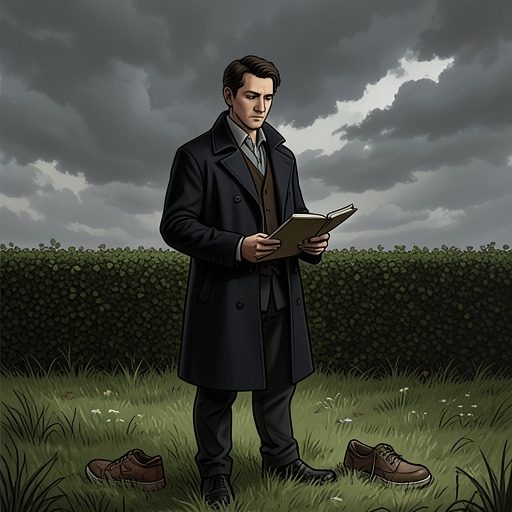
Josef, a Czech Jew from Brno who had worked as a chemist at the camp and is now gone, wrote the testimony and buried it in a child's galosh beneath the hedgerow bordering Doll Villa. Its hiding place gives the document an intimate, makeshift form: a child's shoe becomes the container for a record of children whose lives are at the centre of the pages. The manuscript's survival depends first on concealment in the landscape of the camp, not on any official archive or secure process of preservation.
The prisoners debate whether to bring it back to light. After much disputation and a show of hands, they resolve to exhume it temporarily and learn what it contains. The narrator is instinctively, perhaps superstitiously, opposed; he later describes this episode as one he would least like to relive. That reluctance precedes the reading, so the document's emotional and ethical difficulty is built into the decision to open it, not merely into the scenes it records.
What the pages recount
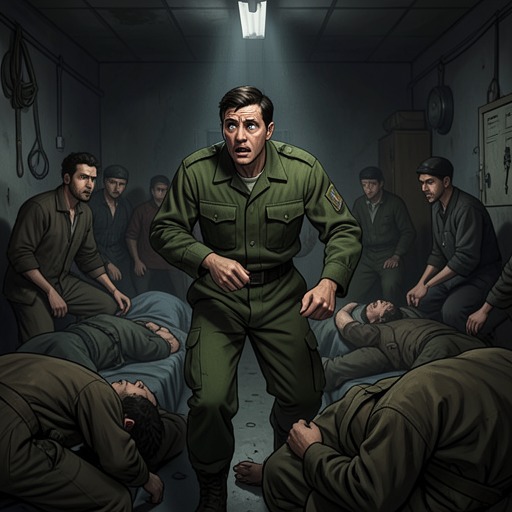
The narrator begins reading an account of a five-year-old girl undressing her one-year-old brother. A member of the Kommando comes to remove the boy's clothes, and the girl presents herself as his mother, insisting that she will remain with him as he dies. The scene places a small child's words beside the unbearable work assigned to prisoners in the killing process. The narrator falters while reading and asks whether he should continue; the others answer in contradictory bursts, at once telling him to stop and urging him on.
The next episode concerns a boy of seven or eight who challenges a Jewish prisoner for leading children to the gas in order to live. The accusation makes survival itself the object of the child's moral judgment, turning the testimony toward the Sonder's coerced position. The narrator again hesitates. This time the interruption grows into outright protest when the pages describe a young Polish woman's short, fiery speech in the gas chamber.
In the account, the woman condemns Nazi crimes and oppression and speaks of the nation's future. The Polish prisoners kneel in prayer, then sing the Polish anthem; the Jewish prisoners sing Hatikvah. The manuscript presents their different songs as joining in a shared fate, giving the final scene a collective and forward-looking cadence. This passage is central to the dispute: the prisoners do not merely react to the deaths described, but question whether such composed, eloquent language could truthfully belong to people in that situation.
The dispute over truthful witness
Several men have tears in their eyes, but the narrator specifies that they are not tears of grief or guilt. Their response is instead bound up with resistance to the account's manner of telling. They object to the claim that the woman made a fiery speech, call the passage a lie, and say that silence would be better. One demand is that the manuscript be destroyed unread rather than returned to the earth. The reading has made the pages more than a record: it has turned them into a conflict among the prisoners about what can be said on behalf of the dead.
The narrator considers Josef a serious man and believes his intentions were of the best, perhaps even the highest. Yet he judges what Josef wrote to be untrue and unclean. He questions whether a five-year-old girl or an eight-year-old boy could possess the experience to understand the Sonder's situation in the terms the manuscript gives them. His objection is not that the children's suffering is unreal, but that the testimony may have shaped their words into an interpretation they could not themselves have made. The question is therefore how to preserve the reality of an event without making its victims speak in a form the witness cannot substantiate.
As the men turn away and seek their bedding, the narrator continues through the pages in silence, or drags his sight down the rest of them. Reading Josef's account leads him to imagine his own future testimony: whether he too will be able to control his pen, or whether the writing will come out distorted. His doubts reach beyond Josef's manuscript to the act of witnessing itself. The pages expose a pressure at the heart of testimony: the need to record what happened, set against the risk that the act of giving it form will falsify it.
Reburial and significance
Despite the demand that the pages be destroyed, the narrator makes sure Josef's manuscript is reinterred in its hiding place. The decision does not resolve his judgment of its truth. He preserves the physical record while refusing to endorse every scene as reliable; reburial is neither a public acceptance of the testimony nor its destruction. The manuscript remains materially present, concealed again beneath the hedgerow, while its claims continue to trouble the person who read them.
The episode belongs to a wider question of bearing witness: the narrator reflects that the word for martyr derives from a Greek word meaning witness, and that some members of the Sonderkommando will bear witness. Josef's pages make that aspiration difficult rather than reassuring. Their survival matters, but survival alone cannot settle the credibility of their language. By ending with reburial, the episode preserves both the testimony and the narrator's unresolved unease about what it means to tell the truth about people facing death.