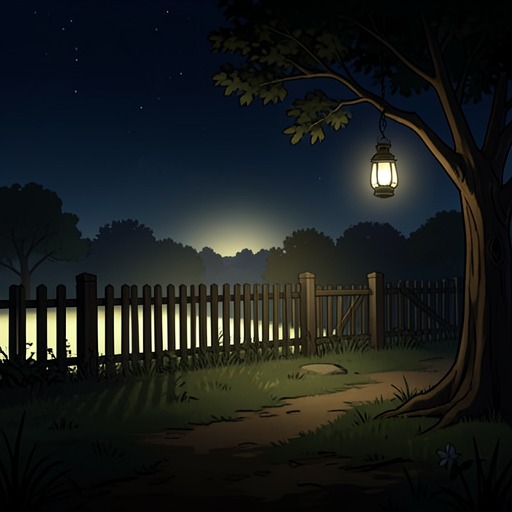
Walpurgis Night
The Zone of InterestWalpurgis Night enters the narrative as a date made ominous by Paul Doll: April 30, which he orders the Sonderkommando leader to remember. Its force comes not from an event shown on that day, but from the way Doll fixes an unstated future act to the calendar, making time itself part of his intimidation. Around this date, the novel sets other political anniversaries and administrative turning points, exposing how the regime uses dates both to stage public memory and to organize violence.
April 30 as a Threat
Doll gives the date in a stockroom containing hoses, brooms, brushes, and bleach. He has a Luger drawn but not raised, and first instructs the narrator to put a date in his diary. He then identifies April 30 as Walpurgisnacht. The setting makes the instruction feel less like neutral scheduling than an order backed by immediate coercion: the gun remains in Doll’s hand while the date is entered into the future.
The date becomes more oppressive because the narration marks the present as March 10. The narrator feels as though he has been granted eternal life, a bitterly distorted response to the interval Doll has imposed. The pages between the two dates become a period of waiting, not a reprieve. Doll continues by pressing the Sonderkommando leader to choose a place, a time, and a means, so the threat acquires logistical dimensions without the passage confirming what will happen on April 30.
Anniversaries and Political Memory
The novel also presents dates as instruments of public commemoration. One celebration is described as a joint anniversary: it marks the Nazi electoral breakthrough of September 14, 1930, and the passage of the Nuremberg Race Laws on September 15, 1935. The paired dates turn an electoral success and a racist law into a shared cause for celebration. The narrator and Hannah attend a performance after cocktails, but his attention is captured by calculations about how the audience might be killed and what could be salvaged from their clothes. The official festive calendar and the narrator’s murderous mental arithmetic occupy the same evening, exposing the violence concealed beneath the language of celebration.
November 9 receives a more elaborate commemorative staging. At a Reich Day of Mourning, Paul Doll invokes November 9, 1918, November 9, 1938, and November 9, 1923, presenting the date as a sacred occasion for the movement. His account recasts the 1918 armistice as a betrayal and describes the violence of 1938 as a spontaneous popular rising. The ceremony culminates in the display of the Blood Flag, which Doll says has been symbolically stained with red wine and compares to the Eucharist. Political myth borrows the language and objects of religious observance, turning a succession of dates into a fabricated story of injury, sacrifice, and communal rebirth.
Dates Behind Administrative Violence
Other dates in the narrative mark the development of policy rather than public ritual. In a discussion of what he calls the crime without a name, Konrad Peters identifies July 31, 1941, as a turning point: authorization was returned with a signature, and the leadership’s wish for a total solution was conveyed. He describes an earlier possibility of deporting Jews to a remote, cold region, then traces how that territorial proposal receded as officials in Poland faced pressure over the number of Jews under their control. By August or September, he says, the killing had expanded from men to women and children.
Peters also insists that the industrial machinery of extermination was not its cause. Gas chambers and crematoria, in his account, accelerated the process, economized effort, and spared the killers’ nerves; bullets and pyres could have produced the same outcome because the perpetrators possessed the will to kill. He points to the Einsatzgruppen’s mass shootings as evidence. The dated policy shift therefore sits within a wider account of institutional pressure and deliberate intent, rather than presenting technology as an explanation in itself.
A related conflict appears in Paul Doll’s private reasoning. He sees the Economic Administration Head Office pressing him to increase labor for the munitions industries, while the Reich Central Security Department demands the disposal of evacuees. He objects to a proposal to work able-bodied mothers until they collapse in a boot factory, imagining the difficulty of separating them from their children at the ramp. The passage places competing bureaucratic objectives beside the human consequences of implementing them: labor extraction and deportation are not separate systems but pressures Doll experiences at once.
The Calendar as a Structure of Dread
Across these episodes, dates perform different kinds of work. September anniversaries recruit public celebration; November 9 converts political history into a ritual of grievance and martyrdom; July 31 and the months that follow mark a policy’s escalation; April 30 becomes a deadline delivered under threat. The calendar does not offer a stable measure of ordinary life. It is appropriated by political theater, administrative decisions, and personal coercion.
Walpurgis Night is especially stark because its meaning in the immediate scene depends on Doll’s act of naming it. The date is given before its promised consequence, and the narrator is left to inhabit the time between announcement and fulfillment. That unresolved interval makes April 30 more than a point on the calendar: it is a future held over a prisoner, while the regime’s other dates show how violence can be made to look commemorative, bureaucratic, or inevitable.