Blake's farewell to Chloe
The light house: A love storyBlake's farewell to Chloe is the decisive mourning ritual of the novel: at sunset, Blake McGrath takes the last red rose to the beach with Ned, speaks directly to his drowned daughter, and finally ends the nightly practices that have kept him waiting for her return. The event does not erase Chloe or cancel Blake's love. Instead, it transforms his relationship with her from desperate expectation into an enduring memory that permits him to remain present with Connie Dixon and to imagine returning to art.
Causes and Background
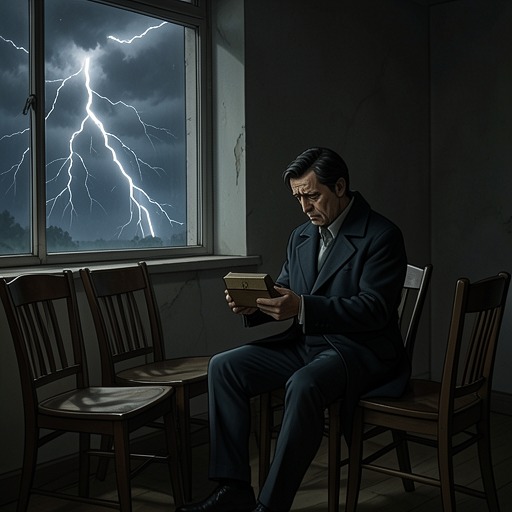
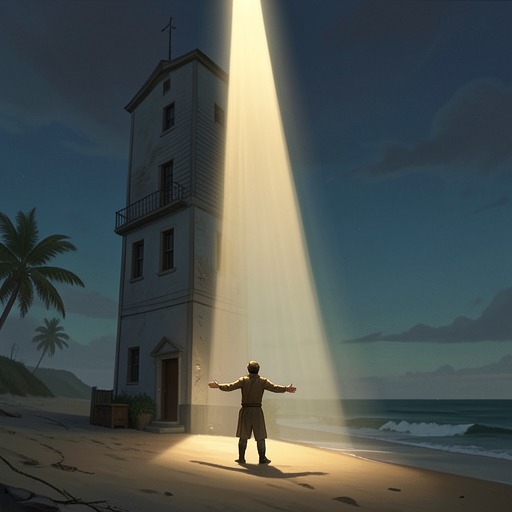
The farewell grows out of the loss that has governed Blake's life. After Chloe drowned, he repeatedly went to the beach with Ned at sunset and sent a rose into the sea; Ned then remained on the empty shore through the night, as though waiting for Chloe. Blake also kept every light in the house burning, day and night, because he wanted Chloe to find her way home. The locals called the residence the light house because its illumination could be seen for miles out at sea, but its local legend concealed a private memorial purpose: the house was a beacon maintained for a child who could never return.
This ritualized waiting had become inseparable from Blake's isolation. Ned's nightly departure to the beach, the rose offered to the ocean, and the permanently lit house gave physical form to Blake's refusal to accept Chloe's absence. The seaside residence, which Connie Dixon could see as a piece of paradise, felt to Blake like a prison. Its beach was both the place associated with Chloe's death and the place where he maintained their connection. The farewell therefore takes place at the precise site where love, trauma, memory, and hope have been held in suspension.
The immediate emotional preparation comes when Blake tells Connie Dixon that he must say the one thing to Chloe that he has never been able to say: goodbye. Connie's presence matters because she has entered the closed world Blake built around his grief. Earlier, sharing the pain of Chloe's death gave him an unexpected sense of lightness; the sorrow remained, but his old self began to emerge from despair. The farewell follows that movement toward recovery without presenting recovery as forgetting.
The Final Rose Ceremony
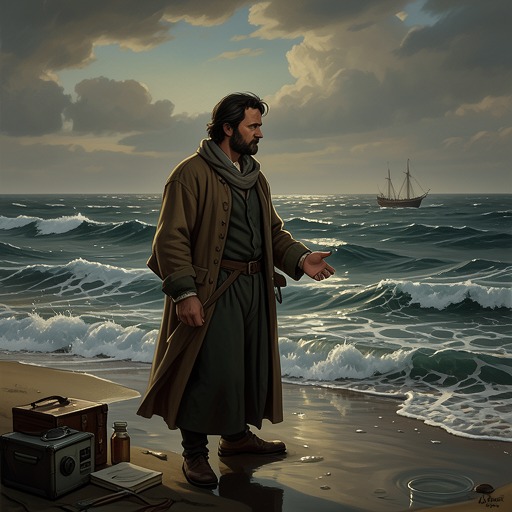
At the going down of the sun, Blake and Ned walk forlornly to the beach. Blake carries the last red rose, and Ned nudges him with his shoulder when he veers, physically guiding the blind and emotionally burdened man toward the water. Blake stands still for a long time, listening to the rhythm of the surf until his heartbeat seems to move in harmony with the ocean. The scene slows the narrative into a deliberate passage from habitual observance to final action.
Blake kisses the rose and pours his love and lament into the gesture before throwing it into the foaming waves. He then addresses Chloe as her father, telling her that he loves her, that she is beautiful, and that his love has been profound. His speech makes explicit what the ritual has carried symbolically for years: the rose is not merely an offering to the sea but a vessel for paternal devotion, memory, and grief.
He calls Chloe a painting in his heart, a masterpiece made perfect by memory, linking mourning to the artistic imagination that has defined his life. He imagines a future reunion in which he will again have a life to love and adore her, but he no longer makes that imagined reunion the condition of his present existence. He acknowledges that he has cried enough tears to fill an ocean and that continued waiting leads toward darkness. Instead of waiting for Chloe, he resolves to celebrate her smile in sunshine and listen for her laughter in the wind.
The final words complete the emotional turn: he says goodbye, declares his love, and names Chloe as his lost little girl. The farewell changes the value at stake from suspended hope to accepted separation. Blake's love remains, but the expectation that the sea might return Chloe is relinquished. The ocean, once an active source of trauma and a setting for repeated vigil, becomes the medium through which he releases the ritual.
Extinguishing the Light House
After the words are spoken and the last rose has gone into the waves, Blake walks slowly back up the beach. Connie Dixon waits on the porch, hugs him, and weeps with him. Their shared grief is consequential: Blake does not leave the beach into renewed isolation, and Connie does not try to replace Chloe or make the loss disappear. She receives him at the threshold between the old life of waiting and the new life they may build together.
Inside the house, Connie turns off the lights one by one until the old home sleeps and the light house is no more. This is the ceremony's visible conclusion. The lights had been kept on so Chloe could find her way home; extinguishing them means that Blake no longer organizes the house around an impossible return. The action is not a rejection of Chloe's memory but a change in the form of attachment. The beacon is withdrawn, while the memory remains within Blake's heart, his speech, his paintings, and his relationship with Connie.
The ending also reverses the meaning of the house. To local fishermen, its constant lights made it an unmistakable landmark at sea. To Blake, they had marked a private prison of grief. When Connie switches them off, the residence ceases to function as a signal of perpetual waiting. A place once shaped by death can now become a home inhabited in the present.
Consequences and Aftermath
The farewell gives Blake a form of release that is neither sudden cure nor emotional erasure. The narrative has already shown that grief still seeps from him and always will, yet sharing Chloe's tragedy with Connie allows a glimpse of his former self. The final rose makes that change ceremonial and public within the intimate space of the beach: Blake stops waiting for Chloe while continuing to love her.
Its consequences extend into Blake's art. At the later opening of the Connie Dixon Gallery of Fine Art, he explains that he had believed blindness marked the end of his art career and that he painted Connie's portrait because he wanted redemption. He then announces that he will return to the easel, not to repeat his former seascapes or portraits, but to paint emotion. The farewell and the artistic decision belong to the same transformation. Once grief no longer demands endless repetition, feeling itself can become the subject of renewed creation.
The event also clarifies the emotional foundation of Blake and Connie's relationship. Connie came to Hoyt Harbor seeking answers while drowning in despair, debt, and a life without love; she had hoped to begin again through a gallery of her own. Blake's farewell allows their futures to meet without Chloe's memory being treated as an obstacle. Their shared tears provide mutual strength, and the extinguished lights mark the possibility that love can accompany mourning rather than compete with it.
In this sense, Blake's farewell to Chloe is a ritual of continuing connection rather than absolute severance. Chloe remains the beloved daughter imagined in the paintings, the child remembered in the rose ceremony, and the figure whose loss shaped Blake's blindness, isolation, and artistic silence. What ends is not the bond but its imprisoning structure: the nightly vigil, the expectation of return, and the house kept illuminated against an impossible dawn. By saying goodbye, Blake makes room for sunlight, human companionship, and a new artistic life without surrendering the daughter he will always call his darling girl.