Chloe's drowning
The light house: A love storyChloe's drowning is the central trauma governing Blake McGrath's life after the death of his six-year-old daughter on the beach. It explains his abandonment of painting, his nightly return to the shore, the perpetually illuminated McGrath residence, and the images of an imagined grown Chloe hidden within his paintings. The event first appears as a remembered catastrophe, but its consequences shape the novel's present until Blake finally gives the loss a spoken farewell and begins to imagine art and love beyond it.
Causes and Circumstances
Blake had moved to Maine with Chloe and her mother because he wanted to live beside the ocean and draw daily inspiration from it for a new collection. At the time, his artistic career was beginning to rise: he had held his last exhibition in New York, and he was working toward another show in the studio. Ned was still a puppy, and the household had not yet acquired the atmosphere of mourning that would later define it. The ocean was initially intended as a source of creative renewal, making the later drowning a devastating reversal of the place's meaning.
The disaster occurred while Blake was working in the studio and Chloe was on the beach with her mother, playing along the surf line at sunset. The narrative withholds the precise instant of the accident and instead presents it through broken recollection. Blake hears screams and cries of panic, sees Chloe's mother with her head buried in her hands, and realizes what has happened before he can fully comprehend it. That delayed recognition gives the memory the quality of a nightmare repeatedly returning rather than a completed past event.
The Drowning and Immediate Trauma
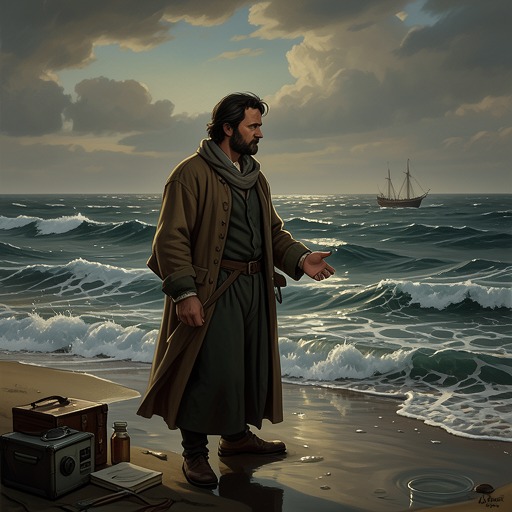
When the cries reach him, Blake runs blindly through the house and down to the darkening beach, with Ned following at his heels. He blunders into the surf screaming for Chloe, thrashing among the waves and sobbing with fear. He continues calling until his throat is hoarse and his legs can no longer hold him. The scene joins physical helplessness to emotional shock: Blake's desperate movement toward the water cannot reverse the loss, and the sea becomes both the site of his search and the force that has taken his child.
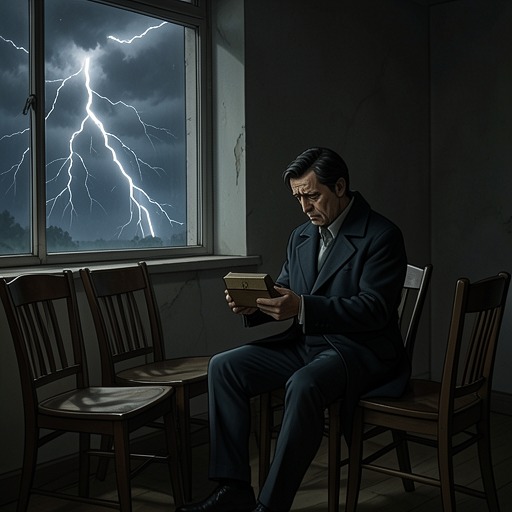
Five years later, Blake still speaks of the drowning as though it were occurring inside him. His voice becomes flat and colorless when he recounts it, while the memory itself remains violently immediate. He can see himself running, hear the screams, and relive the moment without being able to narrate it smoothly. His inability to finish the account is part of the trauma's structure; silence does not close the wound but makes the event recur in image, ritual, and bodily habit.
Repetition, Ritual, and the Light House
After Chloe's death, Blake and Ned go to the beach at sunset to send a red rose into the sea. Ned then remains on the empty beach through the night, waiting until sunrise as though Chloe might return. The dog's nightly departure is so regular that, when a clock chimes in the house, Ned raises his head, slowly gets to his feet on arthritic legs, and leaves for the shore. His behavior externalizes Blake's own inability to stop waiting and makes grief a shared household routine.
Blake also keeps every light in the house on, night and day. Local fishermen can see the house for miles out to sea, which is why residents call it the light house. The practice is not a local superstition for Blake but a private message to his dead daughter: he wants Chloe to find her way home and return to him. The illuminated house therefore turns mourning into a beacon. It preserves an attachment that cannot be fulfilled while making the entire building a visible monument to the missing child.
The paintings extend the same ritual into the public world. Blake adds a beautiful raven-haired young woman to five seascapes, imagining how Chloe might have looked if she had grown up. He sends these works out in the hope that Chloe might one day see herself in one of them and know that she had been remembered and loved. The invented adult figure is not a portrait of a known person but a visual continuation of a life the drowning interrupted. Art becomes a substitute meeting place between the father and the daughter who cannot return.
Revelation and the Work of Farewell
Connie recognizes that the woman in the paintings is connected to the loss that draws Blake to the beach each night. Blake then reveals that his two great gifts were painting and his daughter, Chloe, and states that she drowned on that beach five years earlier. By telling Connie the full story, he moves the catastrophe from private repetition into shared testimony. Her response is not an explanation or cure; she cries with him, witnessing the pain that he has kept sealed inside the house and the rituals surrounding it.
The confession produces an early change in Blake's relation to grief. The sorrow does not disappear, but sharing Chloe's death gives him an unexpected sense of lightness. When Connie later leaves to collect her belongings, Blake dusts Chloe's bedroom and changes the sheets, an ordinary act that signals movement from preserving the room unchanged toward caring for the living household. The grief remains permanent, yet an older self begins to emerge from the darkness of despair.
The final farewell occurs at sunset, when Blake walks to the beach with Ned carrying the last red rose. He kisses the flower, throws it into the foaming waves, and directly tells Chloe that he loves her. He calls her a painting in his heart and acknowledges that he has wept over the broken pieces of his life, but he also declares that he cannot continue waiting for her. He chooses instead to remember her smile in sunlight and her laughter in the wind. This is not a rejection of Chloe; it is a reshaping of their bond so that memory can coexist with continued life.
After Blake returns, Connie embraces him and they weep together. Then she turns off the lights one by one until the house sleeps and the light house is no more. The extinguished lights mark the end of the vigil's outward form. The ritual has reached its conclusion not because Chloe is forgotten, but because Blake has finally said what he could not say before: goodbye.
Consequences and Artistic Renewal
Chloe's drowning initially destroys the conditions of Blake's art. The ocean, once his chosen muse, becomes inseparable from death, and he abandons painting while living in isolation beside the water. Even the seascapes that preserve Chloe's imagined future carry the pressure of mourning. His artistic silence is therefore not a lack of subject matter but the consequence of being unable to pass beyond the single scene that continually returns.
The loss also determines Blake's response to blindness. At the opening of Connie's gallery, he explains that he believed going blind had ended his art career. He painted Connie's portrait because he wanted redemption, and then announces that he will return to the easel, not to paint seascapes or portraits but to paint emotion. The decision connects his renewed work to the earlier catastrophe: painting once preserved an unreachable daughter, while painting now becomes a way to give form to feeling without remaining imprisoned by the original scene.
Chloe's drowning thus remains the novel's deepest negative turning point, changing love into absence, the sea into a place of trauma, and the house into a beacon for the dead. Yet the event also generates the rituals, paintings, confession, and farewell through which Blake can re-enter life. Its ending is not recovery through forgetting. It is a movement from compulsive waiting toward deliberate remembrance, allowing Blake to carry Chloe as a lasting presence while accepting Connie, renewed art, and the future.