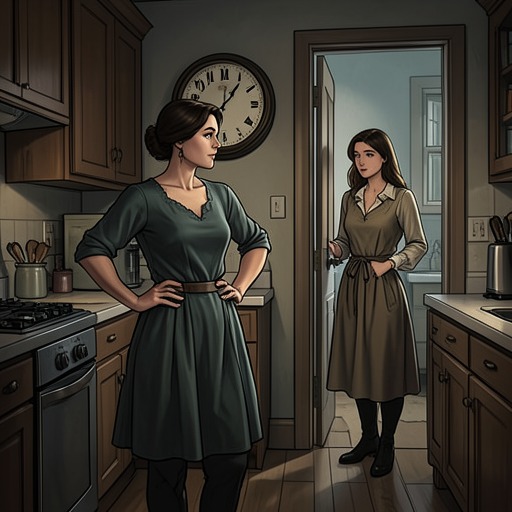
Connie Dixon—Jean Dixon relationship
The light house: A love storyThe relationship between Connie Dixon and Jean Dixon is shaped by a nineteen-year age gap, their mother’s long-term care, and sharply different lives. They are sisters who have never been naturally close, yet the demands of family responsibility compel them to become each other’s necessary support. Their connection develops from unfamiliarity and financial strain toward trust when Connie’s risky art transaction ultimately frees Jean from the burden of paying for their mother’s nursing home.
Distance and Family Responsibility
Jean is nineteen years older than Connie, and the difference has made their relationship resemble that of a parent and child more than that of two ordinary siblings. Jean is the dependable daughter: she studied hard, worked diligently, and built a modest, comparatively stable life. Connie, by contrast, was the indulged child, born when their parents were already of grandparental age. The sisters therefore inherit not only different personalities but different expectations of responsibility. Jean tends toward discipline and caution, while Connie has lived more impulsively and has pursued artistic recognition through unstable and compromising circumstances.
Their mother’s health becomes the practical center of the relationship. After their mother fell at Jean’s home three years earlier, she required full-time nursing care. Connie and Jean each contributed money every week, while Connie’s employer made additional deposits when necessary. The joint account was arranged so that the bank released a monthly payment to a nursing-home facility outside Exeter, leaving the sisters little money beyond the cost of care. This arrangement binds them through obligation even though emotional intimacy does not come easily.
The care arrangement also exposes an unequal emotional economy. Jean carries the ordinary, repetitive burden of managing a household and worrying about the nursing-home payments, while Connie is entangled with Duncan Cartwright, whose financial support has become a mechanism of control. Connie’s artistic dream has been destroyed over four years by Duncan’s possessiveness; instead of exhibitions, she has accumulated dependence, gallery labor, debt, and sexual exploitation. Because Duncan has threatened to ruin her and have her mother removed from the nursing home, Connie experiences her mother’s care as one of the chains keeping her inside his power. Jean is thus connected to Connie’s suffering even when she does not fully understand its source.
Strain and Confrontation
The sisters’ regular contact increases because of their mother, but the contact remains awkward. They hardly know one another, and their conversations carry the stiffness of people performing a family duty without possessing an easy shared language. When Connie calls Jean after her car has been repaired, she says she will return early the next morning, visit their mother, and spend the following night at Jean’s house so that they can discuss what has happened. Jean immediately senses that something may be wrong and asks whether Connie is in trouble, but Connie postpones the explanation until they can meet face-to-face and Jean can see the paintings for herself.
The domestic scene at Jean’s house makes the emotional distance visible. Jean reminds Connie of a dried flower or a black-and-white photograph, as though color has been drained from her life. The sisters sit in silence while Jean makes coffee; the spoon, boiling water, and monotonous clock create an atmosphere of pressure rather than comfort. Jean looks exhausted, and the exhaustion is not merely personal. It represents years of work, worry, and the persistent fear that the family will be unable to meet their mother’s care costs.
Connie then confesses that she withdrew two thousand dollars from the nursing-home joint account while in Maine and used it to buy something. Jean’s horror is immediate because the money is not discretionary: it belongs to a fragile arrangement keeping their mother’s care secure. Connie first explains that she paid three thousand dollars for two paintings, using the final thousand dollars she possessed in addition to the account money. When she identifies the works as original Blake McGrath paintings and estimates that together they are worth close to half a million dollars, Jean does not feel rescued. She breaks down in tears, asking whether the seller will return their money. The gap between Connie’s confidence and Jean’s fear makes the sisters’ different moral and economic positions unmistakable.
Risk, Proof, and Trust
Connie asks Jean to trust her despite knowing that Jean disapproves of her life and choices. She promises that if the plan succeeds, Jean will never again need to worry about the cost of their mother’s care. The appeal is both a plea for emotional recognition and an attempt to justify a morally dangerous act. Connie has risked money earmarked for their mother, but she has done so because she believes the paintings offer a way out of the larger system that has kept her dependent on Duncan Cartwright.
The transaction with Duncan tests whether Connie’s judgment can withstand the authority that has dominated her. Duncan confirms that the painting is genuine and recognizes that Connie already knew this. He wants to possess the work, and Connie uses that desire to demand two hundred and ninety thousand dollars transferred into the account for her mother’s ongoing care, plus five thousand five hundred dollars in cash immediately. She refuses to surrender the second painting until Jean confirms that the funds have reached the account. The demand turns Connie’s knowledge of art into bargaining power and converts a previously private family anxiety into the decisive condition of the sale.
Connie calls Jean and insists that she check the balance. While Duncan studies the painting in rapture, Connie waits for confirmation. Jean’s joyous, incredulous voice tells her that the money has arrived. The moment reverses the earlier scene at Jean’s table: the sister who had been shaking with despair now becomes the person whose confirmation completes Connie’s escape. Jean’s practical oversight is not passive assistance; it supplies the verification that allows Connie to control the exchange.
Financial Liberation and Renewed Alliance
After Duncan pays, Connie asks Jean to transfer forty thousand dollars into Connie’s own account, leaving a quarter of a million dollars to cover their mother’s continuing nursing-home costs. The arrangement lifts the responsibility that had buried Jean’s life in work and worry. The money does more than settle a bill. It changes the sisters’ relationship by removing the immediate emergency that had made every conversation tense and by giving Connie a material basis for leaving Duncan rather than returning to him for support.
Connie’s later actions confirm that the payment is intended as a shared rescue rather than a private windfall. She calls Jean, listens to her sob with happy tears, and gives her the news while arranging the transfer. Connie then prepares to leave New York, storing her few bulky possessions and escaping the apartment leased in Duncan’s name. The sisters’ financial crisis has therefore become part of Connie’s liberation from coercive control: Jean’s security helps Connie sever the economic dependency through which Duncan has claimed ownership of her.
The relationship also gains a new future through Connie’s work. In Hoyt Harbor, Connie buys a new cell phone and gives Jean the new number, as well as contacting the nursing home with the same information. The gesture is small but significant. Connie is no longer hiding within Duncan’s arrangements or communicating from a position of shame; she is establishing an independent life and ensuring that Jean and the nursing home can reach her. Her plans to open a high-end gallery using Blake McGrath’s lost works turn the paintings from an illicit gamble into the foundation of a legitimate career.
Meaning in the Ending
The sisters’ reconciliation is not portrayed as the discovery of an effortless intimacy. Their age difference, contrasting values, and years of unfamiliarity remain part of the relationship. What changes is the form of their connection. They move from reluctant cooperation under financial pressure to an alliance in which Connie provides a daring solution and Jean provides practical trust, confirmation, and continuity of care.
Jean’s role at the gallery opening completes this transformation indirectly. Connie publicly describes the opening of the gallery as the completion of a dream and thanks Blake McGrath for making it possible, but the dream also rests on the family crisis that drove her to act. The money from the paintings secures their mother’s care, releases Jean from constant fear, and enables Connie to become an independent gallery owner. Their relationship thus links domestic care to artistic ambition: the same paintings that restore Connie’s career also protect the sister who had carried the family’s daily burden.
The relationship between Connie Dixon and Jean Dixon ultimately illustrates how affection can emerge through responsibility before it becomes easy or expressive. Their bond begins with distance and mutual misunderstanding, passes through accusation and terror when Connie risks the nursing-home funds, and is strengthened when the gamble succeeds. By the end, financial security has not erased the sisters’ differences, but it has given them room to meet as adults rather than as an exhausted caretaker and a distrusted dependent. Their shared responsibility for their mother becomes, at last, a basis for trust instead of a source of fear.