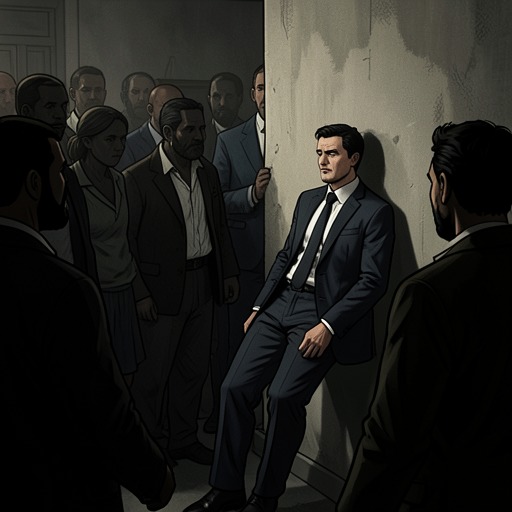
Connie's break with Duncan through the painting deal
The light house: A love storyConnie's break with Duncan through the painting deal is the turning point at which Connie Dixon transforms an art transaction into an act of liberation. After four years in which Duncan Cartwright has used promises of exhibitions, mounting debt, sexual access, threats, and guilt to claim ownership over her life, Connie brings two newly acquired Blake McGrath seascapes into his boardroom. She makes the paintings serve three purposes at once: they expose the value Duncan has failed to recognize, secure money for her mother's nursing-home care, and give Connie a bargaining instrument with which to dissolve their relationship.
Causes and Background
Duncan's control rests on a manufactured debt. He had promised to support Connie's career and make her famous, then taken her to bed and replaced the promised exhibitions with dependence. Connie's artistic dream died as he continued to finance her while demanding that she work for his gallery and surrender herself whenever he wished. When she tried to leave, he threatened to ruin her and have her mother removed from the nursing home. The debt therefore has both an economic and an intimate form: Duncan presents his financial assistance as proof that Connie owes him her body, labor, loyalty, and silence.
The pressure is intensified by the actual cost of caring for Connie's mother. Connie and Jean Dixon contribute regularly to a joint account, while a scheduled payment is released each month to a nursing-home facility outside Exeter. When Connie withdraws two thousand dollars from that account in Maine to purchase paintings, the decision places her under immediate moral and financial strain; she must recover the money before the next payment is due. The paintings are thus not merely speculative acquisitions. They become a risky attempt to redirect an art market controlled by men toward the urgent care of an elderly woman.
The Boardroom Negotiation
Connie opens her battered briefcase and slides the first, smallest painting across Duncan's table. Duncan freezes and immediately asks whether she has found others. Connie explains that she bought the last two available seascapes and offers him the first in exchange for a complete waiver of their debts, responsibilities, obligations, and personal entanglement. Her proposed exchange is precise: Duncan may own the painting, while Connie walks away from the relationship and the guilt he has used to keep her captive.
The painting also reveals a hidden threat to Duncan's authority. He recognizes the signature and the handwritten dedication on its reverse, then realizes that Connie has located Blake McGrath, the artist whose disappearance carries enormous significance in the gallery world. Instead of accepting Connie's terms, Duncan tries to reclaim control through enthusiasm. He urges her to work with him, imagining a triumphant new Blake McGrath exhibition and the publicity it could generate for both of them. His sudden charm exposes the commercial instinct beneath the intimacy: the moment Connie possesses valuable art, Duncan wants to turn her discovery into his next conquest.
When Connie refuses, Duncan abandons persuasion and slaps her across the face. The violence confirms what the negotiation has already shown: his claims of support and affection are instruments of possession. Connie does not retreat. With an icy voice, she asks whether they have a deal for the first painting, forcing him to answer after he has attacked her. She then places the second painting on the table and offers it for purchase, warning that she will take it to another gallery the next morning if he does not accept her terms immediately.
Price, Care, and Escape
Duncan cannot bear to lose the second canvas. Connie demands two hundred and ninety thousand dollars transferred into the account for her mother's ongoing care, plus five thousand five hundred dollars in cash immediately. She justifies the amount through the painting's signature and its status as the artist's first new original work to reach the market in a year, but the deeper force of the price lies in its moral destination: the money will secure care that Duncan has previously threatened to obstruct.
Duncan agrees because desire for the painting overwhelms his anger. He instructs his secretary to make the transfer and throws cash across the table, contemptuously giving Connie six thousand dollars instead of the five thousand five hundred she requested. Connie verifies the nursing-home account by calling Jean. Jean's joyous disbelief confirms that the money has arrived, turning the transaction from a threatened promise into tangible protection for their mother. Connie's calm negotiation has converted the same financial system Duncan used to bind her into a resource for independence.
The transaction does not soften Duncan. He demands to know where she obtained the paintings and responds to her refusal with sexual insults, imagining that she acquired them by offering herself to another man. Connie answers that honorable men still exist, then takes the briefcase and heads for the door. Duncan declares that she is finished in New York and will never work there again. Connie replies that this is acceptable because she does not intend to remain in New York beyond the following day. Her answer is the final reversal: the professional exile he announces as punishment has already become the departure she has chosen.
Consequences and Aftermath
Once the boardroom door closes, Connie reaches the elevator, collapses onto its cold floor, and trembles with relief before the tears she has restrained finally break through. The physical reaction marks the cost of the victory. She has secured money, confronted Duncan, and left his power, but the release follows years of exhaustion, sexual exploitation, fear, and self-blame rather than uncomplicated triumph.
Connie then returns to Warren Ryan, who had sold her the paintings for three thousand dollars. Explaining that the original price was based on her mistaken impression of their value, she gives him an additional forty thousand dollars. This payment distinguishes her from Duncan's exploitative economy: she does not keep every advantage produced by the paintings' sudden value, but acknowledges the seller's claim to a fairer share once she understands what he possessed. The art deal consequently becomes an ethical chain of transfers rather than a single act of profiteering.
The break also enables Connie's return to Maine and the construction of a different professional life. She obtains a new cell phone, contacts Jean and the nursing home with the new number, and begins planning a studio and gallery space in Hoyt Harbor. Her later gallery opening publicly completes the dream Duncan had promised and withheld. At that opening, Connie thanks Blake for allowing her to show his lost works and his new portrait, making the paintings that once served as weapons in a private confrontation part of a shared artistic future.
Narrative Significance
The deal changes the value of every major element in Connie's situation. Debt becomes recoverable money; a painting becomes bargaining power; professional exclusion becomes chosen departure; and a relationship founded on possession ends through Connie's control of the terms. The scene's central value shift is from coerced dependence to negotiated autonomy, achieved not by denying the art market but by mastering its mechanisms long enough to protect her family and leave Duncan.
Its significance extends beyond Connie's escape. The transaction begins the reorganization of the artistic world around Connie Dixon, Blake McGrath, and the eventual Connie Dixon Gallery of Fine Art. It also establishes a contrast between Duncan's possessive response to art and Connie's developing sense of art as a means of care, truth, and renewal. The paintings do not erase the damage Duncan caused, but they give Connie the material leverage to end his claim over her life and to convert a stolen dream into a future she can direct herself.