Social isolation
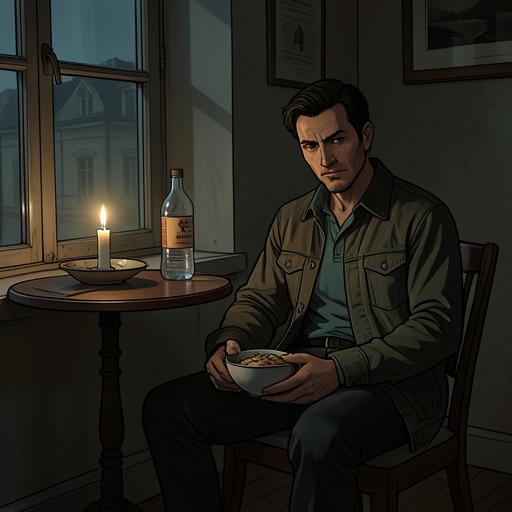
The light house: A love storySocial isolation is the emotional and spatial condition that governs Blake McGrath’s life after Chloe’s drowning. He retreats from the art world, abandons the ocean paintings that made his career, and remains in a house whose lights burn constantly as a signal to the dead. His withdrawal is not simple solitude: it is a self-imposed enclosure built from grief, guilt, memory, and the conviction that leaving Chloe behind would be another betrayal. The narrative ultimately shows isolation loosening not through the erasure of grief, but through shared mourning, a final farewell, and Blake’s decision to re-enter love and art.
Withdrawal After Loss
Blake’s isolation begins with the death of his six-year-old daughter, Chloe, who drowned on the beach five years before the main events. Before the tragedy, Blake had been advancing through the art world, living with Chloe’s mother, and preparing a new collection after moving to Maine because he wanted the ocean’s inspiration. The move was meant to support artistic expansion; instead, the coast became inseparable from catastrophe. Chloe’s death transformed the setting that had promised creative renewal into the source of his most enduring trauma.
He responds by turning away from the life that preceded the loss. The sea had given him his career, yet after Chloe drowned he could no longer paint the ocean. He gave up his art and turned his back on the world, interpreting the disaster as punishment for having been absorbed in painting and for failing, in his own judgment, to love and appreciate Chloe sufficiently. His artistic silence therefore carries moral as well as emotional weight. Painting is no longer merely a profession he has abandoned; it is a gift he believes has become evidence against him.
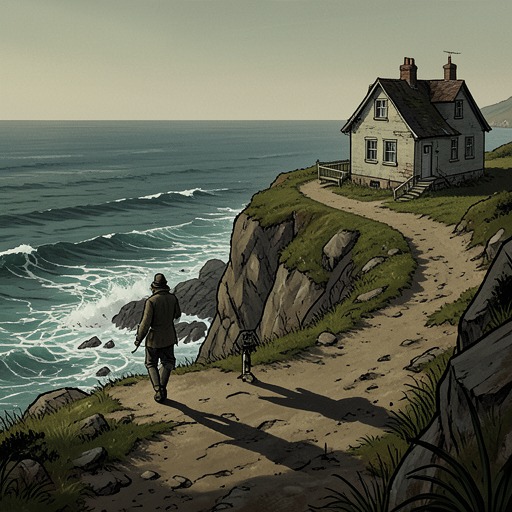
The house intensifies this withdrawal. Local fishermen call it the light house because every light remains on day and night, making the building visible for miles out to sea. The custom is a community observation of an otherwise private life, but its meaning is unknown to the locals until Blake explains it: he keeps the lights burning so Chloe might find her way home. The house thus functions simultaneously as refuge, beacon, memorial, and trap. Its constant illumination reaches outward, while Blake himself remains psychologically enclosed within it.
Ritual, Memory, and the Prison of Place
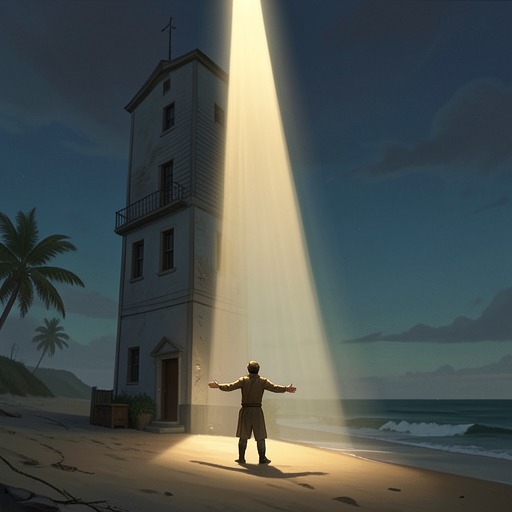
Blake’s isolation is maintained by repeated acts that keep Chloe present. Every sunset, he and Ned go to the beach and send a red rose into the sea. Ned, the Great Dane who was still a puppy when Chloe died, then remains on the empty beach through the night until sunrise, waiting for her. The dog’s nightly departure gives Blake’s grief a companion and a schedule, while the beach remains the fixed point around which both human and animal mourning turns.
The ritual is also a form of continuing connection. Blake does not simply remember Chloe internally; he addresses the sea, keeps the lights on for her return, and imagines the daughter she might have become. Five paintings contain a beautiful raven-haired young woman whom he invented as an image of Chloe grown older. He released those paintings into the world in the hope that Chloe might someday see herself in one of them and know that she had been remembered and loved. His concealed artistic life therefore extends the isolation: the paintings preserve a private relationship that cannot be tested in ordinary reality.
Blake explicitly describes the seaside home as a prison. Connie Dixon sees the beach and town as a piece of paradise, but Blake answers that the place may once have been paradise and now feels like confinement. The contrast identifies the difference between external scenery and lived experience. The same coastline that offers beauty, artistic inspiration, and escape to Connie is, for Blake, the site of death and accusation. He cannot leave because his heart will not let Chloe go. His imprisonment is emotional rather than enforced, yet it controls his movements as decisively as any physical barrier.
Connie Dixon and the Return of Human Contact
Connie arrives in Hoyt Harbor seeking answers during a two-week vacation from despair, debt, lovelessness, and a future that seems likely to drain life of its mystery. Her search for a new direction brings her into Blake’s isolated world, where her curiosity gradually becomes a form of witnessing. She notices his paintings, questions the woman represented in them, and recognizes that the figure is connected to a lost young woman and to his nightly trips to the beach. Blake’s history emerges because Connie remains present when he might otherwise have kept silent.
Her presence changes the texture of the house. When Connie leaves early to collect the clothes and personal items she had left at her rental house, Blake dusts Chloe’s bedroom and changes its sheets. The practical act is small, but it marks a shift in his relation to the room and to the memory it contains. After sharing Chloe’s story with Connie, he feels some burden lifted. The grief does not disappear, and the sorrow still remains, but he senses his former self beginning to rise from the darkness of despair.
Her absence then makes his isolation newly visible. On a perfect summer morning, while looking across the beach, Blake realizes with a shock how lonely he is. Connie has infused herself into his life through her brightness, laughter, and persistence; when she is gone, the view before him is replaced by an image of her and by the memory of her tears for him. The crucial change is not that Blake has become free of grief, but that he has become capable of recognizing loneliness as something he no longer wants. He decides that it is time to make fresh, happy memories, even if Connie’s place in his life should be brief.
From Enclosure to Farewell
Blake’s movement out of social isolation does not follow a simple recovery narrative. He remains bound to Chloe, and the bond is not treated as something that must be erased. Instead, he must alter the form of that bond so that love for the dead can coexist with life among the living. Connie’s support allows him to speak about the past, while the final sunset ritual gives him a structured occasion to stop waiting for Chloe’s return.
At the last farewell, Blake walks to the beach with Ned and the final red rose. He kisses the flower, throws it into the waves, and tells Chloe that her father loves her, that she is beautiful, and that she remains a masterpiece in his heart. He acknowledges the enormous amount of grief he has carried and declares that he cannot continue waiting for her. Rather than deny the relationship, he promises to celebrate her smile in sunlight and listen for her laughter in the wind until they meet again. The farewell converts the nightly vigil from an open-ended demand into a completed act of love.
Afterward, Connie waits on the porch. She and Blake embrace and weep together, drawing strength from their shared sadness. They then enter the house, and Connie turns off the lights one by one until the old home sleeps and the light house is no more. The extinguishing of the lights is the clearest external sign that Blake’s isolation has changed. The house no longer needs to act as a beacon for a return that cannot happen, because Blake has finally released the waiting without releasing Chloe from his memory.
Art, Community, and Renewed Participation
The end of Blake’s isolation is confirmed publicly through his return to art. At the gallery opening, he thanks Connie for lifting him from despair and acknowledges that he might not be present without her. He had believed blindness would end his art career, and he painted Connie’s portrait in the hope of redemption. His decision to paint again therefore joins several recoveries at once: recovery from social withdrawal, recovery from artistic silence, and a redefinition of what his gift can mean after loss.
Blake does not return by reproducing the career he abandoned. He says he will not paint seascapes or portraits, but emotion. This distinction matters because it separates renewed creation from a return to the past. The ocean remains associated with Chloe’s death, and the portrait belongs to his relationship with Connie, yet painting itself becomes available again as a means of expressing what isolation had left unheard. His new artistic purpose is not to restore the old public identity unchanged; it is to make art from an altered self.
Social isolation in Blake’s story therefore ends through relation rather than disappearance. Connie offers companionship without demanding that grief be forgotten, Ned shares the rituals that once confined Blake, and the gallery provides a public space in which his voice and work can return. The final transformation is neither a cure nor a rejection of mourning. Blake keeps Chloe as a beloved presence while abandoning the prison of perpetual waiting, allowing memory, love, community, and creative work to occupy the same life.