The Red Rose
The light house: A love storyThe Red Rose is the central object in Blake McGrath’s ritual of grief, remembrance, and eventual release. Each sunset, Blake carries a rose to the beach with Ned, kisses it, and throws it beyond the breaking waves. At first the gesture preserves his bond with Chloe and expresses his refusal to accept her absence; at the end, the same act becomes a deliberate farewell that allows him to stop waiting for her return and re-enter life, love, and art.
Ritual and Meaning
Sunset unexpectedly interrupts an afternoon conversation between Connie Dixon and Blake McGrath when Ned rises stiffly from his bed, reminding Blake of the hour. Blake returns from the kitchen holding a single red rose and explains that he and Ned go to the beach every day at that time. He presents the ritual as a private moment between man and dog, but Connie is invited to witness it because she is staying at Blake’s seaside house and is beginning to enter the closed world he has built around his loss.
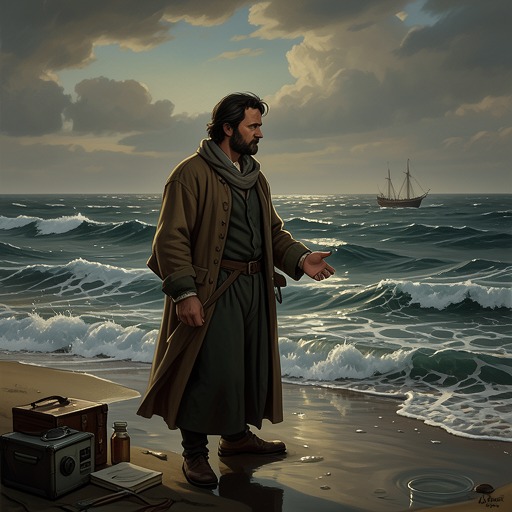
At the shore, Blake walks into the surf until the white water reaches his knees. He kisses the crimson petals, throws the rose beyond the first breaking wave, and then stands beside Ned while the tide carries it away. The action is small and exact: the kiss gives the flower intimacy, the throwing gives grief a direction, and the retreat to the sand leaves Blake facing the absence that the ritual cannot undo. Connie notices that Blake’s eyes are red-rimmed and swollen when they finally return from the beach, making the rose a visible sign of sorrow rather than a decorative detail.
The ritual belongs to a larger memorial system. Ned goes down to the empty beach each night and waits until sunrise, apparently waiting for Chloe, while Blake leaves every light in the house burning day and night. Local fishermen can see the Mason house from miles out at sea, which is why the residents call it the light house. Blake explains that the lights are meant to help Chloe find her way home. The rose therefore works with the lights and the beach: one is sent outward into the ocean, the others remain burning as a beacon, together expressing a continuing relationship with the dead.
Grief and Continuing Attachment
The meaning of the rose is disclosed when Blake tells Connie why he and Ned repeat the ceremony. Chloe drowned, and Blake once ran into the surf screaming for her, thrashing among the waves until exhaustion overcame him. The nightly rose is the controlled repetition of that original catastrophe. It returns him to the sea without reproducing the rescue attempt; each evening he reenacts love, loss, and helplessness in a form he can survive.
Blake also keeps Chloe present through art. He altered five paintings by adding a beautiful raven-haired young woman as he imagined Chloe might have looked had she grown up, then sent the paintings into the world in the hope that she might one day see herself in one of them and know that she was remembered and loved. The red rose has the same logic. It does not erase death or claim that Chloe is physically coming back. Instead, it gives Blake a repeated material act through which love can continue after the person loved has vanished.
The ritual also explains why Blake experiences his coastal home so differently from Connie Dixon. Connie sees the beach and Hoyt Harbor as a piece of paradise and imagines beginning again there, while Blake says that the place feels like a prison. The same shore that offers Connie escape is, for Blake, the landscape of Chloe’s drowning and the stage of his nightly mourning. The rose crosses that contradiction: it is an emblem of devotion, but also a reminder that beauty and trauma occupy the same setting.
Trust and the Living Relationship
The rose changes meaning when Blake begins painting Connie Dixon’s portrait. After taking photographs of her by the window, he realizes that the initial images do not work and leaves the room. He returns with one of the fresh roses Thad Ryan has delivered with the weekly groceries and silently hands it to her. Both understand the flower’s significance, and Connie clutches it as something precious before Blake asks her to remove her blouse for the portrait.
This moment is not the beach ritual, yet it draws on the same symbolic vocabulary. The rose that had belonged to Blake’s private bond with Chloe becomes a sign that Connie is being admitted into his emotional and artistic confidence. The gesture deepens their trust before the portrait session turns physically vulnerable. It links mourning and intimacy without making Connie a replacement for Chloe: the flower carries forward Blake’s capacity to love while allowing a living relationship to emerge beside, rather than through the cancellation of, his grief.
The contrast is important because Blake’s recovery is not presented as the simple abandonment of the dead. Connie’s presence helps him share the pain that had isolated him, and after she moves into his home he feels a burden lifted, with a glimpse of his old self rising from despair. The movement is from solitary repetition toward witnessed remembrance. Connie does not remove the rose from his life; she becomes capable of understanding what it means and of standing beside him within its difficult history.
The Last Rose and Farewell
After Blake and Connie acknowledge their future together, Blake says that he must tell Chloe goodbye. At sunset, he walks to the beach with Ned carrying the last red rose. He stands alone at the water’s edge, listens to the rhythm of the surf, kisses the flower, and pours his love and lament into that final gesture before throwing it into the foaming waves.
This time Blake speaks directly to Chloe: "Goodbye my darling girl," he says, assuring her that her daddy loves her and that she has always been beautiful. He calls her a painting in his heart, a masterpiece perfected by memory, and admits that he has cried enough tears to fill an ocean. The language retains the imagery of art and sea that has governed his mourning, but its purpose has changed. He is no longer sending a rose as an invitation to return; he is declaring that he will stop waiting and will instead celebrate Chloe’s smile in sunshine and listen for her laughter on the wind.
The farewell reaches its emotional culmination when Blake says, "Goodbye, Chloe. I love you – and you will always be daddy’s darling girl. My little girl lost." The repeated goodbye makes the act final without making love final. Chloe remains part of Blake’s memory and identity, but the ritual no longer binds him to an empty beach through the night. Connie waits on the porch, embraces him, and weeps with him. Together they then turn off the house lights one by one, ending the light house as a beacon for Chloe’s return.
Artistic and Narrative Significance
The last rose marks a shift from loss-oriented mourning to a form of remembrance that can coexist with recovery. Blake does not deny the drowning, discard the paintings, or sever his emotional connection to Chloe. He changes the form of that connection: waiting becomes farewell, the beacon goes dark, and the repeated offering becomes a completed act. The rose thus embodies grief’s persistence while also giving grief a ritual boundary.
That boundary makes renewed artistic life possible. At the opening of the Connie Dixon Gallery of Fine Art, Blake explains that he once believed blindness had ended his art career and that he painted Connie’s portrait because he wanted redemption. He then announces that he will return to the easel, not to paint seascapes or portraits, but to paint emotion. The rose’s journey from Blake’s private memorial ceremony to his final goodbye parallels this transformation. Art first preserves the lost child in imagined adulthood; later, through Connie’s portrait and Blake’s decision to paint again, it becomes a means of responding to living feeling.
As a recurring expression, The Red Rose binds together the book’s principal contrasts: paradise and prison, memory and presence, the ocean as muse and source of trauma, and isolation versus shared life. Its repeated color gives physical form to love that cannot be returned by the dead, while its passage into the sea acknowledges that no ritual can reverse loss. The final rose does not erase Chloe. It permits Blake to carry her forward without remaining trapped in the moment of her drowning.