Blake McGrath–Chloe relationship
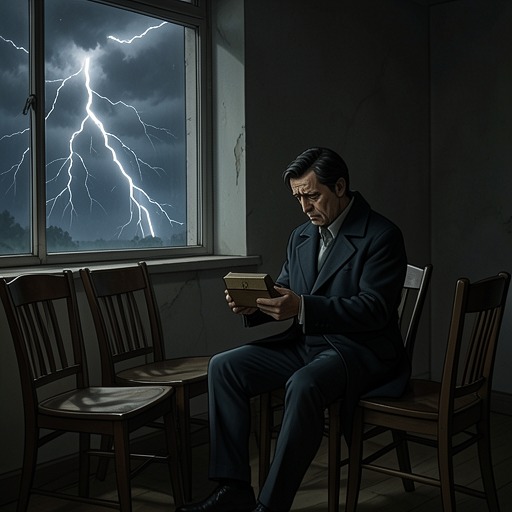
The light house: A love storyThe Blake McGrath–Chloe relationship is a father-daughter bond interrupted by Chloe’s drowning and prolonged through memory, ritual, and art. Chloe is not merely part of Blake’s past: her death governs his nightly movements, his isolation, his self-accusation, his abandonment of painting, and the meaning he assigns to the lights of the house. His eventual farewell does not erase the relationship. Instead, it transforms grief from a prison into a continuing source of love that can coexist with Connie, renewed artistic work, and a future.
Identity and Background
Blake describes Chloe as his second great love, after painting. She was born during the period when his career was beginning to take off, and although Blake’s relationship with Chloe’s mother was based on comfort rather than romantic love, his daughter became the defining emotional presence of his life. When Chloe was approaching school age, Blake held his last exhibition in New York, moved with his family to Maine, bought a dog, and settled beside the sea. He intended the ocean to inspire a new collection, but the proposed body of work was never completed because the place meant to renew his art became the setting of his daughter’s death.
The loss occurred at sunset while Blake was working in the studio and Chloe was on the beach with her mother, playing along the surf line. Ned was still a puppy, curled in a corner of the studio, when the emergency began. Blake heard screams and cries of panic, ran through the house, and blundered into the darkening water searching for Chloe until exhaustion overcame him. The remembered scene remains physically immediate: the beach, the surf, the failing light, and the recognition that his child had vanished into the ocean.
Grief and Continuing Bond
Five years after Chloe drowned, Blake still goes to the beach at sunset with Ned and sends a red rose into the sea. The ritual gives the loss a repeated shape, but it also keeps the relationship active. Ned goes farther: the Great Dane leaves the house after the clock chimes, walks slowly on arthritic legs to the beach, and waits there through the night until sunrise. Blake understands the dog as waiting for Chloe, and the two of them therefore share a vigil that binds their present lives to the missing child.
The house itself becomes part of that bond. Blake keeps every light on night and day, so fishermen can see the Mason house from miles out at sea. Locals call it the light house, but the name acquires its true meaning when Blake explains that he leaves the lights burning so Chloe can find her way home. The building is simultaneously a public landmark and a private signal of impossible hope: a home turned outward toward the sea, waiting for a child who cannot return.
Blake also preserves Chloe through representation. Five paintings that entered the world as apparent portraits of a beautiful raven-haired young woman are revealed to contain an imagined version of Chloe grown to adulthood. Blake never knew what she would have looked like if she had lived, so he added that figure to the paintings as an act of remembrance. He hoped that, somewhere, she might see herself in one of his works and understand that she had been remembered and loved. Art thus becomes a speculative meeting place between the father and the daughter whose future was taken from her.
Guilt, Art, and the Sea
Blake interprets Chloe’s death through guilt. He believes God punished him for being immersed in his art, for failing to appreciate or love Chloe sufficiently, and for not being a good father. The ocean intensifies that accusation. It had given him a career and served as the source of his artistic inspiration, but it then became the force that took his daughter. After the drowning, Blake could no longer paint seascapes, gave up his art, and turned his back on the world. His artistic hiatus is therefore inseparable from his attempt to remain faithful to Chloe and from his belief that painting helped cause the catastrophe.
This grief also makes the coastal home feel like a prison rather than a paradise. Connie sees Hoyt Harbor and its beach as a piece of paradise, while Blake responds that the place may once have been paradise but now feels like confinement. The contrast marks the difference between a newcomer seeking escape and a father trapped inside a landscape of traumatic memory. For Connie, the coast offers the possibility of a new life; for Blake, it contains the scene that repeats the worst moment of his existence.
Yet the relationship with Chloe is not reduced to guilt. When Blake is nearly drowned, visions of her return behind his blind eyes. He sees Chloe running along the sand, her ponytails bobbing, laughing with the adoration and trust of a child as he chases and lifts her into his arms. The vision gives him a momentary return to embodied fatherhood before it disappears and leaves him in the ocean’s darkness. Only then does his will to live revive. Chloe’s memory, which has long kept him bound to death, also becomes part of the force that brings him back from it.
Farewell and Transformation
Blake’s relationship with Chloe changes when he recognizes that continued mourning cannot remain an endless waiting. After surviving the sea, he tells Connie that he must say the one thing to Chloe that he has never been able to say: goodbye. At sunset, he walks with Ned to the beach carrying the last red rose. He kisses the flower, throws it into the foaming waves, and addresses Chloe as his beloved daughter, affirming that her father loves her, that she is beautiful, and that he has loved her with all his heart.
His farewell preserves the language of devotion while releasing its imprisoning form. Blake calls Chloe a painting in his heart, a masterpiece made perfect by memory, and imagines that they will be together again in another life. At the same time, he declares that he will no longer wait for her. He will celebrate her smile in sunshine and listen for her laughter in the wind. The statement does not deny the continuing bond; it relocates Chloe from the expected future she can never inhabit into memory, imagination, and the ordinary world Blake must now reenter.
After speaking the final farewell, Blake walks back to the house, where Connie waits and embraces him. They weep together, drawing strength from shared sadness. Then Connie turns off the lights one by one until the house sleeps and the light house is no more. The extinguishing of the lights is a concrete sign that Blake has abandoned the hope of guiding Chloe home, but it is not a repudiation of her. The ritual ends because the relationship has been given a different form.
Narrative Role and Significance
Chloe’s presence structures Blake’s entire movement from artistic renunciation to renewed creation. Her death explains why he isolates himself, why the beach governs his nights, why the ocean becomes both muse and enemy, and why the imagined woman in his paintings is more than an anonymous figure. When Blake later says that blindness seemed to mark the end of his art career but that painting Connie’s portrait became an attempt at redemption, his return to the easel carries the weight of the earlier loss. He resolves to paint emotion rather than simply resume the seascapes associated with Chloe’s drowning.
The relationship therefore develops through alternating forms of loss-oriented and life-oriented attachment. Blake repeatedly returns to the beach, the rose, the lights, Ned, and the imagined adult Chloe; these acts keep grief present and protect the memory of the child he lost. At the same time, he begins to share his pain with Connie, permits her closeness, cleans Chloe’s bedroom, and feels an unexpected lightness as a former self slowly rises from despair. The grief never disappears, but it ceases to dictate every action.
Chloe remains the emotional measure of Blake’s redemption. His recovery does not mean that he has stopped loving her or that the sea has become harmless. It means that love is no longer expressed only through punishment, isolation, and waiting. By saying goodbye, extinguishing the lights, accepting Connie’s companionship, and returning to painting, Blake carries Chloe forward without demanding that the past become present again. Their bond survives as memory, art, and moral transformation: a father’s continuing love finally made compatible with life.