Blake rescues Connie from the wreck
The light house: A love storyBlake rescues Connie Dixon from the wreck after her rental car leaves a narrow, storm-lashed track and crashes nose first into a ditch. The action is the first decisive meeting between them: Connie is physically trapped, injured, soaked, and unconscious, while Blake emerges from the darkness with Ned, his Great Dane, and turns an apparently fatal encounter with the animal into an act of controlled protection. The rescue saves her life, but its deeper importance is relational. Connie arrives at Blake’s home as a woman overwhelmed by suffocation, anger, and despair; she leaves the wreck in Blake’s arms, entering the isolated world in which their artistic and emotional connection will develop.
Causes and Setting
Connie reaches the crash only after a night of accumulated distress. She has stood alone on a promontory until darkness turns the ocean into a black, seething void, then sits in the parked car with the engine idling and suddenly breaks down. Her crying begins as self-pity and despair over the suffocation of her life, hardening into anger and impotent loathing before she strikes the steering wheel and condemns the man responsible for her misery. The salty crust across the windshield and the deafening silence inside the idling car establish her isolation before the storm converts emotional crisis into physical peril.
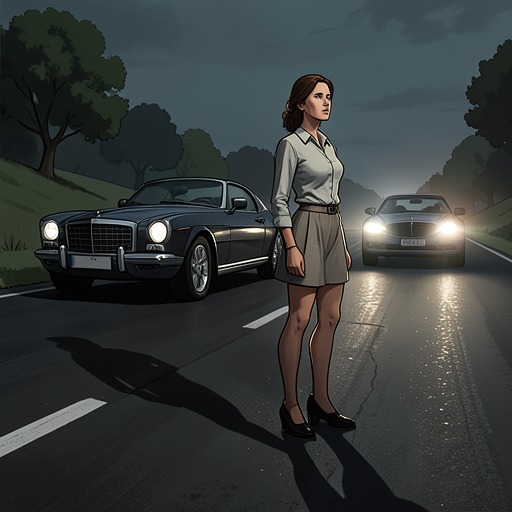
Driving through the storm, Connie leaves the road for a narrow, rutted track. Rocky outcrops rise around the car, vegetation scrapes against its sides, and the headlights bounce as the wind intensifies. She thinks she hears the distant boom of the ocean, then the car slides from beneath her and plunges nose first into a ditch. The impact throws her against the restraints and leaves her tilted at an impossible angle, held in the seat only by the seatbelt. Blood fills her mouth, pain shocks through her knee, and the surrounding woods receive the headlights as broken, unnatural beams.
The Rescue
Connie frees herself from the seatbelt but falls across the passenger side, where the injured knee sends a white-hot lance of agony through her body. The passenger door is jammed against the ditch, so she forces down the window and claws her way out through the narrow opening, dragging the useless leg behind her. Once outside, she tumbles into the mud, looks up at the storm’s black, howling face, and loses consciousness. The rescue therefore begins after Connie has exhausted her own ability to escape: the car is no longer merely damaged property but a trap from which she cannot safely withdraw alone.
She wakes to slobbering jaws and foul breath inches from her face. Ned, a huge, foaming Great Dane, is hunched over her, and Connie’s first response is a scream. A flashlight then cuts across the darkness, followed by a man’s voice calling her by name. Blake McGrath approaches from the far side of the car and kneels beside her. His first essential act is not to seize the dog but to command him: “Back off, Ned,” he says softly. Ned obeys, takes two steps away, and sits when Blake praises him. The scene shifts instantly from animal menace to human authority, showing Blake’s calm control without making the danger disappear.
Blake examines Connie in the mud and sees that she is soaked through, shivering uncontrollably, and wearing a thin dress clinging to her body. He places an arm around her shoulder and asks whether she can sit up, then eases her head from the mud and props her against the ditch. When he presses his fingers tenderly to her swollen, broken skin, Connie winces and bites her lip to suppress the pain. Blake judges that the knee is probably not broken, speaking with a steady, resonant confidence that contrasts with the chaos of the wreck and the storm.
His knowledge of Connie’s name initially bewilders her. Blake explains that she had been unconscious when he and Ned found her, and that he searched through her handbag for a phone before moving her. The detail also exposes Connie’s deliberate severing of an old connection: she tells him that she threw the phone away. Her silence and exhaustion prevent a fuller explanation, but the discarded phone links the rescue to the emotional crisis that preceded it. Blake is not simply retrieving an unknown accident victim; he is encountering someone who has already attempted to make herself unreachable.
Physical Care and Intimacy
Blake asks whether Connie thinks she can walk. She makes a monumental effort to open her eyes and nods, but when he lifts her to her feet, her knee buckles. She staggers into him, and his hands close around her. For a long moment she is pressed against his chest, registering the resilience and warmth of his body through his wet shirt. The embrace is unexpected and intimate enough to shock her fully awake; she looks up into his shadowed face without speaking. Physical dependence arrives before emotional understanding, making the first bond between them bodily, immediate, and involuntary.
When walking proves impossible, Blake changes the method of rescue. He slings Connie’s handbag over Ned’s head, lifts Connie in his arms, and holds her across his chest. She wraps her fingers around his neck and clings to him while the warmth and strength of his body quiet her shivering. Blake then carries her away through the darkness, while the rhythmic sway of his steps lulls her toward sleep. The movement reverses the earlier image of Connie trapped alone in the car: she is no longer suspended by a seatbelt in a wreck but supported by a person whose deliberate physical labor carries her toward shelter.
Consequences and Aftermath
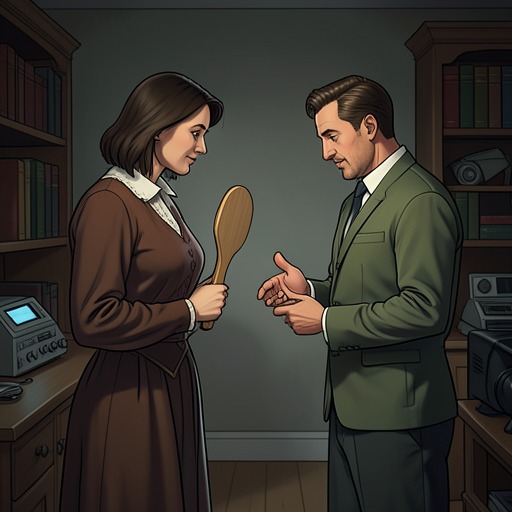
Connie next wakes on a sofa, wrapped in blankets, with her head supported by the armrest. Blake is in a neat kitchen beside a stove, changed into dry clothes, and moving about with composed practicality. The transition from mud and rain to blankets, warmth, and domestic order confirms that the rescue has extended beyond extraction from the wreck. Blake has taken responsibility for Connie’s immediate safety, while she has entered the household whose other defining presence is Ned.
The dog’s role in the rescue foreshadows the unusual emotional structure of Blake’s home. Later, when a clock chimes, Ned rises slowly on arthritic legs and leaves the room for the beach, and Blake explains that the dog goes there each night. Blake’s eventual disclosure that his daughter, Chloe, drowned five years earlier, and that he and Ned send a rose into the sea at sunset, recasts the rescue setting as a place shaped by bereavement. The man who carries Connie from the storm is himself living inside an older catastrophe, with the ocean functioning both as the source of his art and the site of his daughter’s death.
The encounter also begins the movement by which both characters replace isolation with witnessed suffering. Connie’s later revelation that Duncan Cartwright exploited her sexually for four years gives retrospective weight to her abandoned phone, her tears, and the desperation that preceded the crash. Blake’s care does not erase that exploitation, just as Connie’s presence does not erase Chloe’s drowning; instead, the rescue creates the conditions in which each can eventually speak about pain that had been kept private. When Connie later runs after the blind and grief-stricken Blake on the beach and refuses to let his self-pity exclude her, the trust initiated in the ditch has become mutual confrontation rather than mere dependence.
Narrative Significance
The rescue is a value reversal built from successive physical beats. Connie begins in despair, anger, and solitary entrapment; the car crash intensifies those conditions into blood, pain, and unconsciousness. Ned’s appearance briefly makes rescue resemble another threat, but Blake’s command restores safety. His examination, attempted assistance, embrace, and final carrying of Connie then move the scene from danger to shelter and from anonymity to recognition. The decisive shift is not only from injury to survival but from being abandoned inside a sealed life to being received by another person.
The event also establishes Blake’s characteristic form of care: quiet, competent, and tactile rather than sentimental. He controls Ned without violence, assesses the knee without false certainty, asks before attempting to move Connie, and adapts when her body cannot bear weight. His strength is therefore presented through restraint and responsiveness. That pattern later matters when blindness and grief make him feel disabled and condemned. Connie’s rescue by Blake becomes an early counter-image to his later belief that he can offer only darkness: before he can accept a future, he is already capable of carrying another person out of one.
Finally, the rescue inaugurates the chain that leads from shelter to disclosure, from disclosure to love, and from love to renewed art. Blake will later declare that blindness seemed to mark the end of his career, yet Connie’s arrival helps draw him back toward painting and toward a life not organized solely around Chloe’s death. At their public gallery opening, he explains that her love, laughter, passion, and persistence lifted him from despair, and announces his decision to return to the easel to paint emotion. The first physical act in that transformation is simple and concrete: in the storm’s aftermath, Blake lifts Connie from the mud and carries her home.