Chloe
The light house: A love storyChloe is the absent center of Blake McGrath’s emotional and artistic life. She dies at six by drowning on the beach, yet the narrative keeps her presence active through memory, ritual, imagined images, and the changes her father must make in order to survive her loss. Her death explains Blake’s withdrawal from painting, his isolation in the house known locally as the light house, and the painful movement by which remembrance gradually becomes compatible with renewed life.
Identity and Family
Chloe is identified by Blake as his daughter and as the second of the two great loves given to him in life; the first was painting. He recalls that she was born by happy accident while he was beginning to establish himself in the art world. She lived with him and her mother while his career advanced, and the family moved to Maine when Chloe was about to start school. Blake had chosen the coastal setting partly because he wanted the ocean to inspire a new collection of paintings, a collection that would never be completed after the disaster.
The account gives Chloe a vivid but necessarily remembered identity. In Blake’s later vision, she runs along the sand with ponytails bobbing behind her, laughs with a child’s delight, and looks at him with enormous eyes filled with adoration and trust. These details matter because Blake’s grief is not directed toward an abstract symbol of lost childhood. He mourns a specific child whose physical liveliness remains sharply present in his imagination even after her body has disappeared.
Death and the Wound of Memory
Chloe drowns five years before Connie’s conversation with Blake. The event occurs at sunset while Blake is working in his studio, Ned is still a puppy, and Chloe is on the beach with her mother, playing at the surf line. When the screams begin, Blake runs from the house and enters the waves in panic, calling for Chloe and thrashing through the water until exhaustion overcomes him. The scene becomes the central trauma from which his later conduct can be understood: the sea is at once the source of his artistic inspiration and the place that took his child.
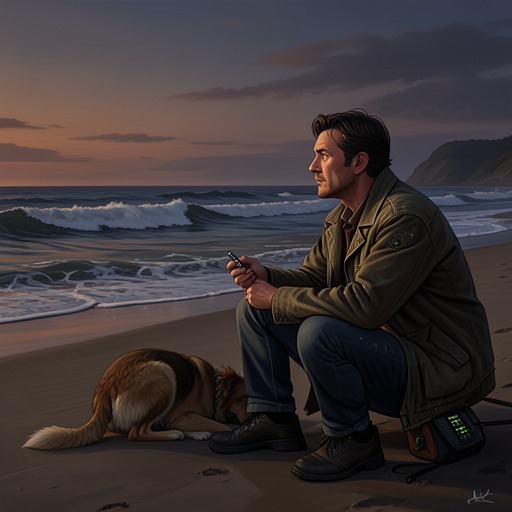
Blake’s response is marked by repetition rather than resolution. Every evening at sunset, he and Ned go to the beach and send a rose out into the sea. Afterward, Ned remains on the empty shore through the night, waiting until sunrise as though he expects Chloe to return. The dog’s departure from the house, prompted by the chiming clock and Blake’s silent acknowledgment, makes the ritual part of the household’s daily structure. Chloe’s absence is therefore repeatedly enacted: the same beach, the same hour, the same flower, and the same impossible expectation return night after night.
The house itself becomes an extension of this mourning. Every light remains on, day or night, so that fishermen can see the Mason house for miles out to sea. Locals call it the light house, though it is not an actual lighthouse. Blake explains that he leaves the lights burning because he wants Chloe to find her way home and find her way back to him. The lights transform private grief into a visible beacon, preserving a connection with the dead while also revealing how completely the loss has organized his life.
Chloe in Blake’s Paintings
Chloe continues into the world through Blake’s art. Blake takes five paintings and adds the image of a beautiful raven-haired young woman to them, imagining how Chloe might have looked if she had grown up. He sends these works outward in the hope that she might one day see herself in one of them and understand that she had been remembered and loved. The woman Connie recognizes in the paintings is therefore not a lost adult lover, as she initially assumes, but an imagined future version of a child who never reached adulthood.
This artistic act holds both tenderness and pain. Blake cannot paint Chloe as she was alone; he inserts into the existing works the daughter whom time denied him, giving her an imagined age and an imagined future. The paintings become memorials, messages, and attempts to overcome death through representation. They also show why his art became inseparable from guilt. Blake believes he failed to appreciate or love Chloe sufficiently because he was absorbed in his career, and he interprets her death as punishment for that failure. His paintings preserve her, but they also keep him inside the accusation he directs against himself.
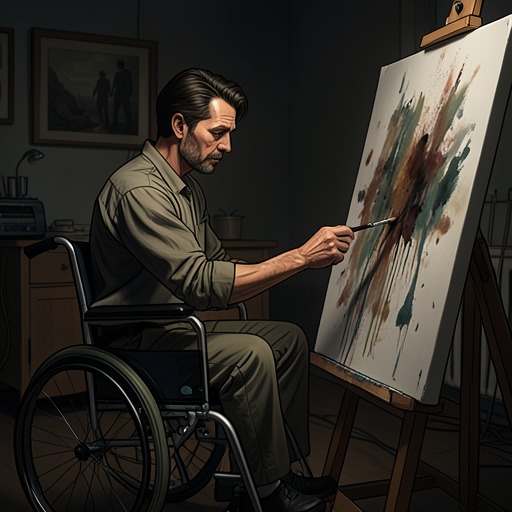
The later return of art changes the meaning of this legacy. When Blake publicly announces that blindness once seemed to him the end of his artistic career, he explains that he painted Connie’s portrait because he wanted redemption. He then declares that he will return to the easel, not to repeat his old seascapes or portraits but to paint emotion. Chloe’s memory remains part of the emotional source from which this new artistic purpose emerges, even as painting is no longer used only to search for her or reconstruct the life she lost.
Farewell and Continuing Bond
Blake’s near-drowning forces his relationship with Chloe into a decisive crisis. While submerged and surrendering to the possibility of death, he sees her running along the sand and embraces her in a vision. The vision disappears, and other moments of delight and dread pass before him, but the encounter eventually awakens his will to live. He realizes that he does not want to die and is not ready to give up. Connie’s call from the shore then asks him to remember Chloe while coming back free of debilitating sadness, not to erase the past but to stop allowing it to determine the rest of his life.
After surviving, Blake tells Connie that one thing remains undone: he must say goodbye to Chloe. At sunset he walks with Ned to the beach carrying the last red rose. He kisses the flower, throws it into the waves, and finally speaks directly to his daughter. He tells her that her father loves her, that she is beautiful, and that he has loved her with all his heart. He calls her a painting in his heart and a masterpiece perfected by memory, joining the languages of parental devotion and artistic creation.
The farewell does not cancel Chloe’s importance. Blake says that he will no longer wait for her, choosing instead to celebrate her smile in the sunshine and listen for her laughter on the wind until they meet again. This is a change in the form of remembrance, not its disappearance. The final ritual ends when Blake returns to the house, Connie embraces him, and together they weep. Connie then turns off the lights one by one, ending the light house’s vigil. The darkness signifies the end of enforced waiting, while Chloe’s place in Blake’s memory remains intact.
Narrative and Thematic Significance
Chloe functions as a character of absence whose story is disclosed gradually through Blake’s behavior before his explanation is given. The beach visits, the red roses, Ned’s nightly departure, and the permanently illuminated house first appear as mysterious patterns. Once Blake reveals the drowning, each pattern becomes a form of testimony to grief. The narrative thus makes the reader experience the delay between visible ritual and underlying wound, allowing Chloe’s identity to emerge through the traces her death has left on the living.
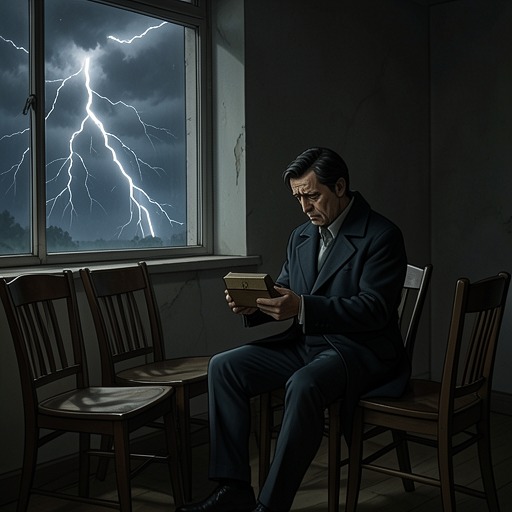
Her memory also structures Blake’s movement between loss and restoration. Cleaning Chloe’s bedroom and changing its sheets brings him a sense of lightness after he shares the burden of her death, although the sorrow does not vanish. Later, surviving the ocean and completing the farewell allow him to retain memory without remaining imprisoned by the beach. Chloe is neither forgotten nor simply overcome; she becomes a continuing bond that can coexist with Blake’s love for Connie, his return to painting, and his renewed willingness to inhabit life.
In this sense, Chloe is more than the explanation for Blake’s sadness. She is the measure by which the novel tests whether art can preserve love without preserving paralysis. The imagined girl in the paintings, the rose carried into the surf, the light meant to guide her home, and the final spoken goodbye all convert private grief into forms that can be witnessed. Chloe’s death destroys Blake’s former life, but her memory ultimately helps give shape to his redemption and to the emotional art he decides to create.