Connie and Blake’s “No More Secrets” agreement
The light house: A love storyConnie and Blake’s “No More Secrets” agreement is the relationship’s explicit answer to the damage caused by concealed trauma. It is not a casual promise of openness but a hard-won covenant made after both partners have discovered that love cannot remain secure when each person carries a private history capable of being mistaken for betrayal. The agreement joins confession, mutual trust, and the possibility of a shared future.
Circumstances and Hidden Histories
The pact emerges after Blake McGrath has disclosed the central wound of his life: he was given two great loves, painting and his daughter Chloe, and Chloe drowned at the beach five years earlier when she was six years old. His grief has governed his existence ever since. He and Ned go to the beach at sunset to send a rose into the sea, while Ned returns each night to wait on the empty shore until morning. Blake also leaves the lights on so Chloe might find her way home. These rituals show that his sorrow is not merely remembered; it structures his nights, his home, and his relation to the ocean.
Connie Dixon likewise enters the relationship under the pressure of an undisclosed past. She left home for New York City hoping to become an artist, but Duncan Cartwright, her employer at the gallery, found her when she had no money. He encouraged her painting, paid her bills, and then turned those payments into a debt he demanded be repaid through sex. Connie describes the arrangement as grooming and says that Duncan used her for four years. Her silence has been shaped by shame and coercion rather than simple evasiveness, but Blake initially experiences the withheld information as a betrayal.
The surrounding narrative reinforces how secrecy and financial pressure trap Connie. Her joint account with Jean is intended chiefly to pay a monthly charge to a nursing home facility outside Exeter for their mother’s care, after their mother fell at Jean’s home three years earlier. When Connie admits that she withdrew two thousand dollars from the nursing-home joint account while in Maine to buy something, Jean reacts with horrified disbelief. The detail makes the lovers’ agreement part of a wider pattern: private burdens, family obligations, economic desperation, and exploitation have all encouraged concealment, even when concealment endangers other people.
The Promise Itself
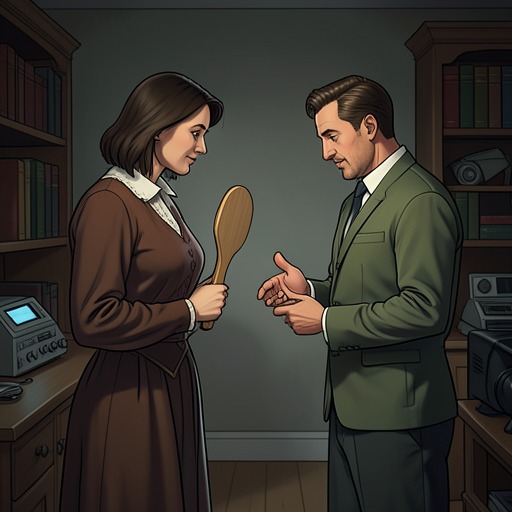
After the painful revelation about Duncan Cartwright, Connie acknowledges that she should have told Blake about Duncan and her past so that he could understand her. In the intimacy that follows, she vows, “Never again.” She then states the rule more fully: “No more secrets between us,” asking whether Blake agrees. Blake answers that he does, and when Connie asks him to swear it, he replies, “I swear.” The exchange gives the pact a solemn, almost ritual form: recognition of wrongdoing or injury leads to a clearly worded rule, assent, and an oath.
The agreement is reciprocal. Connie is not merely promising to become transparent while Blake remains the keeper of hidden truths. Blake admits that he carried his own secrets for five long years and that it took a great deal for him to open up and confide in her. His admission places his silence beside Connie’s, without making the two histories identical. His secret concerns Chloe’s death and the grief that followed; hers concerns sexual exploitation and the coercive power Duncan held over her. The pact therefore establishes not a demand for identical disclosure, but a shared responsibility to stop allowing the past to govern the relationship from concealment.
Blake also qualifies the promise with a realistic understanding of trust. He tells Connie, “Trust takes time,” particularly for him. The agreement does not pretend that an oath can erase suspicion immediately. Instead, it creates a standard by which future conduct can be measured. Its emotional force comes from the tension between the absolute language of “No more secrets” and Blake’s recognition that trust must be rebuilt gradually.
Secrecy, Trauma, and Conflict
The pact matters because both characters respond to trauma through forms of withdrawal. Connie’s despair can become physically overwhelming: after sitting in her idling rental car, she begins to cry, pounds her fists against the steering wheel, and hisses, “Damn him!” Later, after her car crashes in a storm, she is trapped at an impossible angle, tastes blood, suffers an injured knee, claws her way through the window, and loses consciousness in the mud. These bodily crises give context to the emotional cost of a life in which fear, shame, and helplessness have been contained until they erupt.
Blake’s withdrawal is longer and more systematic. Following Chloe’s drowning, he abandons painting and returns nightly to the beach with Ned, preserving a bond with the dead through the rose ritual and the light house. Yet his grief is not permanently static. After Connie learns his history and shares the pain, he dusts Chloe’s bedroom and changes the sheets while she goes to Hoyt Harbor to collect her belongings. The grief remains, but Blake senses an unexpected lightness and a glimpse of his old self emerging from despair. This movement shows why the agreement is consequential: truth becomes a form of witness, and being witnessed permits change without requiring Chloe to be forgotten.
The promise is tested when Blake’s sudden blindness and emotional devastation make him believe Connie may remain only out of pity. He offers her the chance to leave and begin her life again, insisting that he could not live with himself if she stayed from compassion. Connie runs after him on the beach and confronts the deeper disability beneath his physical condition. She tells him that his blindness is not the central problem; the hollowing effect of grief, sadness, and self-pity is. Their quarrel reveals the agreement’s demanding side. Honesty does not guarantee gentleness. It can function as a painful intervention, forcing Blake to hear what his mourning has done to the living person beside him.
Reconciliation and Consequences
The “No More Secrets” agreement becomes the basis for reconciliation because it replaces suspicion with a mutually accepted rule. Connie’s earlier concealment is not treated as meaningless, but neither is it allowed to define her permanently. Blake’s grief is likewise recognized as real without being permitted to dictate whether Connie can remain. The relationship survives by acknowledging both injuries and by distinguishing compassion from the choice to build a life together.
Their renewed commitment is symbolized by the continuation and eventual transformation of Blake’s farewell to Chloe. Connie and Blake cling to each other as waves lap around them and the rising sun appears like a renewed promise. Blake says that they can be all right, but he still needs to say the one thing he could never bring himself to say to Chloe: goodbye. The farewell does not cancel his continuing bond with his daughter; it changes its place in his life, making room for Connie and for a future that is not organized solely around waiting.
The agreement also prepares the couple for a future based on shared work rather than private suffering. At the opening attended by the public, Blake explains that Connie entered his world during a difficult time and lifted him from despair through love, laughter, passion, and persistence. He reveals that he had thought blindness marked the end of his art career, but that he painted Connie’s portrait because he wanted redemption. He then announces that he will return to the easel, not to paint seascapes or portraits, but to paint emotion. His declaration gives the pact its broadest consequence: truth and trust do not merely repair the romance; they help restore Blake’s artistic voice.
The Agreement’s Significance
The pact is a compact rule with expansive consequences. It opposes the controlling secrecy imposed by Duncan Cartwright, the isolating secrecy Blake maintained around Chloe’s death, and the evasions produced by shame, debt, and fear. Against those forms of concealment, Connie and Blake choose disclosure as a practice rather than as a single dramatic confession.
Its meaning is also deliberately practical. Blake’s statement that trust takes time prevents the oath from becoming a magical cure, while Connie’s insistence that there be no further hiding gives the relationship an ethical boundary. The two characters must continue to face grief, blindness, exploitation, and the possibility of loss, but they are no longer required to face them alone or through false appearances. In that sense, the agreement marks the transition from isolated survival to conscious partnership: the past remains present, yet it can finally be spoken, answered, and placed beside a future made in common.