Hoyt Harbor
The light house: A love storyHoyt Harbor is the coastal Maine town that redirects Connie Dixon’s life after she arrives seeking refuge from Duncan Cartwright’s control, debt, and the death of her artistic ambitions. At first it offers the appearance of a bright summer escape; over time, it becomes the place where Connie builds the Connie Dixon Gallery of Fine Art, where Blake McGrath begins to emerge from isolation, and where the sea’s beauty remains inseparable from the memory of Chloe’s drowning.
Setting and Local Character
Hoyt Harbor is introduced as a sleepy coastal town whose apparent idyll is enlivened by the first tide of summer visitors crossing the bridge. From Connie’s rented house, the town appears beneath a clear blue sky, with sunlight warming the window and gulls sounding in the distance. The sight produces an involuntary lift in her spirits: after years in which Duncan Cartwright has converted her artistic hopes into debt and sexual exploitation, the town briefly restores a sense that pleasure and choice might still be possible.
The harbor itself is a sheltered bite in the coastline, protected from the storms and gales that sweep down from the northeast. Its history is visible in the tension between past and present. Hoyt Harbor once supported a small fishing fleet, but the local industry declined, forcing residents to rebuild a fragile economy around tourist money. Painted trawlers still sit at their moorings, waterfront shops retain nautical decoration, and white-winged seagulls gather on the rocky breakwater to harass families for scraps. The town therefore carries a proud maritime inheritance while living from the seasonal commerce that replaced it.
The waterfront also gives the town a social brightness that contrasts with the private suffering of the people who inhabit it. Connie watches two boys in lifejackets push a canoe into the water, while vacationers fill the streets and promenade. Later, after returning from New York, she crosses the bridge at night beneath colored lights, passing crowds gathered beside the star-filled harbor. The public atmosphere is festive and restorative, but it does not erase the darker histories attached to the coast.
Connie Dixon’s Refuge and Rebeginning
Connie Dixon comes to Hoyt Harbor for two weeks of vacation because she is drowning in despair and debt and needs to make decisions while some remnant of her will remains free. Duncan Cartwright had promised exhibitions and fame, then used his financial support and sexual hold over her to claim ownership of her body, labor, and future. When she tried to leave, he threatened to ruin her and have her mother removed from the nursing home. Hoyt Harbor is thus not merely a holiday destination: it is the physical distance that allows Connie to imagine a future not dictated by Duncan’s demands.
Her first movement through town turns escape into active possibility. She walks downhill toward the harbor in a summer dress, watches the glittering water and the boys with their canoe, and absorbs the town’s bubbling urgency. The tourists’ unwillingness to waste a moment gives the setting a forward-driving energy that Connie has lacked. She has arrived looking for answers without knowing what form they will take, and the town becomes the stage on which fate brings her into contact with Blake McGrath.
Hoyt Harbor remains connected to Connie’s practical struggle even after she begins her new life with Blake McGrath. When she decides to stay, she must confront the logistics of housing and the daily drive between town and Blake’s seaside house. She accepts the difficulty because the alternative is a life still governed by Duncan Cartwright. Her return across the bridge is accompanied by fear as well as elation: the new life offers no guarantees, only the dream of opening a small gallery. The town’s uncertainty becomes a condition of freedom rather than another form of confinement.
From Tourist Town to Artistic Enterprise
Hoyt Harbor changes from a place of temporary refuge into the center of Connie’s professional future. At the end of her first week with Blake McGrath, she buys a new cell phone and gives the number to Jean and the nursing home, a small but concrete sign that she is reconnecting with responsibilities on her own terms. She then identifies a vacant shop on the town’s main street, a few doors from the grocery store, as the perfect location for a studio and gallery. The former real-estate office offers an ordinary commercial shell for an extraordinary personal rebeginning.
Connie shares her plan with Blake by drawing the layout in the sand with a stick. Her excitement is practical as well as emotional: she imagines the rooms, the work that will be needed, and the way the space can display Blake’s old seascapes and new work. The project joins their relationship to the town’s economic life. Hoyt Harbor’s tourist trade, once presented as the fragile substitute for fishing, now supplies the audience and commercial setting for Connie’s gallery.
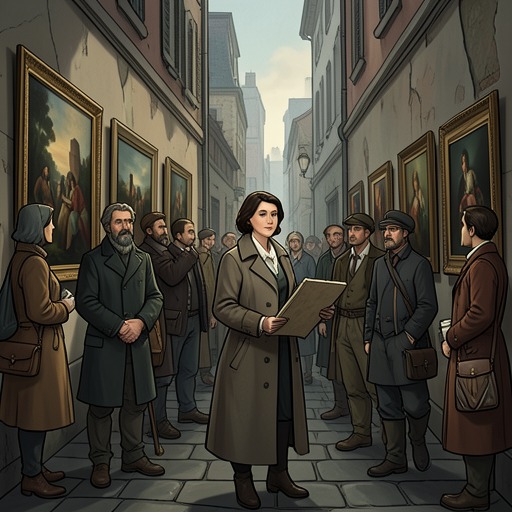
The following morning, Connie phones the landlord, and the Connie Dixon Gallery of Fine Art is established. The transformation is labor-intensive. Tradesmen repaint the building and install new lighting; Connie photographs Blake’s old seascapes; catalogues arrive from printers and circulate to galleries and collectors in Europe and Asia. Hoyt Harbor is therefore not an isolated retreat cut off from the art world. Through Connie’s organization, the small coastal town becomes connected to international collectors and institutions while retaining its local storefront scale.
The gallery also gives the place a new meaning for Blake McGrath. He has allowed the sea and the house beside it to become a prison, but Hoyt Harbor offers a public structure through which his hidden work can return to view. At the gallery’s opening, he moves carefully through the art space with his cane, counting paces and memorizing distances while Connie manages catering and preparations. His blindness changes how he occupies the town, yet the gallery makes his work present within it again.
The Sea, Grief, and Place Memory
Connie experiences Hoyt Harbor and its coast as paradise, but Blake McGrath rejects that description. When she says that she will miss the place and calls it a piece of paradise, he answers that he hates it. He explains that it may once have been paradise, but now feels like a prison. The contrast establishes that a location does not possess one fixed emotional meaning. Connie sees shelter, beauty, and an opening toward independence; Blake sees the site of a loss from which he has been unable to escape.
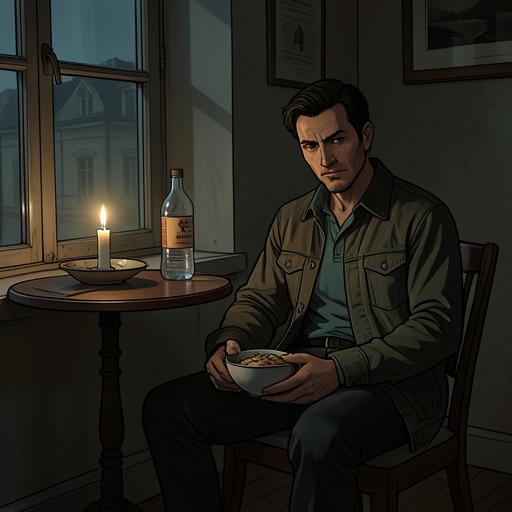
Blake’s attachment to the coast is organized by Chloe’s drowning. At sunset, he and Ned go down to the beach and send a rose into the sea. Ned then remains on the empty beach through the night, waiting for Chloe, while Blake keeps the lights of the house burning so that she might find her way home. The ritual makes the shoreline both memorial and wound. The same water that gives Hoyt Harbor its tourist appeal also holds Blake’s most devastating memory.
The beach’s significance begins to change only when Blake shares the truth of his grief with Connie Dixon. After she understands the nightly rose ritual and the lights, he experiences some relief from the burden that has defined his isolation. The next morning, he dusts Chloe’s bedroom and changes the sheets; grief remains, but an old self begins to rise from the darkness. Hoyt Harbor does not become free of mourning. Instead, it becomes a place where loss and recovery can coexist, with the beach continuing to hold Chloe’s memory while no longer dictating every movement of Blake’s life.
The town’s restorative and destructive meanings continue to overlap. Connie and Blake celebrate the gallery by carrying a folding table to the beach, eating grilled steaks beneath the moon and stars, and talking until mist rolls in from the ocean. The same coast that once served Blake’s ritual of waiting can now host shared food, artistic plans, and intimate conversation. This does not cancel the past; it gives the setting another layer of memory.
Narrative Significance and Continuing Future
Hoyt Harbor functions as a threshold between imposed identity and chosen identity. Connie enters it as an indebted gallery employee whose career has been appropriated by Duncan Cartwright, then uses its distance, streets, commercial spaces, and artistic community to establish herself independently. Blake enters its landscape as a secluded painter whose blindness and grief seem to have ended his career. Through Connie’s gallery, the town becomes the place where his lost works are shown and where he announces his return to painting.
That return is explicitly tied to the new public life formed in Hoyt Harbor. At the gallery opening, Blake says that going blind once seemed like the end of his art career and that he painted Connie’s portrait in search of redemption. He then declares that he will return to the easel, not to paint seascapes or portraits, but to paint emotion. The announcement turns the town from the backdrop of his confinement into the setting of an artistic transformation.
The location’s deepest importance lies in this doubleness. Hoyt Harbor is a tourist town built over the remains of a fishing economy; a paradise to Connie and a prison to Blake; a place of commercial opportunity and a shore haunted by Chloe’s death. By the end of the supplied narrative, it has not shed those contradictions. Instead, its harbor, beach, bridge, gallery, and lights hold the story’s central movement: escape becomes belonging, private grief becomes shared memory, and a landscape once associated with endings becomes the ground for artistic and emotional renewal.