The ocean as muse and source of trauma
The light house: A love storyThe ocean as muse and source of trauma is the governing paradox of Blake McGrath’s life. It once gave him the artistic inspiration through which he built a career, yet it also became the setting of Chloe’s drowning and the source of the grief that drove him to abandon painting and withdraw from the world. In the story, the sea is never merely scenery: it is a creative partner, a place of repeated mourning, an apparent agent of punishment, and the physical force against which Blake must decide whether to surrender or return.
The Sea as Artistic Calling
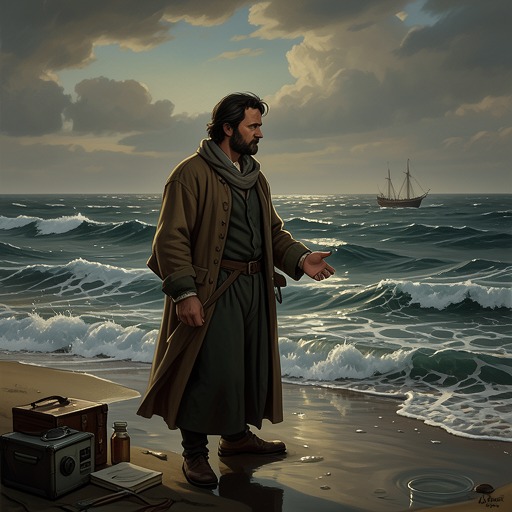
Blake’s connection with the ocean began as an artistic vocation. Before Chloe’s death, he wanted to live beside the sea and draw daily on its inspiration for a new collection of paintings. He moved to Maine with Chloe, the child’s mother, and their dog Ned while preparing for an exhibition that would never take place. The coast therefore represents both professional promise and the domestic future he thought he was building. His decision to settle there was not an escape from art but an attempt to place his work closer to its most important subject.
The ocean’s creative power is also implied by the distinctive quality of Blake’s paintings. Connie Dixon observes that his oil paint seems to melt into the canvas rather than lie heavily upon it, producing a style that differs from the thick, textural methods associated with many painters and old masters. Although Blake treats this manner as simply a characteristic of his technique, the paintings embody a fluidity suited to the sea: boundaries between surface, light, and depth appear to dissolve. His art is thus linked to an environment that cannot be held still, even when transformed into a canvas.
The Shore as Site of Loss
That artistic relationship is violently reversed when Chloe drowns on the beach five years before the main action. Blake recalls that he had been working in his studio while the child’s mother played with Chloe in the surf at sunset. The screams brought him running through the house and onto the darkening beach, where he entered the waves in panic, thrashing and calling for his daughter until his strength failed. The ocean becomes inseparable from the moment when his family, career, and sense of safety collapse at once.
Blake interprets the death through guilt and religious fear. He believes God took Chloe because he had not appreciated her sufficiently, had not loved her enough, and had been too immersed in his art to be a good father. In this account, the sea is not only the material location of the accident; it becomes the instrument through which he imagines divine punishment has been delivered. The ocean that once supplied his creative gift appears to have turned against him, making his artistic dependence seem morally dangerous.
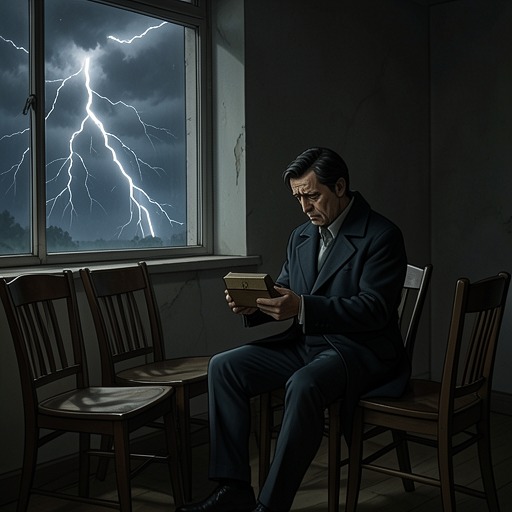
After Chloe’s drowning, Blake can no longer paint the ocean. He says that the sea had given him a career and then cruelly taken his daughter’s life, so he gave up art and turned his back on the world. His withdrawal makes the coastline function like a prison rather than a refuge. Connie sees the lonely beach and calls the place a piece of paradise, but Blake answers that it may once have been paradise and now feels like a prison. The contrast establishes that the same landscape contains radically different emotional realities: for Connie, it offers distance and the possibility of a new life; for Blake, every view is haunted by the child who vanished there.
Ritual, Memory, and the Light House
Blake’s grief does not lead him to leave the sea. Instead, he returns to it through repeated ritual. Every evening at sunset, he and Ned go down to the beach and send a red rose into the water. Ned then remains on the empty shore through the night until sunrise, as though waiting for Chloe to return. The ritual turns the ocean into an imagined channel between the living and the dead, while also preserving the wound by repeating the circumstances of loss at the same hour and in the same place.
The house participates in this continuing bond. Blake keeps every light burning day and night, leading local fishermen to call it the light house because they can see it for miles out to sea. The community knows the visible habit but not its reason. For Blake, however, the lights are a beacon for Chloe: he wants her to find her way home and return to him. The sea therefore extends into the domestic space, while the house projects a message across the water. His memorial system joins rose, shoreline, darkness, and illumination into a single language of longing.
The ritual also gives grief a structure when ordinary speech fails. Blake can perform the sunset farewell long before he can explain Chloe’s death to Connie. His practices repeat the relationship rather than cancel it; Chloe remains present as someone to be awaited, addressed, and loved. Yet the same repetition keeps him tied to the beach and prevents the house from becoming an ordinary home. The ocean is both the medium through which he maintains connection and the environment that fixes him inside the past.
Storm, Drowning, and Reversal
The sea’s destructive force returns dramatically during a storm. Dark clouds boil in from the ocean, night falls early, thunder rolls, and wind tears across the exposed beach. Blake places the rose in the surf while sand strikes his skin and the gale presses against his back. A flash of lightning briefly reveals Connie and Ned waiting for him. The familiar ritual continues, but the weather transforms it into a scene of immediate danger, suggesting that remembrance can bring Blake once more to the edge of annihilation.
That danger becomes literal when Connie pushes Blake after he insists that he wants to be left alone and tells her to leave him to drown in his misery. The churning surf pulls the sand from beneath his feet, and he falls backward into deeper water. Waves repeatedly force him under; he gulps air, loses orientation, and struggles against the current until exhaustion changes into surrender. The episode echoes Chloe’s drowning while reversing the roles: Blake, once the father who entered the sea to rescue his child, becomes the person whose life must be recovered from it.
As Blake gives up struggling, the water produces visions of Chloe running along the sand, laughing, and trusting him as he carries her. The near-drowning therefore joins physical submersion with a return to the most intimate memory of his daughter. The sea seems to offer reunion at the same moment that it threatens death. Connie’s voice finally reaches him, and he surfaces; the ocean has not become safe, but Blake has crossed through a repetition of his trauma without dying in it. His survival creates the possibility that the memory can be transformed rather than endlessly reenacted.
Farewell and Reclaimed Creativity
After the rescue, Blake tells Connie that he needs to say the one thing to Chloe he had never been able to say: goodbye. At sunset he goes to the beach with Ned carrying the last red rose. He kisses the flower, throws it into the foaming waves, and speaks directly to Chloe, affirming that her father loves her, that she is beautiful, and that she will always be his darling girl. He calls her a painting in his heart and a masterpiece perfected by memory, preserving the artistic language through which he has always understood her.
This farewell changes the meaning of the ocean ritual. Blake does not deny the loss or pretend that the sea has ceased to hurt him. Instead, he declares that he will no longer wait for Chloe’s return or continue grieving in the same way; he will remember her smile in sunlight and listen for her laughter in the wind until they meet again. When he returns to the house, Connie helps him turn off the lights one by one. The light house, once a beacon of desperate expectation, goes dark. The gesture marks not the destruction of love but the end of an enforced vigil.
The sea nevertheless remains part of Blake’s artistic history, even after he rejects seascapes. When his vision is failing, he explains that he did not return to painting because the ocean inspired him again. He made Connie’s portrait for redemption, not for a new career, and believed continuing would be futile because blindness seemed to end the possibilities of his former practice. His relation to the sea has thus changed from inspiration to wound, and neither romantic love nor technical brilliance immediately restores the old vocation.
At the opening of the Connie Dixon Gallery of Fine Art, Blake unexpectedly announces that he will return to the easel. He once thought blindness marked the end of his art career, but he now wants to paint because some part of him still needs to be heard. He specifically rejects a return to seascapes and portraits and says that he will paint emotion. This decision does not restore the ocean to its earlier status as a harmless muse. Rather, it acknowledges that art can survive after the subject that once sustained it has become traumatic. Blake’s new direction grows from the sea’s double legacy: its beauty gave him his first artistic language, its violence broke that language, and the suffering it caused ultimately forces him to seek another form of expression.
Narrative Significance
The ocean organizes the book’s movement between loss and recovery. Connie arrives in Hoyt Harbor seeking answers and the possibility of a new life, while Blake remains bound to a coastline that he experiences as a prison. Their different responses to the same place allow the narrative to distinguish landscape from destiny: the shore does not carry one fixed meaning, but changes according to the memories and hopes brought to it.
For Blake, healing is not a clean departure from the sea. It involves alternating between loss-oriented acts—watching the beach, sending roses, remembering Chloe—and renewed engagement with ordinary life, including sharing his history with Connie, preparing Chloe’s room, and eventually returning to art. The ocean remains capable of violence, but it no longer dictates that every encounter must end in repetition. Its final significance lies in this unresolved transformation. It remains the source of the original wound and the image of overwhelming grief, yet it also becomes the setting in which Blake survives, says goodbye, and begins to make an art that can carry emotion beyond the limits of the old seascapes.