Alexandria
Theodosia and the Serpents of ChaosAlexandria is Theodosia’s first sight of Egypt in the expedition’s arrival by sea: a city of towers, turrets, and flags beyond a brilliantly blue sky. The harbor promises the mystery of the ancient world, while the practical urgency of her mission allows her only a hurried introduction before she continues inland toward Cairo.
Setting and historical associations
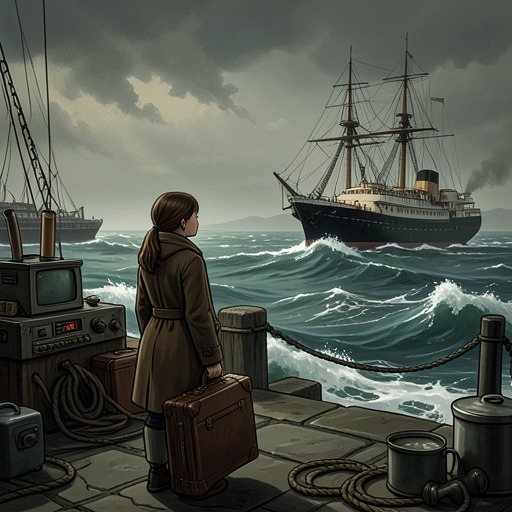
As the Rosetta Maru approaches, Alexandria appears in the distance against the sky, and the sight of the city brings a welcome contrast to the long stretch without sunshine. Theodosia is drawn not only to the present-day harbor but to the history the name evokes: the Lighthouse of Pharos, once counted among the Seven Wonders of the Ancient World, and the ancient library, whose lost scrolls and texts she imagines might have contained knowledge of Egyptian magic and curses.
That historical imagination gives the arrival a particular charge. Alexandria is more than a stop on the route: for Theodosia, it is a place where the ancient past seems to promise answers relevant to the work ahead. Yet the city she encounters is also busy and immediate, not the imagined scene of antiquity alone.
Harbor and first impressions
The Rosetta Maru threads its way through a harbor crowded with ships. The docks surprise Theodosia because they look much like those back home, rather than the foreign and picturesque scene she had expected. The people’s faces and the jumble of unfamiliar sounds, which she likens to an exotic drum, sharpen her sense of difference even as the familiar appearance of the docks complicates it.
The contrast continues in the narrow streets. A dragoman arranged through Theodosia’s mother meets the family and guides them through the confusion, first into a carriage and then toward the railway station. The streets are packed with small shops and beggars pleading for backsheesh; their crowdedness recalls Seven Dials to Theodosia, though the beggars’ appeals leave her distressed. Her impressions thus move between likeness and unfamiliarity: the docks recall home, while the street scene unsettles her and makes the need for a guide plain.
Passage toward Cairo
The dragoman hurries the family through the city and shepherds them onward to the train. The journey by carriage is hair-raising, but the large railway station brings relief: from there they can continue toward Cairo, with the hope of arriving by dinnertime. Alexandria is consequently encountered in motion, through a sequence of ship, dock, carriage, and station rather than an extended visit.
As the train pulls away, Theodosia resolves to return someday when she has time to see the sights. For now, the city’s ancient associations and present-day bustle give way to the expedition’s purpose. Her mission determines the shape of the visit: Alexandria offers the promise of discovery, but the journey does not pause to explore it.