Amenemhab's Tomb
Theodosia and the Serpents of ChaosAmenemhab's Tomb is the adjoining burial site that Henrietta Throckmorton finally discovered after two years of coming up empty-handed. It matters not only as a place of burial but as a record of Thutmose III’s campaigns and the hiding place of the Heart of Egypt, an amulet whose absence had remained a historical puzzle. Through its inscriptions, weapons, and most consequential artifact, the tomb joins military history to the danger of a curse intended to make a nation vulnerable to conquest.
Identification and Discovery
Alistair Throckmorton had been working on a theory about the location of Amenemhab's Tomb. Amenemhab served as Thutmose III’s Minister of War, and some credited his brilliance with helping account for the pharaoh’s great military conquests. The tomb’s discovery therefore promised to illuminate not merely the resting place of a high-ranking official, but the work of a figure associated with the reach of Thutmose III’s power.
The breakthrough came through Henrietta Throckmorton, who found the adjoining tomb after two years of unsuccessful searching. The discovery immediately stirred the family’s expectations: Alistair was eager to see what she had found, and Theodosia Elizabeth Throckmorton wanted to hear about her mother’s experience of entering an ancient sealed tomb. Henrietta was about to answer when Nigel Bollingsworth interrupted. The exchange briefly frames the discovery as a family event before the contents of the tomb begin to redirect attention toward its historical and political importance.
A Record of Thutmose III’s Wars
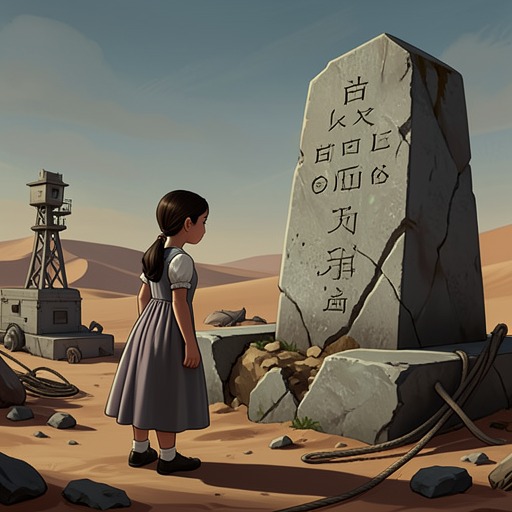
Henrietta described the tomb’s walls as covered in detailed histories of every war Thutmose III had fought, including accounts of his victories and strategies. The inscriptions were so extensive that deciphering them would take years. The tomb thus functions as a military archive: its significance lies not only in what was buried there, but in the sustained written record surrounding the burial.
That prospect also draws attention to how much remains to be interpreted. Theodosia doubted the estimate of years, believing she and her father might decipher the material in months if she were allowed to work on it. Her confidence contrasts with the scale of the task Henrietta describes, while underscoring that the inscriptions have not yet yielded their full contents. The tomb is a repository of evidence, but access to that evidence does not mean it has already been understood.
Weapons and Unusual Imagery
The tomb also contained a wide assortment of weapons, including spears, daggers, and long swords. Several were carved with Apep and Mantu. Alistair and Henrietta both remarked that they had never seen the serpent of chaos and the god of war used together in this way. Their response marks the combination as unusual rather than established, and leaves its meaning unresolved in the available account.
The pairing is striking in a tomb whose walls recount wars and military strategy. Its imagery brings the serpent of chaos into proximity with the god of war, while the inscriptions preserve the campaigns of a powerful pharaoh and his minister. The evidence does not explain what the carvings meant to their makers, but it does make the weapons more than a simple inventory: they are part of the tomb’s unanswered questions about the relationship between warfare and forces of disorder.
The Heart of Egypt and the Tomb’s Legacy
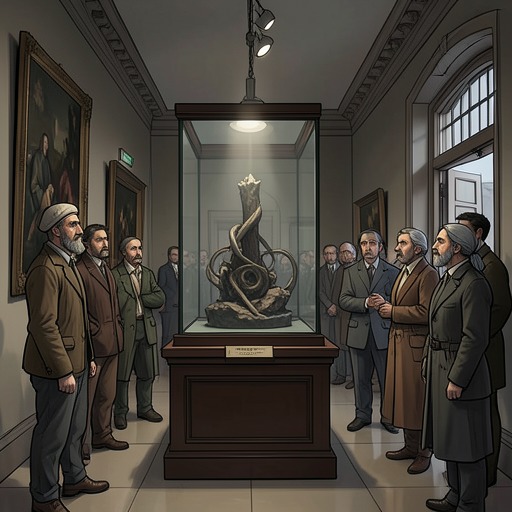
The most consequential object recovered from the tomb was the Heart of Egypt. Henrietta presented a large scarab carved from precious stone, with gold wings curving from its sides and inlaid with thousands of jewels. A cherry-sized carnelian sat at its head, and a smaller green stone decorated its lower end. She identified it as the Heart of Egypt and said it came straight from Amenemhab's Tomb; she then handed it to Alistair Throckmorton.
The amulet’s location resolved a longstanding puzzle. A Heart of Egypt was made for each pharaoh at coronation, because the ruler’s health and well-being were understood to be inseparable from those of Egypt. It was destined to be placed on the pharaoh’s body after death. Thutmose III’s Heart had not been found in his own tomb, and its whereabouts had puzzled investigators for years. The discovery showed that it had been in Amenemhab's Tomb instead.
That recovery gives the tomb significance beyond the military record it preserves. The Heart’s curse was designed to weaken a nation and leave it easier to conquer; the account identifies its designer as Thutmose III’s Minister of War, Amenemhab. The tomb consequently brings together the record of campaigns, weapons marked by an unusual religious pairing, and an amulet bound to the fate of a country. Its contents reveal a burial place as a site where the history of conquest and the means of threatening a nation meet.