Execration Magic
Theodosia and the Serpents of ChaosExecration Magic is a form of Egyptian magic in which a wax figure becomes a means of acting against a named person: Theodosia carves symbols and a target’s name into it, performs the execration rites, and inflicts harm by breaking the corresponding part of the figure. The episode in the tomb gives the practice a precise, consequential shape. Its power depends not only on the object and the ritual, but on identifying the intended victim correctly and carrying the working through under immediate threat.
Definition and Materials
Theodosia identifies an execration figure as the Egyptian equivalent of a voodoo doll. She finds it on an altar among small wax and clay figures, with bits of hair protruding from the wax and a piece of ancient papyrus bearing writing attached to it. The figure is not presented as an ordinary effigy: its hair, writing, and place among ritual objects mark it as something whose material form can be used to reach beyond itself.
The figure’s function depends on inscribed signs. With enemies closing in, Theodosia uses a jagged fingernail to carve into the wax a symbol for invoking power and another for smiting her enemies. These marks establish the aim of the working, but they are not sufficient by themselves. She must also identify the people against whom the magic is directed. In this scene, the figure is therefore both a magical instrument and a surface on which intention and identity have to be made legible.
The scene leaves some details of the figure’s preparation unexplained. It does not specify how the attached hair or papyrus contributes to the rite, or whether either is indispensable. What it does establish is the practical importance of the figure’s wax body, the carved symbols, the spoken rites, and the naming of the intended target. The limits of what is shown matter: the episode demonstrates one urgent use of execration magic rather than laying out a complete general manual.
Names, Symbols, and Ritual Action
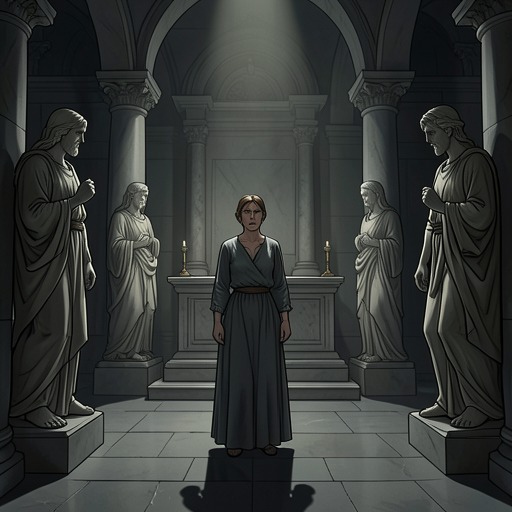
Theodosia hesitates over the names because an error would make the magic useless. She is almost certain that the man directing the threat is von Braggenschnott, and suspects that Tetley is among the others, but she needs to be sure before completing the working. When Tetley appears beside an Anubis statue, she has confirmation of one identity. She then uses the brief delay to move around a statue and a funerary chariot, carve Tetley’s name into the wax, and whisper the execration rites.
This sequence makes accurate naming a condition of effective action, not a decorative detail. Theodosia can carve symbols for power and harm while still lacking the information needed to direct that harm reliably. The arrival of Tetley resolves that uncertainty, and the rite becomes specifically aimed at him. The practice thus joins symbolic instruction to personal identification: the marks express what is to be done, while the name determines to whom it is done.
The ritual also has a spoken component. Theodosia whispers the rites as she carves, then later chants the ancient words of power while holding the figure. The account does not provide a full catalogue of the words or symbols, but it shows that the carving and recitation belong to one continuous act. Her work is improvised under pressure, using a jagged fingernail and a small figure taken from an altar, rather than being performed in protected or orderly conditions.
The Working Against Tetley
After completing the final hieroglyph, Theodosia runs toward the back wall, with Tetley close behind and the available escape route narrowing. When he advances, she grasps the wax figure and waits until he has taken two more steps. She then wraps her hand around its left leg and breaks it while chanting the words of power. Tetley screams and clutches his own left leg as it folds beneath him. The correspondence between figure and victim is immediate and bodily.
Theodosia follows by snapping the figure’s right leg. Tetley howls and crumples to the floor. The scene thereby demonstrates the rite through a concrete correspondence: damage to the wax figure’s left and right legs is answered by injury to Tetley’s legs. The magic does not simply distract or frighten him; it physically incapacitates the pursuer who has been closing in on her.
The action is also a calculated risk. Theodosia has already recognized that guessing the names incorrectly could render the magic useless, and she acts only once she is sure Tetley is one of her targets. Even then, she can only hope she has not mishandled the working. Its success is shown through Tetley’s collapse, not explained by a further account of the rules. The episode gives the rite a clear result while preserving the uncertainty of someone attempting it in danger, with little time to check her work.
Relation to Other Magical Practices
The book also shows Theodosia preparing wax in a separate attempt to remove the curse from the Bastet statue. That procedure uses a small wax replica marked with hieroglyphs, a mixture of claret and rue, a rag to apply the potion, and protective wedjat eyes drawn on her palms. As she chants, the curse’s symbols shrink and then rise from the statue; the intended next step is for them to enter the wax figure, which she would burn. This is a curse-transfer working, not the execration rite used against Tetley. The distinction is important: the presence of wax and hieroglyphs does not by itself make two procedures the same kind of magic.
That attempted removal also shows how a ritual can turn on focus and handling. The symbols do leave the statue, but a distraction diverts them toward Isis instead of into the prepared wax, and the cat becomes dangerously transformed. By contrast, the tomb’s execration working is directed at an identified human target and is enacted through damage to the figure. Read together, the episodes present magic as material and procedural: substances, signs, words, attention, and the relation between an object and its target all shape what happens.
Execration Magic’s significance in the tomb lies in that exactness under pressure. The small figure is easy to overlook among the altar objects, but it lets Theodosia answer a threat she cannot meet by strength or escape alone. The need to identify Tetley correctly delays the spell; the carved name and rites make it specific; breaking the figure’s legs gives that specificity a startling physical consequence. The scene portrays the magic neither as a vague symbol of resistance nor as a power without conditions, but as a risky practice whose force depends on doing the right things to the right object for the right person.