Heart of Egypt curse and its reversal
Theodosia and the Serpents of ChaosThe Heart of Egypt curse is a conditional act of magical retribution: removing the Heart from its rightful resting place brings calamity upon the land that takes it, while returning the relic to its original place reverses the threat. The rule joins an ancient written warning to the present crisis. Its force is not merely that the Heart is dangerous when displaced, but that the danger has a specified cause and a specified remedy: restoration.
The Rule and Its Written Record
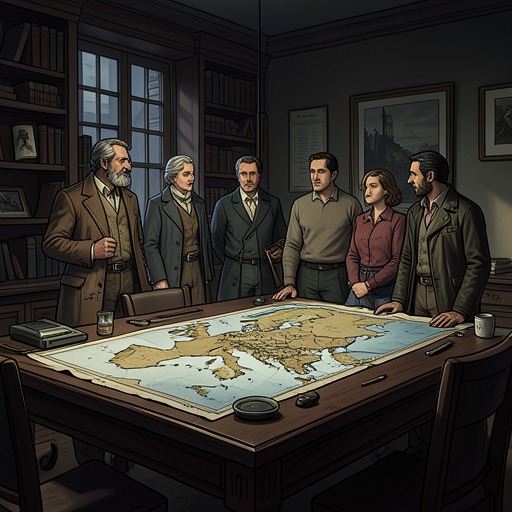
The warning appears in inscriptions examined by Theodosia. After spending the afternoon studying steles laid out on a table, she recognizes that their images tell the same story as the Art of War rubbing, but with vivid visual detail. The written and pictured accounts therefore reinforce one another: the curse is represented not as an unexplained affliction, but as an announced consequence of taking the Heart from Egypt.
The inscriptions make the rule reciprocal. Whoever removes the Heart brings suffering upon themselves, and the land associated with their action becomes the target of the threatened punishment. The curse is directed against those who have taken Egypt’s sacred object, and its terms insist on a return: the Heart must be put back in its rightful resting place. The punishment is thus linked to an identifiable violation, rather than presented as random misfortune.
The Threatened Consequences
The steles describe a sequence of disasters affecting the offending land. They warn of pestilence and famine, the loss of a land’s abundance, and destructive flooding associated with the Nile. They also depict sickness spreading among people. The account sets bodily affliction alongside damage to the wider community: suffering reaches individuals, while famine and flood threaten the stability and livelihood of an entire land.
The images make the warning legible beyond the inscription’s formal language. One stele shows emaciated people; another portrays people with a severe pox, writhing on the ground. Theodosia connects the first image with the haunted faces she has seen in Seven Dials. That resemblance brings the ancient account into relation with the present, suggesting that the described calamities are not remote illustrations but signs that the curse’s threatened effects have become relevant in Britain.
The inscriptions also define the endpoint of the retaliation. Punishment is to continue until the Heart is returned and Thutmose III’s glory is made whole again. Restoration is therefore more than a practical means of stopping further damage: within the rule’s own terms, it repairs the violation that provoked the curse. The fate of the offending land and the Heart’s proper placement are bound together.
Recognition and Reversal
The rule becomes decisive in the tomb when Theodosia discovers a carved indentation exactly shaped like the Heart of Egypt. The shape gives her a concrete answer to the problem of where the object belongs. Before she can act on this recognition, Von Braggenschnott appears, leaving her with no apparent route of escape. The discovery is not an abstract interpretation of the inscriptions: it identifies the physical place to which the Heart can be restored.
When the Heart is placed in the wall, magic gathers around it and the object glows briefly. The wall then appears whole again, with the Heart occupying the cavity where there had been an opening. Von Braggenschnott’s hand becomes stuck to the restored object. The scene gives the rule a visible reversal: the Heart is no longer displaced, and the magical change occurs at the very place whose shape had disclosed its proper position.
Theodosia understands that this act has saved Britain and Henry. That consequence completes the curse’s logic: removing the Heart exposed the land that took it to danger, and returning it to its resting place supplies the remedy. The account does not need a separate abstract explanation of reversal; the restoration, the magical response, and Theodosia’s recognition connect cause, corrective action, and consequence.
Narrative Significance
The curse works as a rule of responsibility as well as a magical mechanism. The warning names the consequences of taking the Heart, while the tomb scene forces Theodosia to interpret the place where it must be returned and act under immediate pressure. Ancient text, pictured suffering, and a precisely shaped recess converge on one solution. The rule turns the relic’s proper location into the key to resolving the crisis.
Its structure also gives the ending a clear reversal: the same displacement that threatens a land can be undone by restoring the object to its proper resting place. The Heart’s return repairs the breach described in the inscriptions and halts the danger posed to Britain. Through that cause-and-remedy pattern, the curse links Egypt’s violated sacred history to the present fate of the people and country threatened by the relic’s removal.