Heka
Theodosia and the Serpents of ChaosHeka is the evil magic associated with cursed artifacts, and in Theodosia’s account it is something that can be sensed and tested rather than merely suspected. Her methods give the concept a practical place in the story: an unsettling physical intuition leads to a repeatable wax test, while a further test is needed to make a curse’s written signs visible.
Recognition and Detection
Theodosia says that she can usually sense a spell the first time she looks at an artifact. The sensation is physical and vivid, like icy-footed beetles crawling down her back. When she asks Lord Wigmere whether he detects spells in the same way, he explains that the people around him use other methods. Heka is therefore not presented as something every investigator perceives through a shared sensation; Theodosia’s bodily response is her own means of recognizing that an object may be bespelled.
The Second Level Test
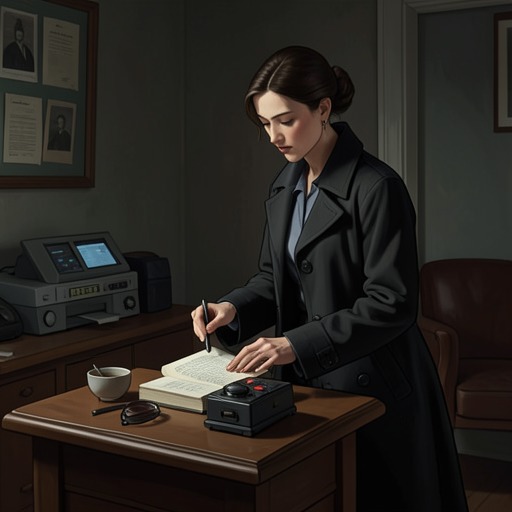
Theodosia’s practical test uses wax because she understands it to absorb Heka. She saves candle ends and other scraps, then places the wax pieces in a small circle around an artifact that she suspects may be cursed. A few hours later, dirty gray or black wax confirms her suspicion. She tells Lord Wigmere that the wax has never stayed white and that she has never been wrong. That is her reported record of the test, not an independent verification of its reliability.
The method is also improvised from ordinary materials. In one trial, Theodosia takes wax from a small, battered Canopic jar in the receiving area. The jar had arrived badly damaged and had not been restored because it was not considered particularly valuable; she had been using it to collect old candle stubs and sealing wax. By dinnertime, the wax arranged around the statue has turned a foul greeny-black. The unusually rapid change strengthens her suspicion that the artifact is cursed and prompts her to return for a Third Level Test.
From Absorption to Visible Inscription
The wax test detects a curse indirectly through a change in color; it does not reveal the curse’s wording. For the Third Level Test, Theodosia needs moonlight, which she describes as the only way to make the inscribed curses visible to the human eye. The two procedures thus answer different questions: the wax indicates that an artifact carries a curse, while moonlight exposes its otherwise unseen inscription. Together, they make Heka legible through material signs—darkened wax first, hidden writing afterward—rather than through sight alone.