Isis
Theodosia and the Serpents of ChaosIsis is Theodosia’s cat and, after the curse on a Bastet statuette is accidentally transferred to her, the story’s most intimate and unpredictable supernatural danger. Her transformation makes the curse more than an ominous property of an artifact: it enters the household as a beloved animal, threatening the people closest to her. Her arc moves from instinctive flight, through frightening attacks and a fragile recovery, to a final return to ordinary affection.
Identity and First Warning
When Theodosia first sees the black Bastet statuette, she feels icy-footed beetles marching down her spine. Isis, who has been skulking under a workmen’s bench, looks at the statue, meows loudly, and bolts away. Theodosia reads the object as dripping with ancient evil curses; Isis’s immediate flight makes the danger bodily and shared, registering before anyone else in the room acknowledges what the artifact might mean. Nigel Bollingsworth asks whether Theodosia is all right, while Clive Fagenbush watches her with disdain, leaving her to conceal her alarm.
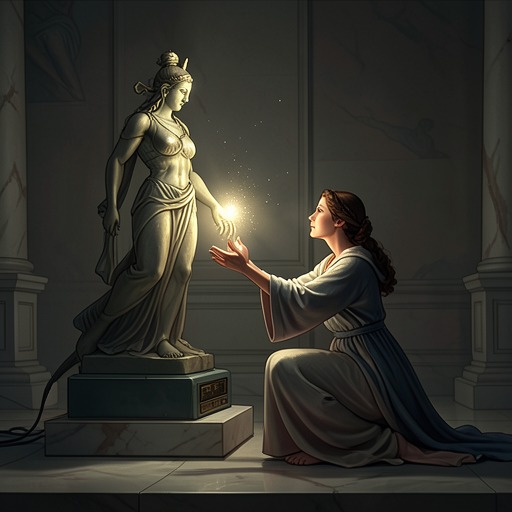
The fear becomes real during Theodosia’s attempted curse-transfer ritual. The buzzing symbols do not enter the wax figurine as intended: they stream toward Isis instead. They touch her fur, and she snarls, her hair standing on end as the hieroglyphs dance across her body. Her eyes grow wild, her ears flatten, and an unholy yowl replaces the familiar presence Theodosia knows. Theodosia understands that Isis is no longer behaving as her beloved pet but as something evil, and the failed ritual leaves her unable to consult the book for guidance without taking her eyes off the cat.
The Curse in the Household
Isis’s changed state turns domestic spaces into places of danger. When Lord Snowthorpe waits in the foyer, Theodosia hears a faint hiss and sees Isis crouched on the balcony above him. Before Theodosia can intervene, Isis screeches and flies at him. The attack gives the curse a public consequence: the cat’s violence is no longer confined to Theodosia’s fear or to the ritual room, and an unsuspecting visitor becomes its target.
The danger reaches Theodosia’s father as well. After Theodosia returns from Charing Cross Station, a bloodcurdling yowl comes from the third floor. Alistair Throckmorton calls for her to collect her cat; in the workroom she finds Isis clinging to his back like a demonic cocklebur while he turns round and round, trying to dislodge her with his cane. The scene’s absurdly specific struggle does not lessen the threat: the animal who once fled from the cursed statue now attacks members of the family, and Theodosia must face the consequences of the ritual’s misdirection at home.
Theodosia’s Care and Isis’s Uneven Recovery
Theodosia does not treat Isis as simply an enemy to be subdued. While unpacking Shabti Figures, she thinks about how to make her beloved cat herself again, and later tries to guide her toward a sarcophagus using sardines. Isis approaches the food in a panther-like crouch, stopping repeatedly to check for danger. She then tears into the sardines with startling ferocity, shaking each one as if killing it again before eating. The meal is both practical coaxing and a measure of how far the curse has altered an ordinary habit.
To bring Isis nearer, Theodosia settles into the sarcophagus and calls her name as well as Horus, whose protection she has placed in Isis’s amulet. Isis’s eyes gradually look more focused and less frenzied. After several hesitant starts, she reaches the sarcophagus, balances on its edge, then hops down to Theodosia’s feet and kneads the blanket with her claws. A loud purr follows. Theodosia takes this as a hopeful sign that the amulet may be working, but the improvement is not yet a complete or reliable cure: the cat’s approach is cautious, and the larger danger facing the country remains unresolved.
Return to Familiarity
Isis’s recovery is confirmed the next morning. Theodosia wakes expecting the sensation of a Shabti Figure chewing her ankle, a fear sharpened by a dream in which one had bitten her. The apparent threat is instead Isis, curled into a warm furry ball at her feet and kneading gently. The Demon Isis is gone. Theodosia rubs her tummy and scratches behind her ears, gestures that make the change tangible: the same claws that had attacked and threatened now touch her gently, and the cat can again receive ordinary affection.
Isis’s arc gives the curse a close, personal cost and gives Theodosia’s response a form beyond magical technique. The first sign of danger is an animal’s instinctive recoil from the statuette; the crisis follows when the intended transfer goes wrong; recovery comes through the protective amulet, patient coaxing, and the return of familiar behavior. Isis is not merely a warning attached to an artifact. Her frightened, violent, and finally affectionate presence makes Theodosia’s effort to undo the curse a matter of rescuing a companion as well as containing supernatural harm.