Museum of Legends and Antiquities
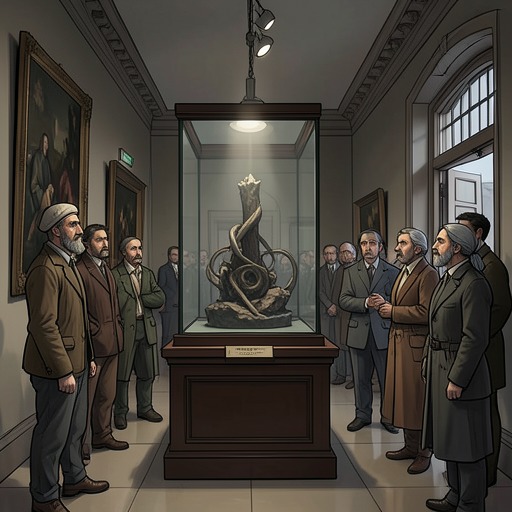
Theodosia and the Serpents of ChaosThe Museum of Legends and Antiquities is both a London institution and the principal setting for Theodosia’s early investigations: a place where ancient objects arrive in crates, curators handle them, and hidden curses can go unnoticed by almost everyone. Overseen by Alistair Throckmorton and described as the second-largest museum in London, it gives Theodosia access to a world of artifacts while leaving her to recognize dangers that the adults around her cannot see.
Institution and working spaces
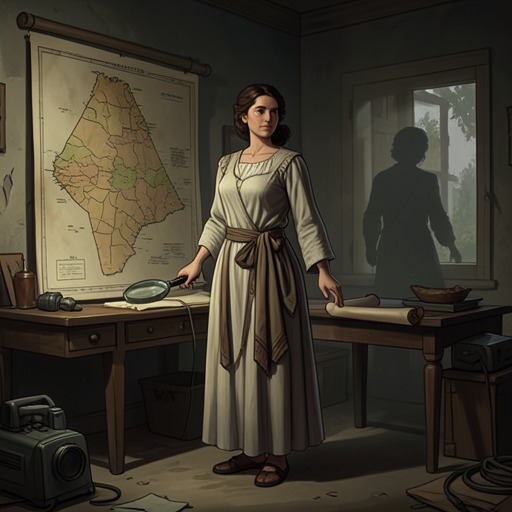
The museum is not merely a backdrop to Theodosia’s life. Because her father oversees it, she spends much of her time moving through the old building, where its rooms and collections offer both occupation and a field for her curiosity. She is especially skilled at ferreting out secrets, including the dark Egyptian magic attached to objects brought into the collection. Her familiarity with the institution gives her opportunities to observe the artifacts directly, but it does not mean that the curators share her knowledge: she believes she alone can detect the black magic clinging to them.
The museum’s receiving area establishes how its objects enter ordinary institutional life. When a shipment from Thebes arrives, the drayman brings it to the loading area, where the hired hands Dolge and Sweeny carry the crate inside. The curators gather around a worktable as Alistair opens it. The sequence makes the museum’s handling procedures tangible, from delivery and unloading to examination, while also revealing a gap in those procedures: Alistair reaches into the crate without gloves, even as Theodosia’s gloved fingers twitch in dismay.
The building’s galleries and floors also shape Theodosia’s investigations. After leaving Henry in the foyer, she goes upstairs to the second floor to put away her case, then continues to the third-floor Ancient Egypt Exhibit to investigate a sense that something is wrong in the museum and, under cover of that search, to look for Isis. The movement through the building turns the gallery into a destination for inquiry rather than passive display: Theodosia approaches the collection as a place where evidence might be found.
Artifacts, danger, and discovery
The arrival of the black Bastet statue shows the museum’s dual character as a place of scholarly work and occult risk. The statue has been sent by Henrietta Throckmorton from her archaeological work in Egypt. When Theodosia sees it, she feels what she describes as icy-footed beetles marching down her spine; Isis meows at the statue and bolts away. The adults do not recognize the danger. Henrietta and Alistair do not realize the object is cursed, and the assistant curators appear not to notice its black magic either. Theodosia therefore treats identifying and removing the curse as her own urgent responsibility, especially with further shipments expected from the Valley of the Kings.
The museum’s connection to Egypt is also a matter of movement, permission, and competing claims. Henrietta reports that von Braggenschnott helped persuade local officials to let her take her discoveries out of Egypt and bring them to England. The objects are subsequently unloaded at the museum: Dolge and Sweeny carry crates and some trunks into its downstairs workroom and short-term storage area, while Alistair sends the remaining belongings to the family home. This chain links archaeological permission to transport and institutional custody without making those stages identical. The museum receives and stores discoveries whose removal from their place of origin is itself part of the story’s conflict.
That conflict sharpens when the British Museum is suspected of trying to take another discovery from under Alistair’s nose. He regards the prospect as a personal affront and secures permission from the Museum of Legends and Antiquities’ board to travel to Cairo with Henrietta. Institutional rivalry thus reaches beyond the galleries: it helps determine who pursues discoveries and who claims authority over them. Later, when Lord Wigmere asks Theodosia to take the Heart of Egypt back to its rightful resting place, she must persuade her parents to travel with her. The museum’s role in the artifact’s story is consequently not a simple endpoint; the demand to return the object challenges the assumption that arrival in a collection settles where it belongs.
A base for action and departure
The museum remains a practical base even as Theodosia’s investigations extend beyond its walls. When she and Henry plan to meet Sticky Will at the Duke of York Column, they slip out through the museum’s east-side entrance and hurry toward Pall Mall. The exit turns the institution into a launch point for action: its familiar entrances and working routines provide the cover from which the children can leave on their own errand.
The same building becomes a place of imposed responsibility when Alistair and Henrietta prepare to sail to Cairo aboard the Rosetta Maru. They tell Theodosia she must stay behind, ostensibly to watch over the museum, and arrange for her to stay with Grandmother Throckmorton. The assignment sounds like trust but does not give her the expedition she wants; she recognizes that her parents do not intend her to accompany them. The museum is therefore both the setting that makes her expertise possible and the domestic institution through which adults try to contain her independence.
Its narrative significance lies in that tension. The museum offers Theodosia access to the artifacts, spaces, and investigative opportunities that adults overlook, yet it also embodies the larger question of who may handle, transport, keep, or return those artifacts. In the final confrontation with von Braggenschnott, the decisive act takes place not in the museum but at the object’s intended resting place: Theodosia throws herself toward the wall and thrusts the Heart of Egypt into its indentation. The movement away from the museum completes the location’s larger function in the story. It is where the danger becomes visible and where the struggle begins, but not necessarily where an artifact should remain.