Theodosia—Mother
Theodosia and the Serpents of ChaosTheodosia’s relationship with Henrietta Throckmorton is shaped by a tension between longing for parental attention and the habit of going it alone. Their reunion after Theodosia’s dangerous expedition gives that tension a concrete answer: Henrietta chooses her injured daughter’s safety over the archaeological discovery Theodosia had made, while Theodosia begins to understand that her desire to be noticed has been shared across her family relationships.
Care Before Discovery
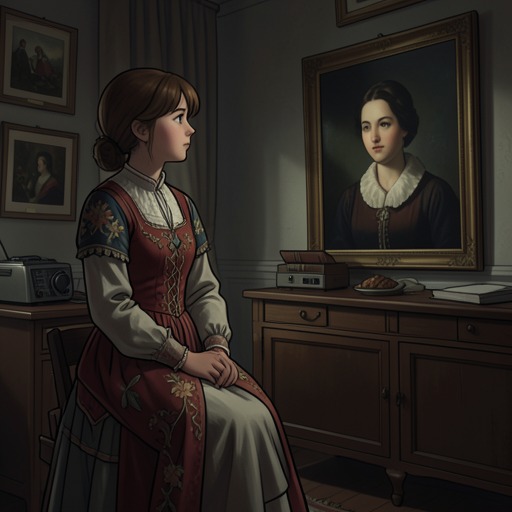
When Theodosia wakes after being brought out of the newly discovered tomb, she realizes that Henrietta and her father did not even pause to look into the new section she had found. The omission initially strikes her as astonishing: they had passed up an undiscovered tomb for her sake. Henrietta makes the priority plain by explaining that they needed to get Theodosia out and find proper medical treatment. Her attention then turns to the danger that remains, as she asks whether anyone else was in the tomb and whether the intruders were from the British Museum.
The exchange places archaeological ambition beside immediate responsibility. The discovery matters greatly to Theodosia, but Henrietta’s decision treats her daughter’s injury as more urgent than the tomb, its novelty, or the chance to inspect it. Theodosia answers that the men were Germans looking for objects to sell on the black market. Once the immediate questions are settled, exhaustion overtakes her and she lets herself sleep. Henrietta’s care is thus conveyed less through extended reassurance than through what she has done and what she needs to know to protect her daughter.
The Need to Be Seen
The reunion also sharpens Theodosia’s understanding of her own emotional history. In speaking with Henry, she admits that she is accustomed to going it alone and has found it difficult to adjust to his new interest in the museum. Henry explains that the museum was not the point: he had felt that she treated him as though he were insignificant and unwanted. Theodosia recognizes the resemblance between his hurt and her own long-standing wish for attention from Mother and Father. Her response to Henry—an apology and the realization that he, too, had wanted to be noticed—makes the family dynamic more reciprocal than she had understood.
That recognition does not erase the earlier loneliness, nor does the passage claim that Henrietta’s actions resolve every part of it. Instead, the emergency and the reunion give Theodosia a different kind of evidence about her mother: when her safety is at stake, Henrietta puts her first. The care arrives amid exhaustion and unanswered questions, but its priority is unmistakable.
Independence and Reliance
Across the wider story, Theodosia repeatedly takes responsibility for vulnerable beings and people. She tries to calm and recover Isis after the cat’s curse has made her wild, risking scratches to catch her and attempting a healing charm. Later, when Danver’s arm is overtaken by a curse, she uses one of her amulets as a barrier and urgently calls for wax when it cannot hold indefinitely. These episodes are not direct scenes between Theodosia and Henrietta, but they illuminate the practical, immediate form care takes in Theodosia’s own conduct: she notices danger, acts with the means available, and persists even when the outcome is uncertain.
Against that pattern, Henrietta’s choice in Egypt carries particular force. Theodosia has become accustomed to acting alone, yet her injury makes her dependence unavoidable; Henrietta responds by abandoning the opportunity to explore the tomb and securing medical help. The relationship is therefore defined not by a complete reconciliation scene, but by a shift in what Theodosia can recognize: the attention she has wanted is not merely an abstract hope, and her mother’s actions show that, at a decisive moment, her life matters more than the discovery.