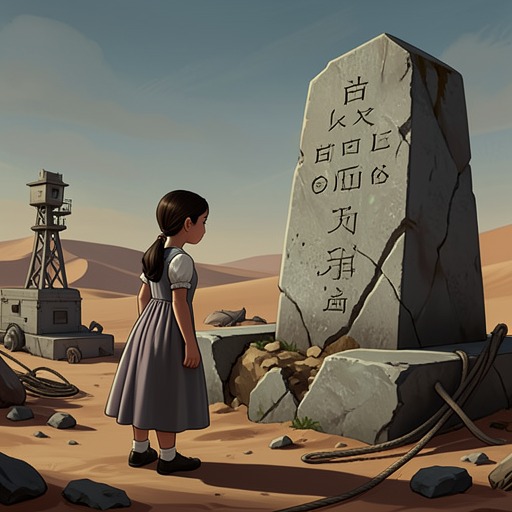
Thutmose III's Tomb
Theodosia and the Serpents of ChaosThutmose III's Tomb is both the focus of Alistair Throckmorton’s defining archaeological work and the destination to which the Heart of Egypt must be returned. The tomb’s importance turns on a striking absence: the powerful royal amulet was expected there, yet its true location was the Tomb of Amenemhab, making Thutmose’s tomb the endpoint of the book’s effort to reverse the curse.
Discovery and Disputed Credit
When Theodosia was two, Alistair Throckmorton spent years researching the likely whereabouts of Thutmose III's Tomb, associated with the pharaoh’s reign in the New Kingdom of Egypt. He and Henrietta Throckmorton travelled to the Valley of the Kings for an expedition that Theodosia recalls as a success, though she was left in Britain with her grandmother. The expedition’s achievement was compromised when a colleague betrayed Alistair and Victor Loretti claimed the official discovery.
The institution Alistair worked for, Alistair's British Museum, declined to support him and accepted Loretti’s claim. Alistair consequently left the museum and joined the Museum of Legends and Antiquities. The episode establishes the tomb not only as an archaeological prize but also as the source of an old professional injustice that shaped Alistair’s career.
The Missing Heart
The location of Thutmose’s Heart of Egypt had remained a major puzzle because it was not in Thutmose III's Tomb. Henrietta identifies the solution: the amulet had been in the Tomb of Amenemhab all along. The distinction between the tomb associated with the pharaoh and the actual hiding place explains why the search for the Heart could not be resolved by finding Thutmose’s tomb alone.
The Heart was made for a pharaoh upon his coronation, and its fate was bound to the well-being of both ruler and Egypt. Its absence from Thutmose’s tomb therefore carries consequences beyond the archaeological mystery: the tomb remains the place to which the amulet is destined to return.
The Tomb as the Necessary Destination
Lord Wigmere explains that whoever removes the Heart of Egypt from its tomb brings famine, plague, pestilence, and destruction upon themselves. Because a British subject brought it to British soil, Britain—not the Germans who later possess the Heart—is in danger. His instruction is explicit in substance: the Heart must be retrieved and returned to Thutmose’s tomb, the only way to stop the curse, and it must remain there.
Thutmose III's Tomb thus frames the story’s resolution as restoration rather than possession. Its significance rests on the contrast between the celebrated but contested discovery and the unresolved absence within the tomb: only returning the displaced Heart to its intended resting place can address the danger unleashed by its removal.