
Making Help Possible
This Is Going to HurtThis flow traces how formal safety and support mechanisms encounter the realities of clinical work, from practical safeguards to missing emotional care.
increasing Bearing strength in each event
 decreasing
Bearing strength in each eventdecreasingThe Hospital Arrow
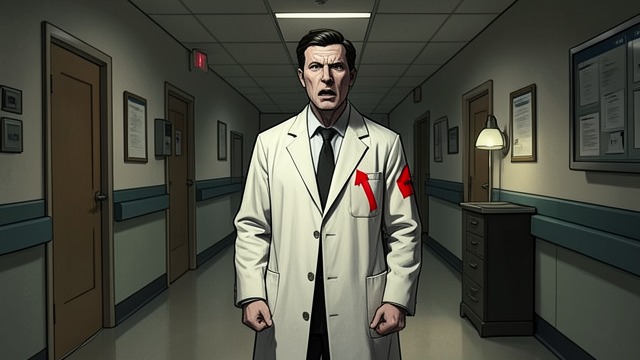
The Hospital Arrow
A system failure acknowledged
A safety briefing follows wrong-side operations, and staff are instructed to mark the correct limb with an arrow. The policy recognizes that professionals need shared checks.
An overlooked complication
Kay’s tattoo question leads management to clarify how to handle a misleading arrow. The practical detail strengthens a safeguard by anticipating a real-world variation.
The Red-Sticker Procedure
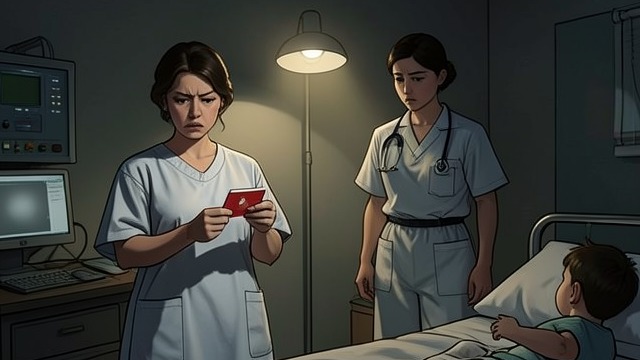
The Red-Sticker Procedure
A route to help
The hospital uses red stickers on medical notes to let women signal that they want to discuss violence at home. The system is designed for patients whose controlling partners may accompany them.
Procedure meets ambiguity
A patient’s two-year-old has placed stickers on her notes. Staff initially interpret the signal as a request for help, then discover the misunderstanding and can proceed more carefully.
A Private Conversation Secured
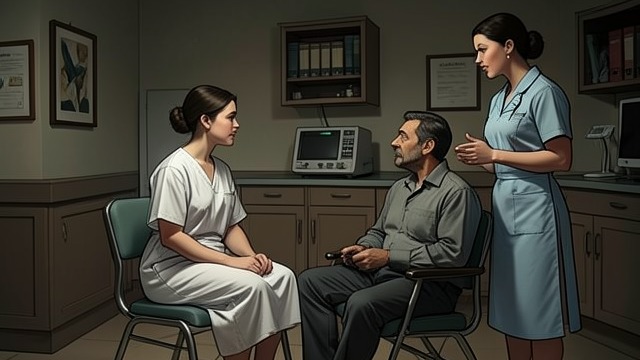
A Private Conversation Secured
Finding a way to speak
The patient’s husband remains in the room, preventing a private discussion. Kay calls a midwife, and together they eventually get the woman alone.
Limits of a signal
The stickers do not automatically resolve the danger or confusion. They create an opening for conversation, but staff still need time, judgment, and a safe opportunity to hear the patient.
A Missing Safety Net

A Missing Safety Net
Crisis without recovery time
After the fatal birth, Kay is sent home but expected to return to work the next day. The rota has no space for the recovery he needs.
Support as patient safety
Kay later argues that the hospital should have made sure he could talk to someone. Emotional care is not separate from safe practice when clinicians must return to high-stakes decisions.
The Need for Change
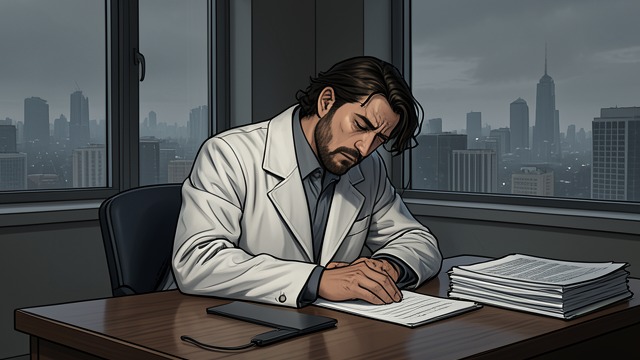
The Need for Change
Individual endurance is not enough
Kay’s experience shows the limits of relying on clinicians to absorb trauma privately. Good intentions cannot create rest, adequate staffing, or psychological support by themselves.
Responsibility beyond the ward
His account turns personal suffering into a demand for institutional responsibility. Safer systems require both practical checks and conditions that allow staff to recover and ask for help.
November 2007
17 December 2009
17 December 2009
After December 2010
By the end of Kay’s career
